
Woodmere Art Museum
Philadelphia, PA
June 20, 2026 – January 10, 2027
(group)


Anne Doran in ARTnews.com
James Castle, William Edmondson, Philadelphia Wireman, Joseph Yoakum, Outsider Art Fair

Elisa Carollo in The Observer
Felipe Jesus Consalvos, Howard Finster, Philadelphia Wireman, Bill Traylor


palladium/Athena Project
New York, NY
December 6, 2025 – January 17, 2026
(group)


Astor Weeks
New York, NY
Jun 27–Aug 1, 2025
Dorothy F. Foster
(group)
With Zoe Beloff, Todd Hamel, Megan Mi-Ai Lee, Hanna Rochereau. Curated by Marie Catalano.

White Columns
New York, NY
Jun 13–Jun 26, 2025
Sarah Gamble, Felipe Jesus Consalvos, Memory Ware
(group)


Portikus
Frankfurt, Germany
Jun 14–Oct 19, 2025
Bill Walton
(group)

Started in 1900, Yaddo is a nonprofit retreat for artists in Saratoga Springs, New York.

Will Heinrich in The New York Times
Martin Ramirez, Outsider Art Fair
Claire Haik on Sarah Gamble's Second Sight in Art Spiel
Sarah Gamble

Join us Saturday, July 13 at 4pm for a book signing with Anthony Coleman for his book:
I LIKE DRAWING
Drawings by Anthony Coleman spanning 2016 to 2023.
36 pages
Published 2023 by Blurring Books, NY
Following at 5:15pm:
Live performance by Full Size, a Philadelphia band described by Byron Coley: "Linked throbbing guitars and very well slammed tubs...somewhere between raunch and drone inducing a wonderful Stooges damaged head buzz."
In conjunction with Anthony Coleman and Andrew Jeffrey Wright: E.T. and Some Bananas and Woodley White: Shirts of All Sizes

Jesse Harrod
(group)
Mighty Real/Queer Detroit 2024 Biennial
Detroit, MI
May 31 – Jun 30, 2024
On view at Detroit Artists Market and Elaine Jacob Gallery

(group)
SPACE
Portland, ME
Jun 7 – July 18, 2024
Curated by Kelsey Halliday Johnson
The Artblog
Jayson Musson

Grounds for Sculpture
Hamilton, NJ
May 5–Sep 1, 2024
Billy Dufala
(group)
Curated by Monument Lab
Billy Dufala, Future futures, 2024, aluminum bales, 12 x 15 x 12 feet

Wednesday, May 8, 2024, 6–8pm
Join us for a conversation with Musson about the work in his current show, Allegory of the Veil.
Contemporary Arts Center
Cincinnati, OH
April 6 – September 8, 2024
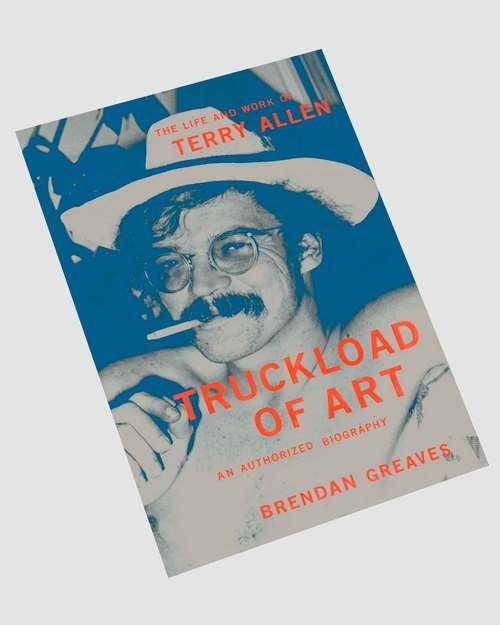
Join us Wednesday, April 3, 2024, at 6pm to celebrate the publication of Brendan Greaves' biography of artist and musician Terry Allen. Both subject and author have history with Fleisher/Ollman: Allen showed artwork at Janet Fleisher Gallery in 1994 alongside collaborators from the musical Chippy, which premiered in Philadelphia that year; and Greaves was a director at the gallery in the early 2000s, where he was introduced to Allen's work. More information
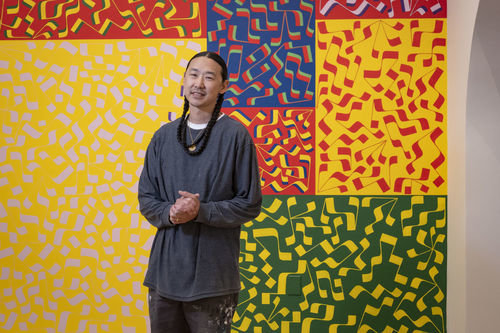
Isaac Tin Wei Lin and Melissa Choi, along with their son, Teo, redesigned the Kids’ Corner at the Delaware Art Museum during their 2023–24 residency.
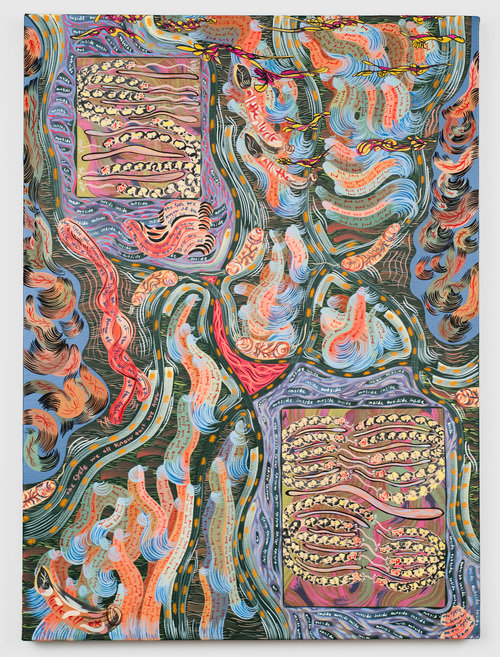
Temple Contemporary
Philadelphia, PA
Aug 30–Dec 9, 2023
Isaac Tin Wei Lin
(solo)
Charles Addams Fine Arts Gallery, University of Pennsylvania
Philadelphia, PA
Jul 7–Jul 18, 2023
Kate Abercrombie, Sarah Gamble, Paul Swenbeck
(group)
In conjunction with PhilaDelic
MARCH
New York, NY
Jun 8–Jul 21, 2023
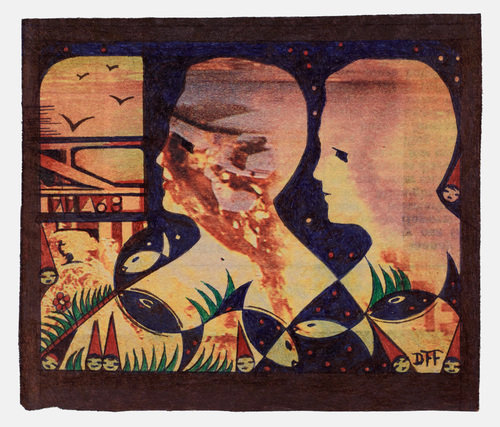
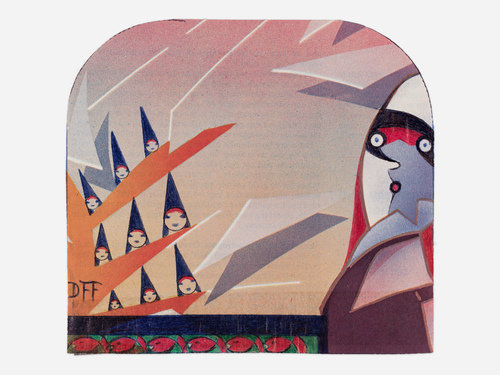
Dorothy F. Foster
(solo)
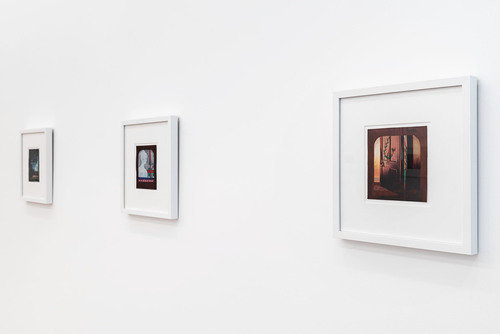
White Columns
New York, NY
May 15–Jun 1, 2023
Dorothy F. Foster
(group)
Vox Populi
Philadelphia, PA
Opens May 5, 2023
Anthony Campuzano
(group)
Campbelltown Art Center
Campbelltown, NSW
Mar 30–Jun 25, 2023
Julian Martin
(group)
The New York Times
Eamon Ore-Giron
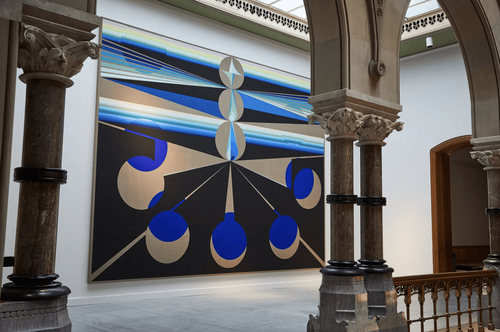
image: “Black Medallion XIV (Inti)” (2022) by Eamon Ore-Giron at the top of a stair at PAFA.Credit: Aaron Richter for The New York Times
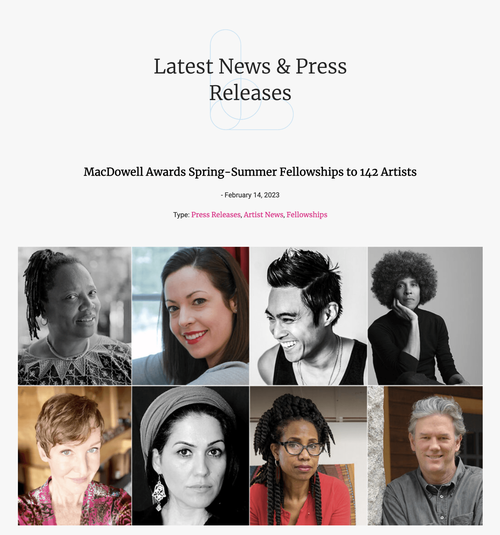
Gamble will be in residence at MacDowell February–April 2023.
Join us Saturday, March 11 at 2pm for a conversation with Jesse Harrod on the final day of their exhibition: Tough Nut.
The Artblog
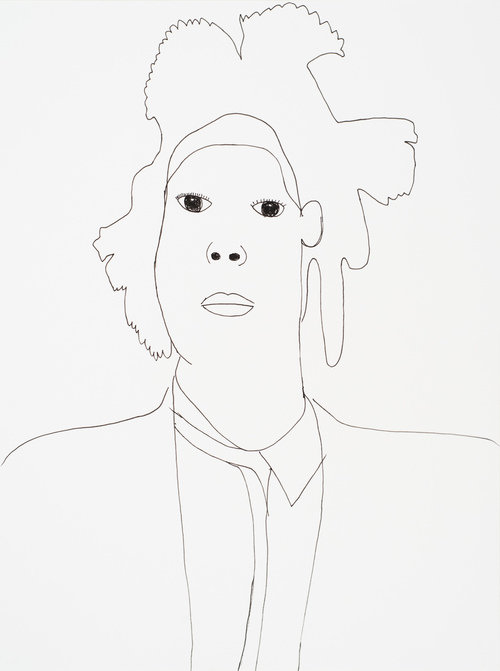
Marginal Utility
Philadelphia, PA
Dec 2, 2022–Jan 23, 2023,
Sarah Gamble
(group)
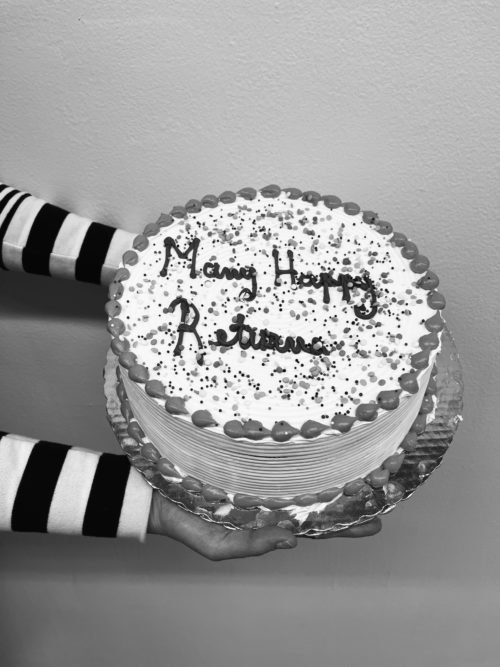
JTT
New York, NY
Oct 28–Dec 17, 2022
Bill Walton
(solo)
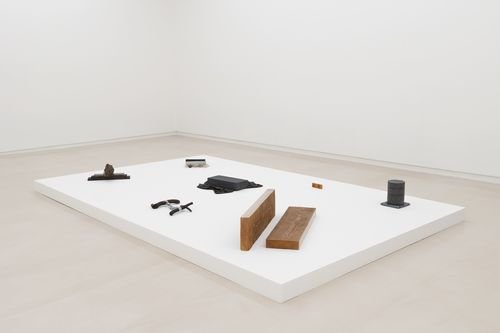
Jayson Musson explains art history as a sitcom at Philly’s Fabric Workshop and Museum
whyy.org
The Art Angle Podcast: Why Artist Jayson Musson Is Clowning a Humorless Art World
artnet.com
Art history as a sitcom: Jayson Musson serves up satire and nostalgia in Philadelphia exhibition
The Art Newspaper
Puppet Master: The World According to Jayson Musson
ArtForum
Jayson Musson: His History of Art
The Brooklyn Rail
A Bigger Canvas for Jayson Musson Includes Puppets and Picasso
The New York Times
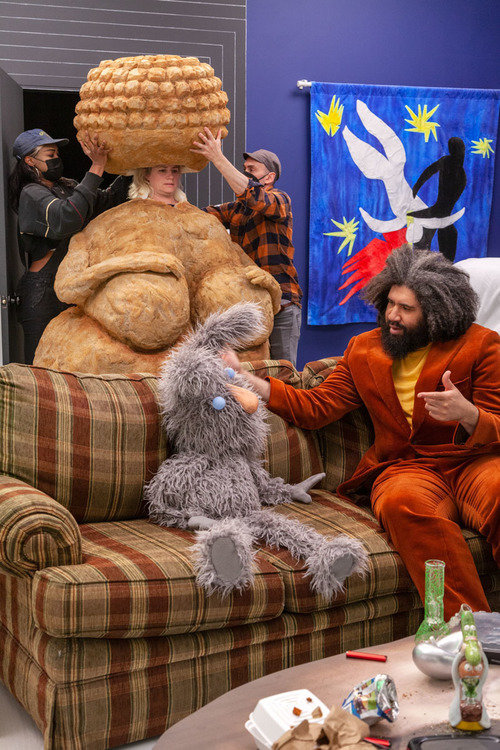
(group)
Hicks Art Center Gallery, Bucks County Community Collete
Newtown, PA
Aug 24–Oct 14, 2022
(solo)
Holmes Hall Gallery, Bucknell University
Lewisburg, PA
Aug 15–Oct 7, 2022

(group)
Pennsylvania Academy of the FIne Arts
Philadelphia, PA
Jul 8–Dec 31, 2022
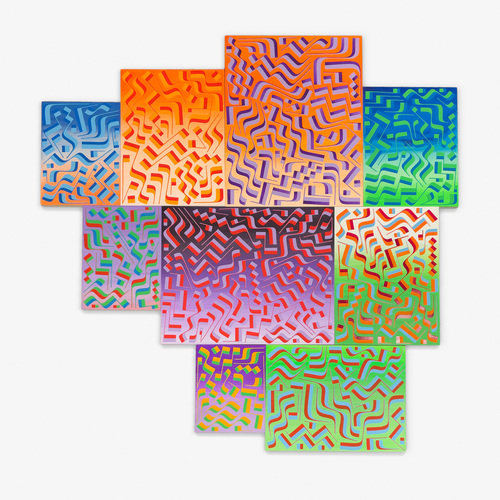
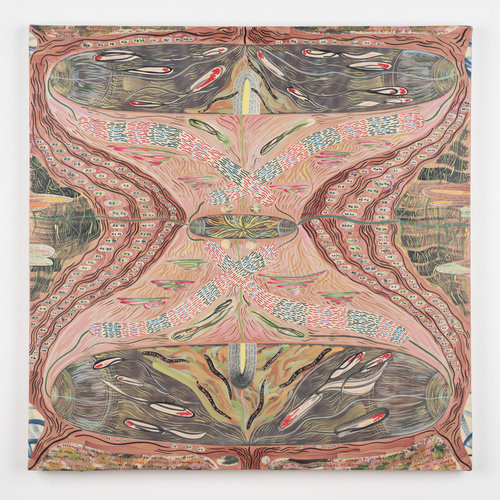
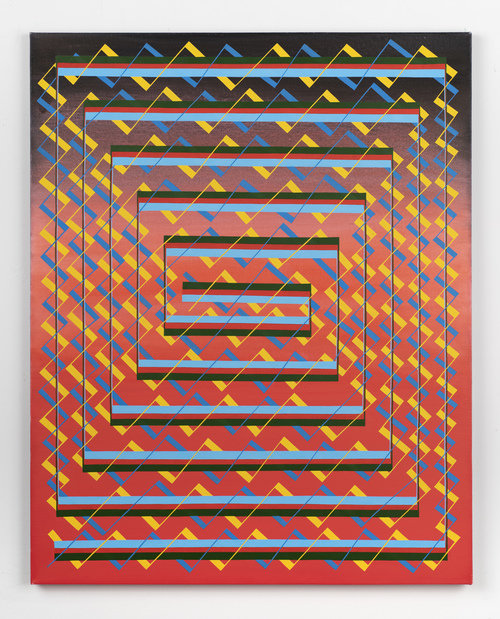
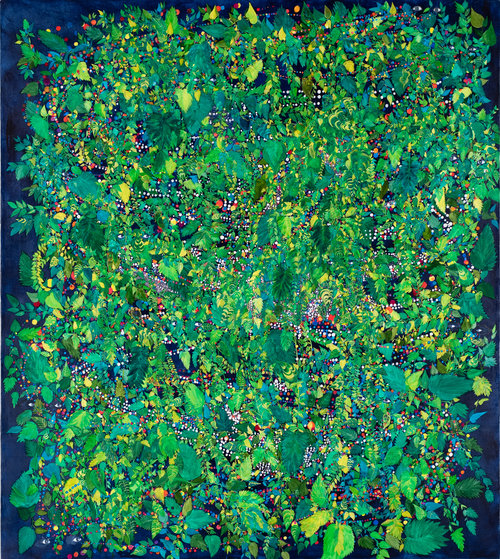
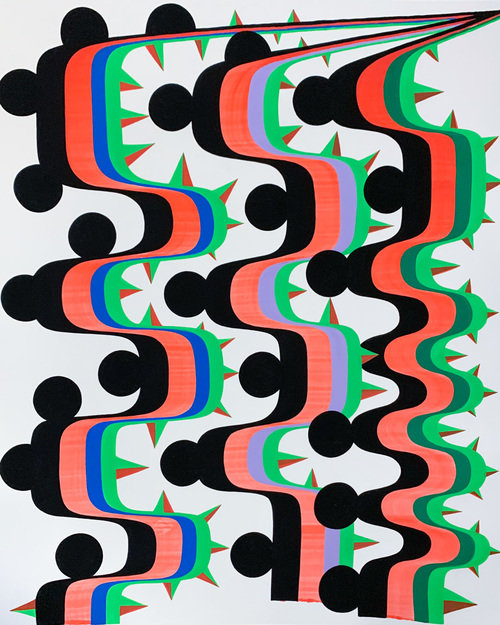
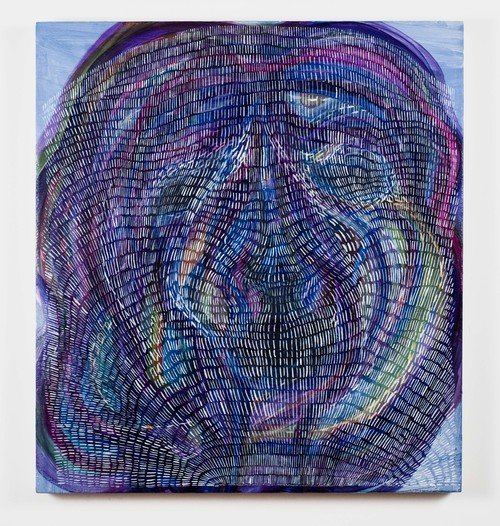
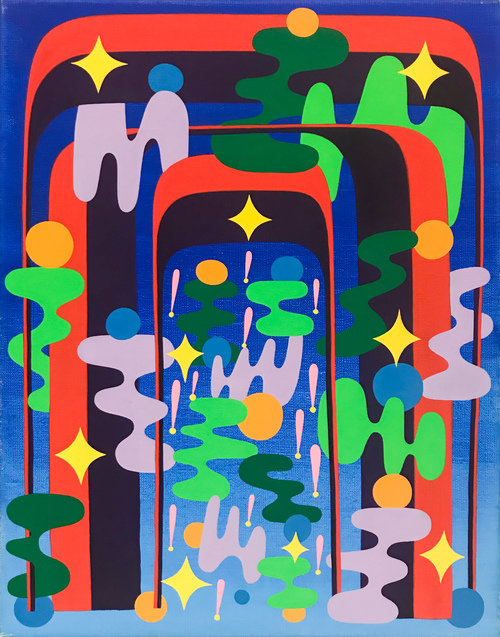
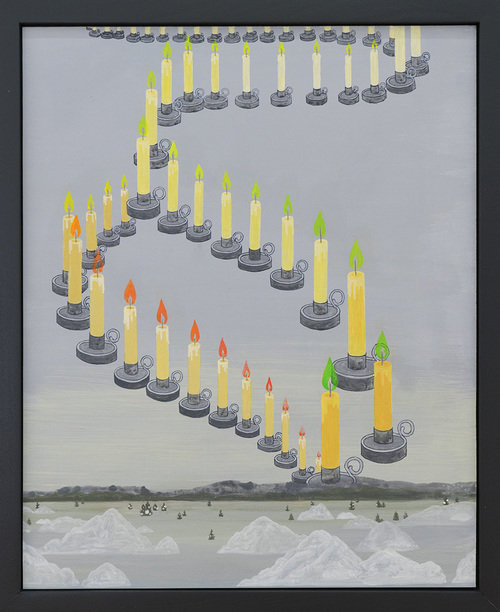
image: Fragmentary Bliss, 2021Acrylic and airbrush ink on panel
(solo)
Pennsylvania Academy of the FIne Arts
Philadelphia, PA
Jun 30–Oct 30, 2022
(group)
Andrew Kreps
New York, NY
Jun 30–Aug 12, 2022
Curated by Alex Glauber
Powerstation 501
Villanova, PA
Jun 8–Jun 18, 2022
Opening Wednesday, June 8, 5–8pm
Benefiting the Philadelphia Ballet, curated by Thomas Brummett
Sarah Gamble
(group)
Jack Shainman Gallery
New York, NY
May 12–Jun 18, 2022
Becky Suss
(solo)
Philadelphia Wireman
(group)
Curated by William Pym
Herald St
London, UK
Apr 6–May 7, 2022
Molly Metz
(solo)
Friends Indeed Gallery
San Francisco, CA
Mar 31–May 6, 2022
ARTnews
Kambel Smith, Philadelphia Wireman
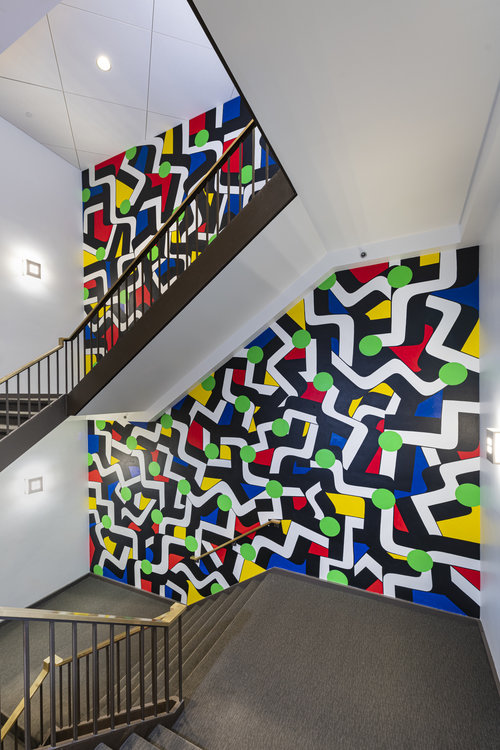
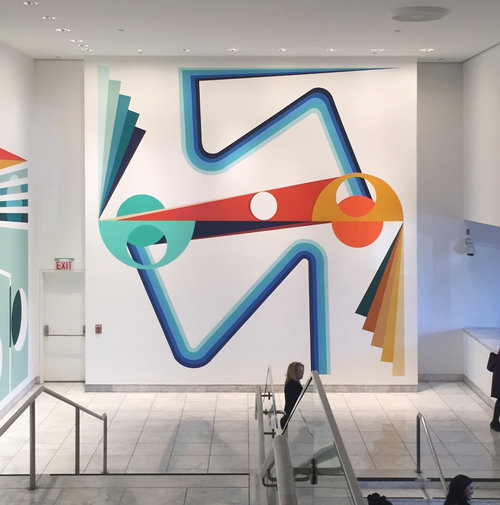
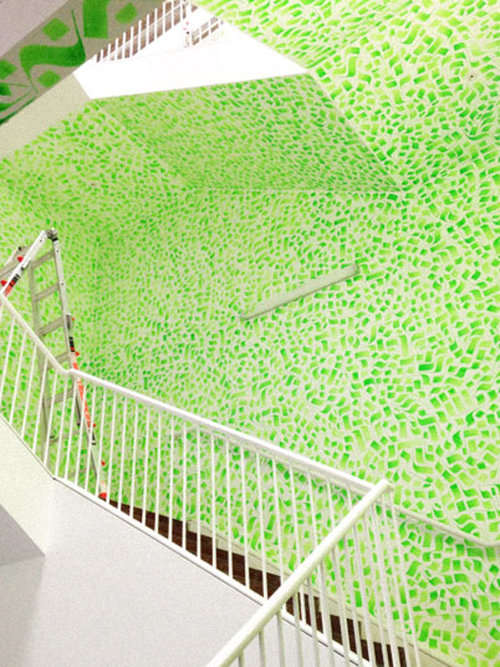
Permanent mural installation by Isaac Tin Wei Lin, co-commissioned by the Sachs Program for Arts Innovation for The Annenberg Center, University of Pennsylvania
Photo: Jaime Álvarez

Felipe Jesus Consalvos
(group)
El Museo del Barrio
New York, NY
Nov 12, 2021–Feb 27, 2022
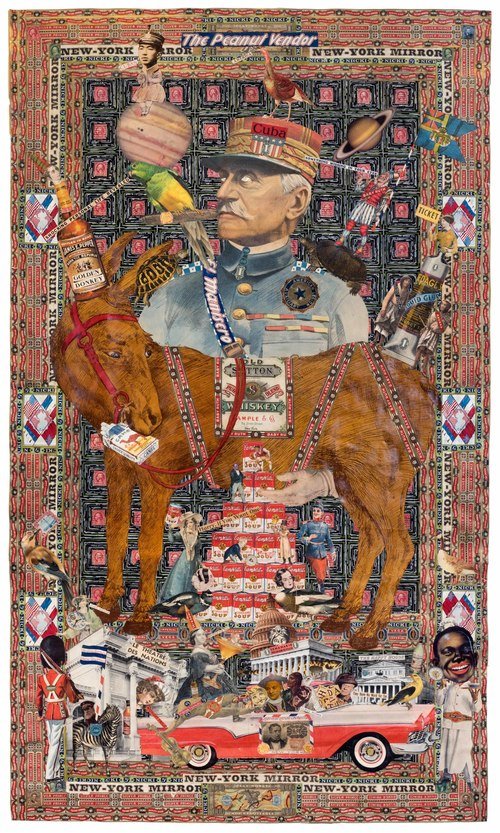
Joy Feasley
(solo)
Adams and Ollman
Portland, OR
Nov 1–Dec 18, 2021
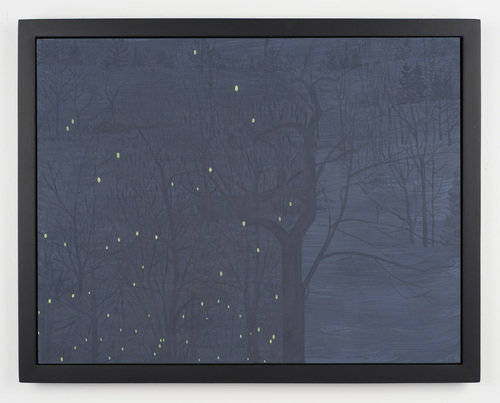
Joy Feasley, Paul Swenbeck, Pat Maguire
(group)
Temple Contemporary
Philadelphia, PA
Oct 22, 2021–Feb 4, 2022
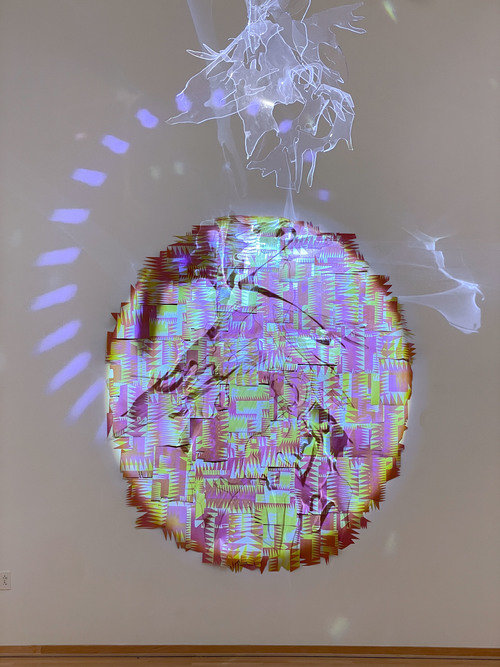
Santa Barbara Museum of Art
Santa Barbara, CA
Aug 15, 2021–Jan 30, 2022
Eamon Ore-Giron
(group)
Published in conjunction with “DANS LES TÊTES DE STÉPHANE BLANQUET” at Halle St. Pierre, Paris
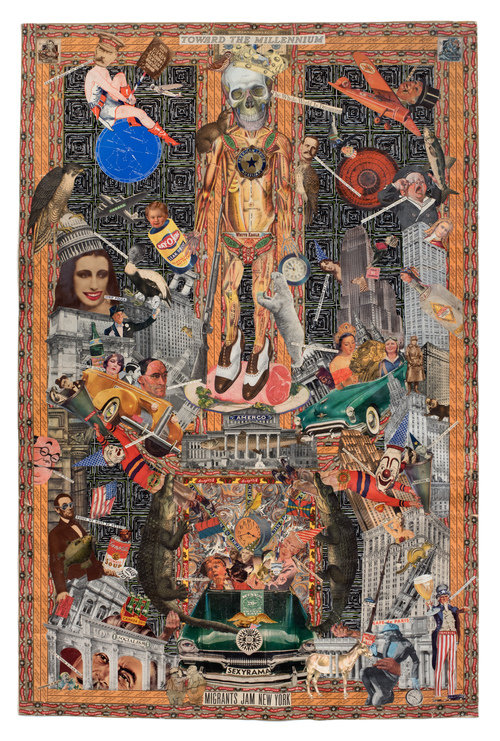
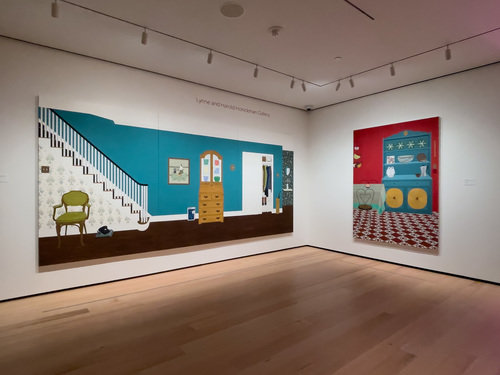
Becky Suss
(group)
The School | Jack Shainman Gallery
Kinderhook, NY
Jun 5–Oct 30, 2021
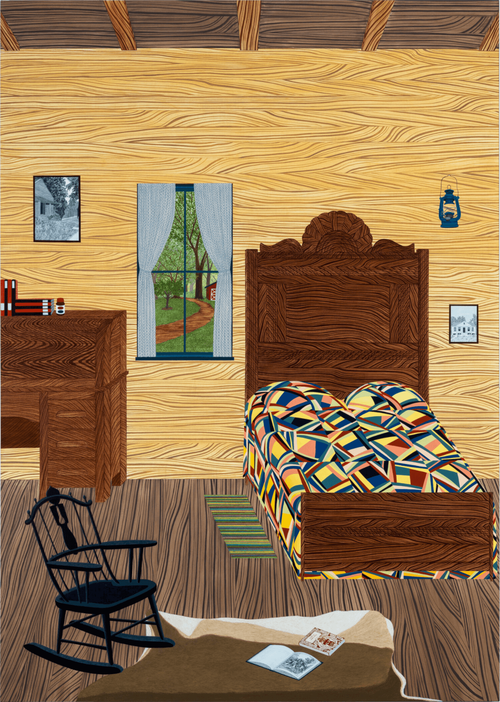
Paul Swenbeck and Joy Feasley
(group)
Center for Maine Contemporary Art
Rockland, Maine
May 29 – Sep 12, 2021
Organized by and featuring Joy Feasley and Paul Swenbeck, including Asata Radcliffe, Aaron Igler, Virgil Marti, Clint Takeda, Kelsey Halliday Johnson and Shannon Bowser.
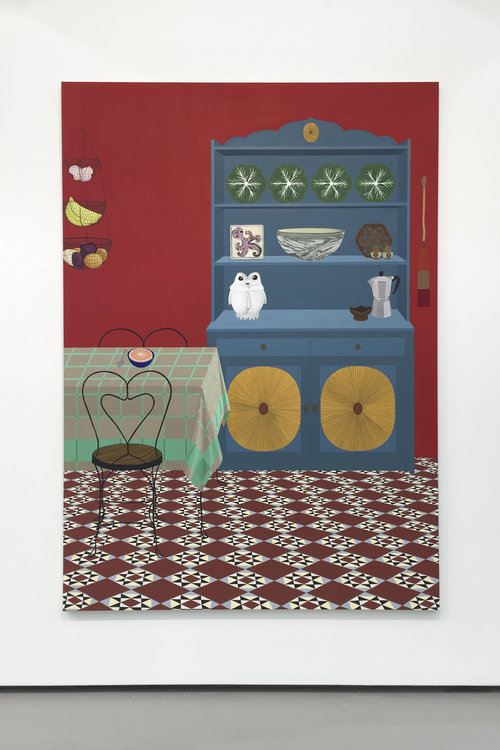
Becky Suss
(group)
Philadelphia Museum of Art
May 7–Aug 22, 2021
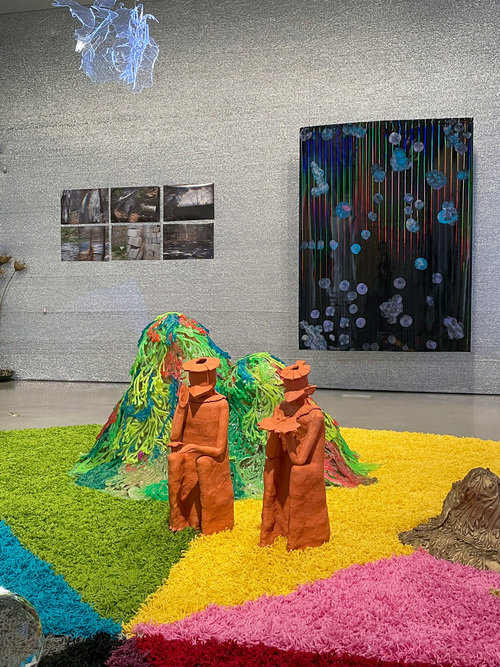
Eamon Ore-Giron
(solo)
James Cohan
New York, NY
May 1–Jun 5, 2021
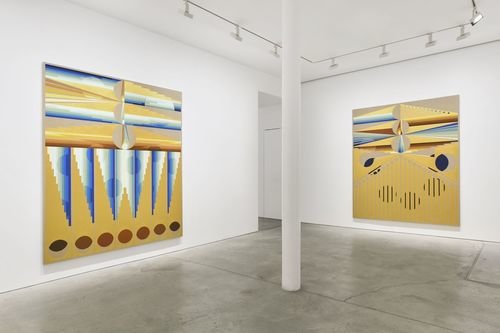
(group)
JTT
New York, NY
Mar 19–Apr 24, 2021
In collaboration with Adams and Ollman and Fleisher/Ollman
James Castle
Felipe Jesus Consalvos
William Edmondson
Lee Godie
William Hawkins
Philadelphia Wireman
Eugene Von Bruenchenhein
Bill Walton
Joseph Yoakum
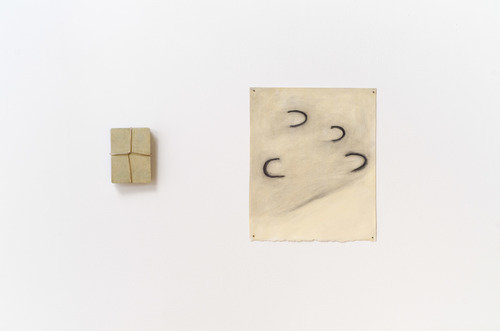
(group)
Adams and Ollman
Portland, OR
Mar 19–Apr 17, 2021
In collaboration with JTT and Fleisher/Ollman
James Castle, Isaac Tin Wei Lin, Becky Suss
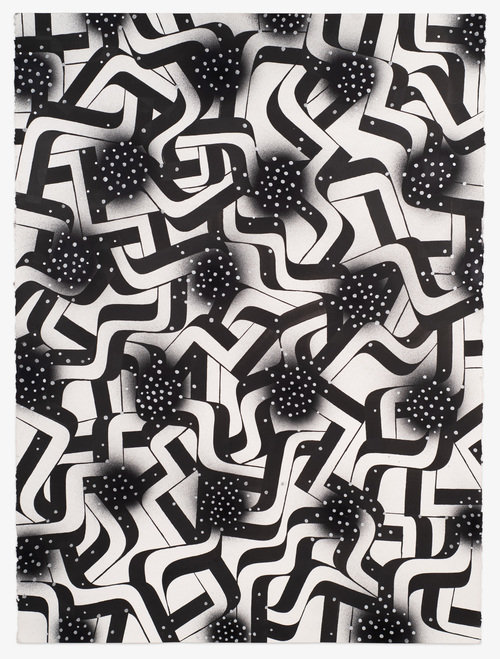
Logan Cryer interviews Jordan Deal about Hissed gently in silence, a dream of Flight for the Artblog.
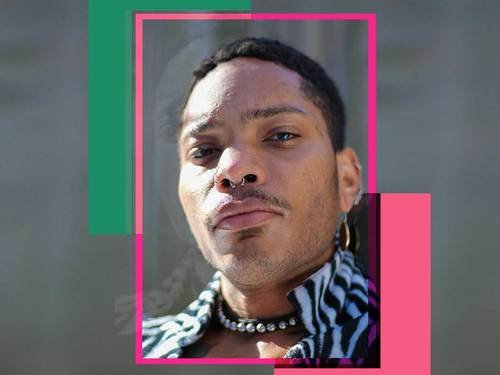
Surface Mag
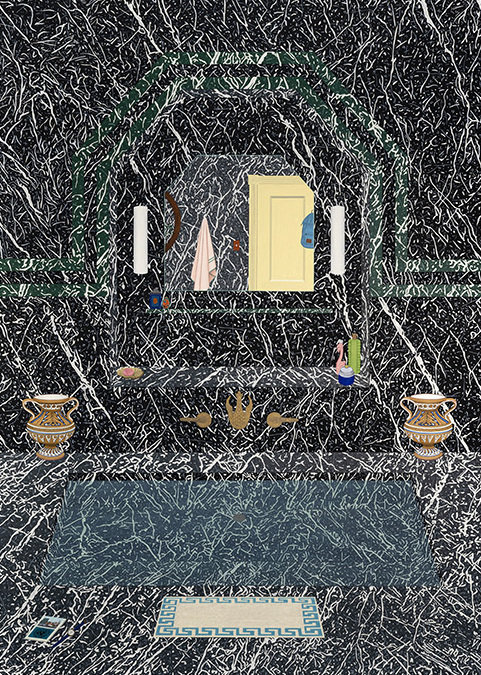
Becky Suss
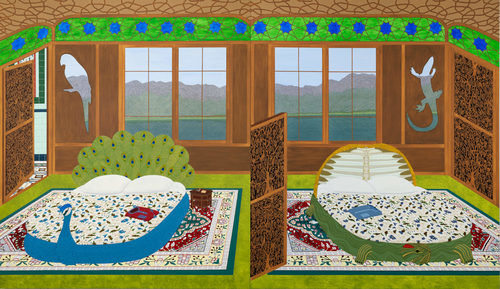
Becky Suss
(solo)
Jack Shainman Gallery
New York, NY
Feb 21–Mar 28, 2020
Will Heinrich on the Outsider Art Fair in The New York Times
Anthony Campuzano, Sarah Gamble, and Mark Mahosky’s works are on view at Offsite at Fitler Club through 2020 for its inaugural Artists in Residence program.
The Philadelphia Inquirer
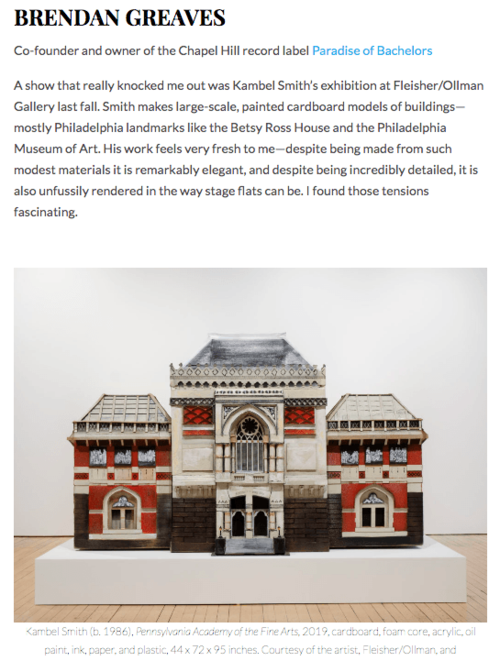
Kambel Smith: Philadelphia
Photo: Jessica Griffin for The Philadelphia Inquirer
Mark Mahosky
(solo)
University of Rhode Island
Kingston, RI
Nov 6–Dec 6, 2019
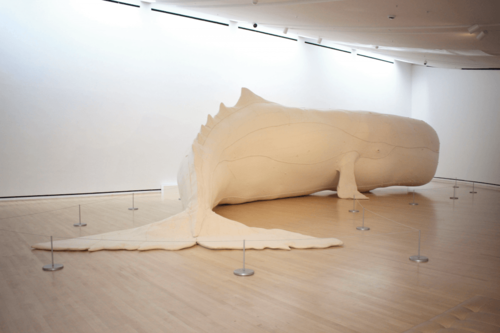
Tristin Lowe
(solo)
Curated by Rachel Reese
Telfair Museums, Jepson Center
Savannah, GA
Oct 11–Feb 16, 2019
Press:
A Whale of an Exhibition Connect Savannah
Taking the Deep Dive:Telfair Museums Presents ‘Summon the Sea! Contemporary Artists and Moby Dick’ Do Savannah
Isaac Tin Wei Lin
(group)
Scooters for Peace
Tokyo, Japan
Nov 2 – Nov 30, 2019
(group)
Oct 26, 2019 – Feb 17, 2020
SFMOMA, San Francisco
SFMOMA’s ‘Soft Power’ displays the influence of art in the 21st century
–San Francisco Chronicle
'Soft Power' showcases world-changing art
–San Francisco Examiner
Suss is the recipient of a 2019 Fellowship in the Arts from the Pew Center for Arts and Heritage.
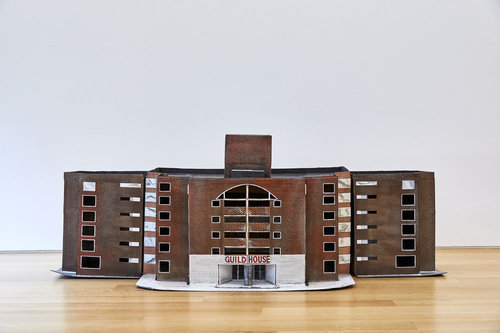
Kambel Smith
(solo)
Marlborough New York, Downtown
New York, NY
Oct 12–Nov 16, 2019
Julian Martin
(group)
FLAG Art Foundation
New York, NY
Oct 11–Dec 14, 2019
Edith Newhall on Mending and Repair in Response in The Philadelphia Inquirer
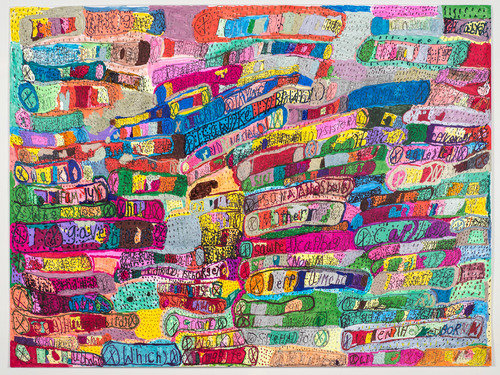
“Queen” Nancy Bell, Knicoma Frederick, Jenny Cox, Dwayne Boone, Paige Donovan, Geraldo Gonzalez
(group)
Group show curated by Alex Baker
Arts Project Australia
Melbourne, Australia
Sep 21–Oct 19, 2019
Jenny Cox, Saw Red Cap Bag, 2016, marker on paper, 18 x 24 inches, JCOX 21
Anthony Campuzano
(group)
Tiger Strikes Asteroid
Brooklyn, NY
Sep 6–Oct 6 2019
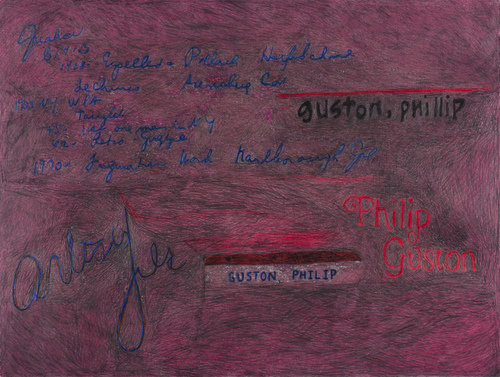
(group)
Philadelphia Museum of Art
Philadelphia, PA
on view through Dec 2019
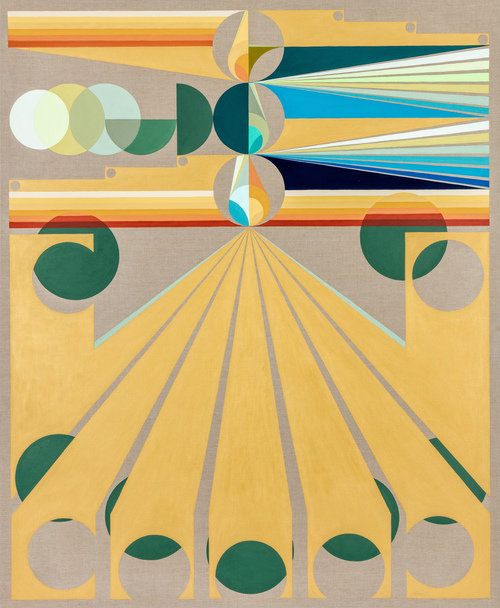
Trying to find our spot off in that light, light off in that spot, 2014, mercerized cotton stretched over cotton, 72 x 90 x 1 5/8 inches
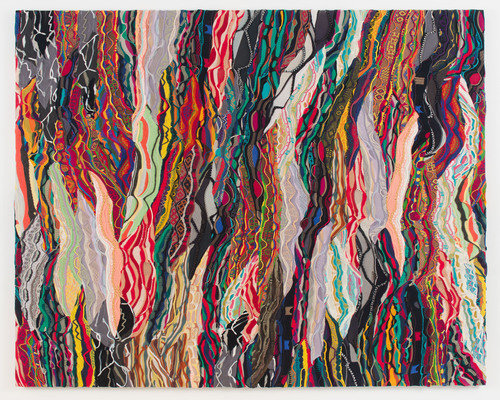
The Dufala Brothers
(group)
Organized by Rosario Güiraldes and Lisa Sigal, Open Sessions Curators
The Drawing Center
New York, NY
Aug 16–Sep 15, 2019
Reception: Aug 15, 6–8pm
Laura Raicovich on Lisi Raskin’s instructional video in Hyperallergic
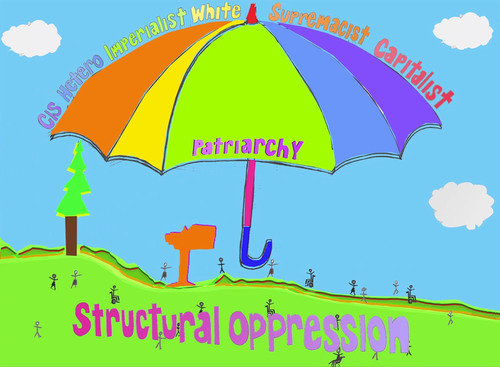
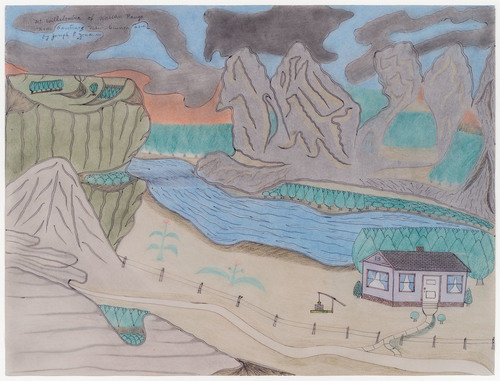
Joseph Yoakum
(solo)
Venus Over Manhattan
New York, NY
Jun 20–Jul 26 2019
Bill Walton, Pat Maguire
(group)
curated by Eileen Neff
Woodmere Art Museum
Philadelphia, PA
Jun 1–Sep 2, 2019
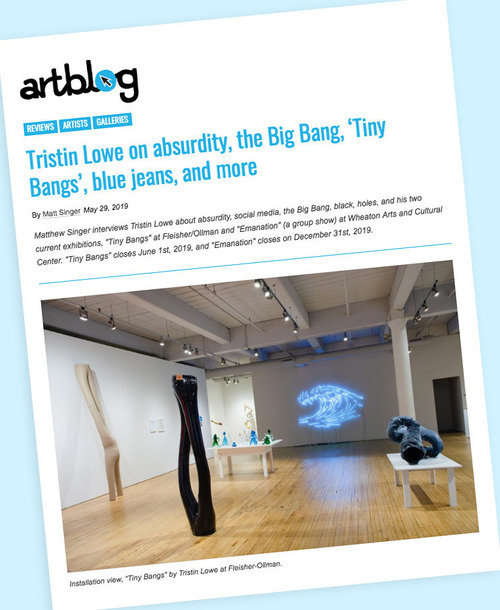
Matt Singer speaks to Tristin Lowe in The Artblog.
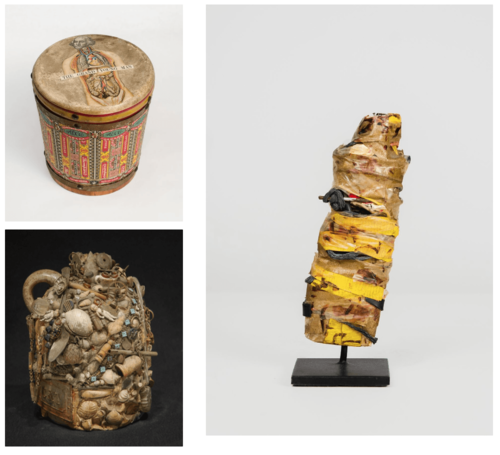
Works by Felipe Jesus Consalvos and Philadelphia Wireman, and a Memory Jug from Fleisher/Ollman’s collection are included in White Columns’ annual benefit auction.
Silent auction: May 18–29
Live auction: Wednesday, May 29, 6:30pm
White Columns
91 Horatio St, New York, NY
Information
Tickets available here.
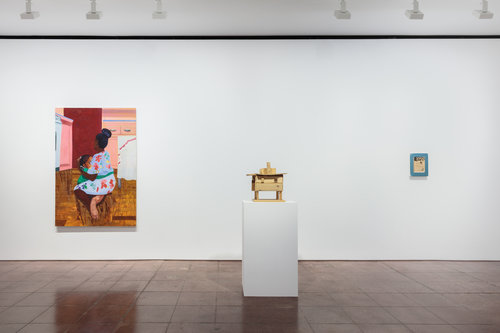
Becky Suss
(group)
curated by Adeze Wilford
Hales Gallery
New York, NY
Jun 6–Jul 20 2019
Kate Abercrombie
(group)
Mount Airy Contemporary
Philadelphia, PA
May 11 – Jun 15, 2019
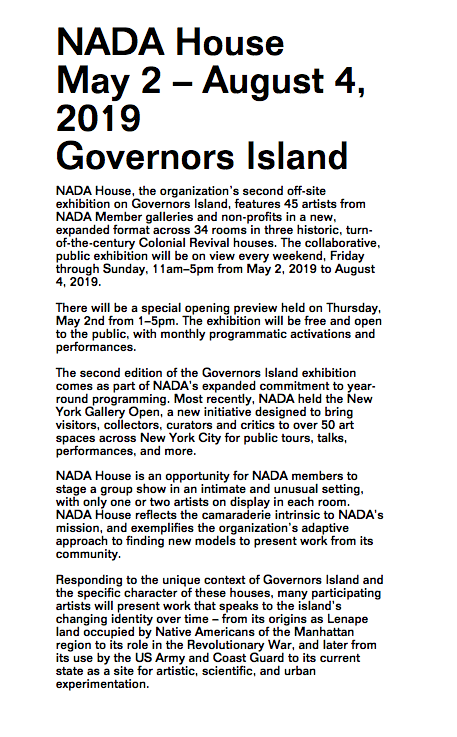
Joy Feasley and Paul Swenbeck will present a collaborative installation, Midnight Sun, sponsored by Adams and Ollman and Fleisher/Ollman
(group)
Colonels Row, Governors Island
New York, NY
May 4 2019–Aug 4 2019
Edith Newhall on Tiny Bangs in The Philadelphia Inquirer
Tristin Lowe
CBS Philly
Kambel Smith
Group show including Tristin Lowe, curated by Julie Courtney
WheatonArts, The Museum of American Glass
Millville, NJ
Apr 2–Dec 31, 2019
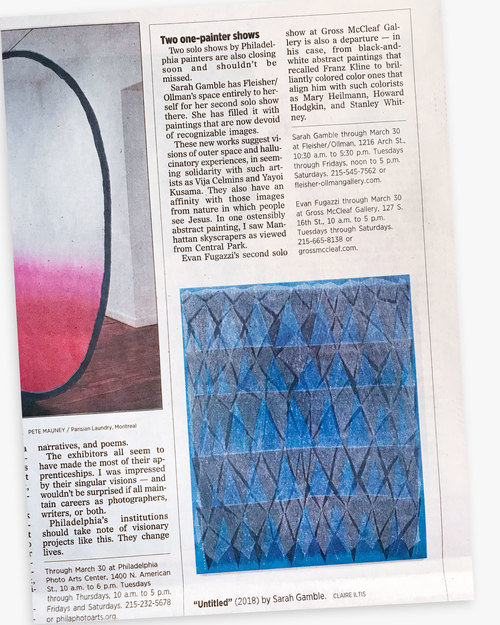
Matt Singer on Sarah Gamble: New Paintings
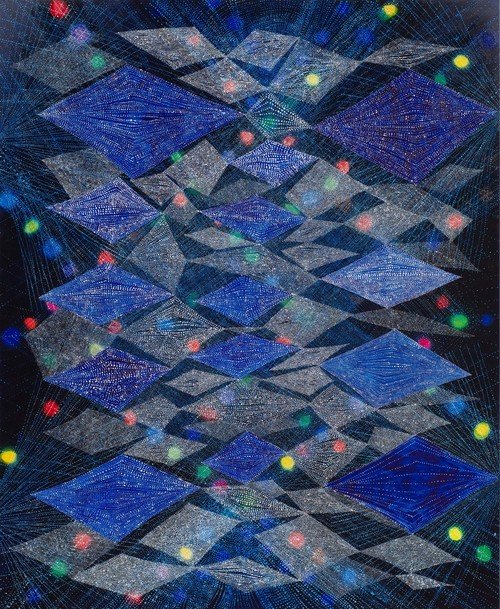
Edith Newhall on Sarah Gamble: New Paintings in The Philadelphia Inquirer
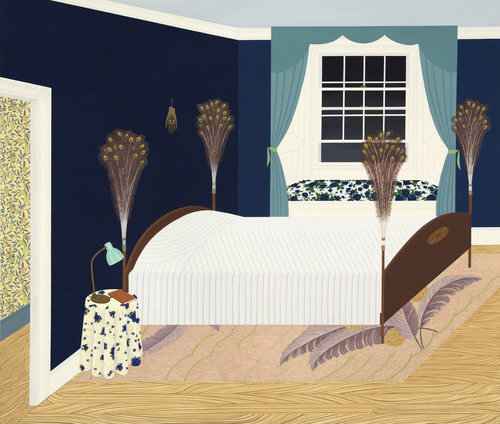
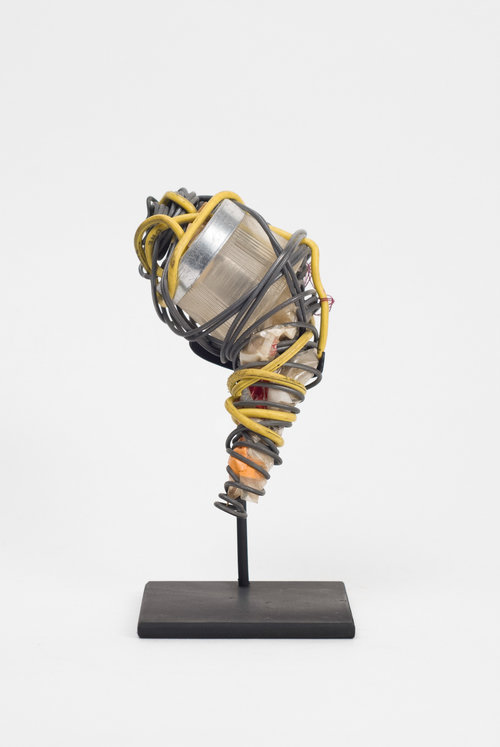
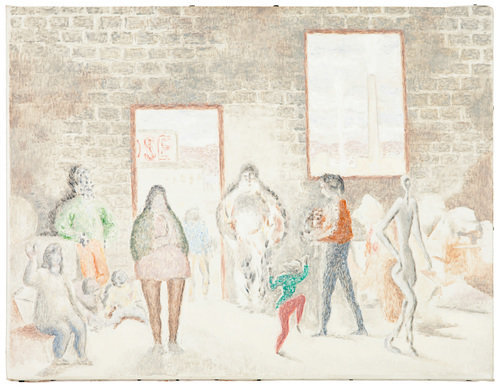
Nicholas Heskes on David Byrd at White Columns, New York
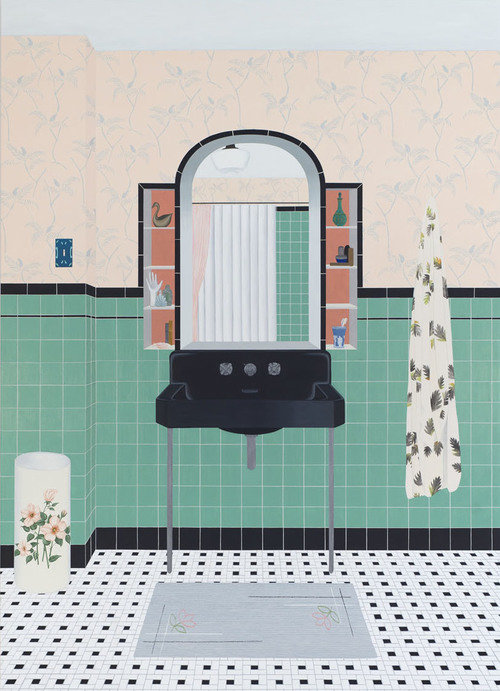
Anthony Campuzano and Felipe Jesus Consalvos on ARTnews.com
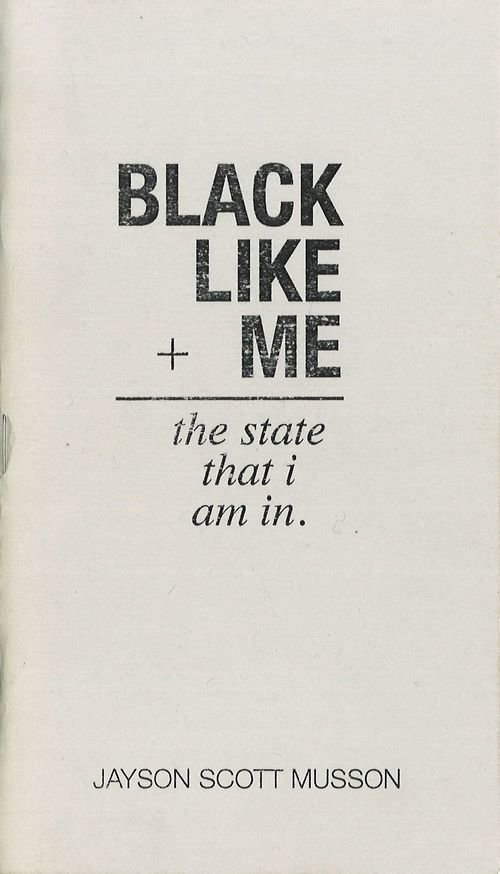
Jason Musson’s Black Like Me is included in this exhibition highlighting writers who have a hand in designing their own books.
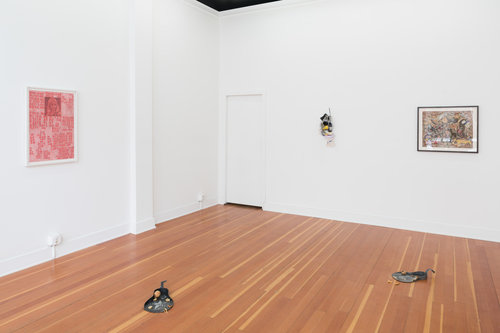
Spruance Art Gallery, Arcadia University
Feb 5–Apr 21, 2019
Malvern, PA
Mar 4–31, 2019
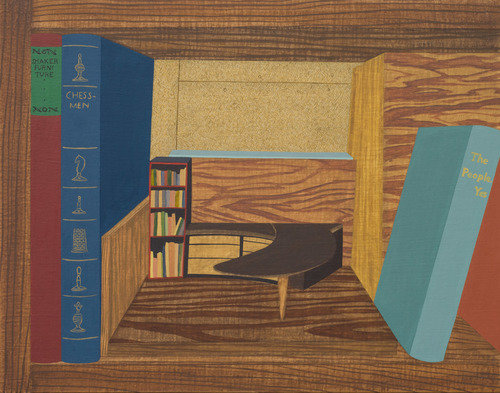
This presentation incorporates Becky Suss’s paintings of Esherick’s studio back into the studio itself, bringing Suss’s collaboration with the Esherick Museum full circle.
A panel discussion about being based in Los Angeles with Kelly Akashi, Kori Newkirk, Eamon Ore-Giron, and Mary Weatherford. Moderated by Naima Keith and Diana Nawi.
Organized by X-TRA
Frieze LA
Los Angeles, CA
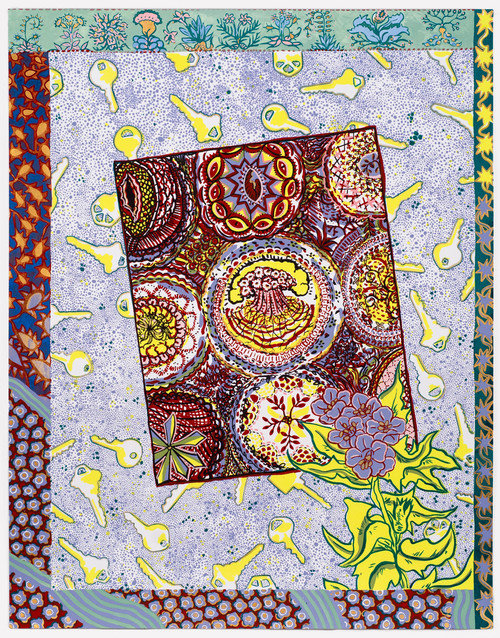
Henbane, 2018
5-color screen print with real and imitation gold paint
Edition of 25, + AP
Jennifer Levonian and Eva Wylie
Locust Projects
Miami, FL
Feb 13–Mar 30, 2019
Sarah Gamble: New Paintings in The Philadelphia Inquirer
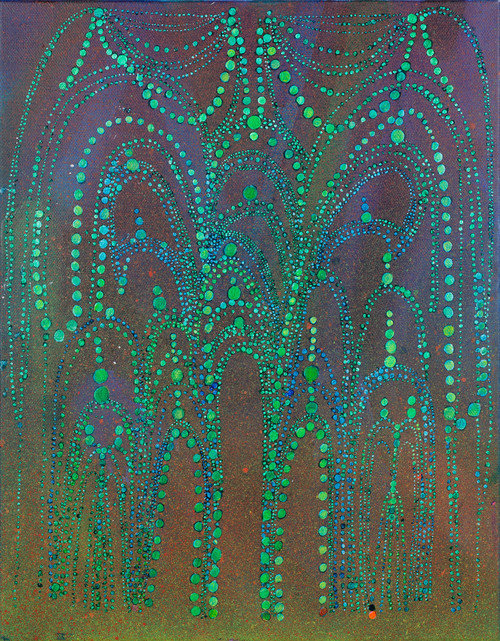
Group show including Anthony Campuzano and Felipe Jesus Consalvos
Adams and Ollman
Portland, OR
Feb 8–Mar 16, 2019
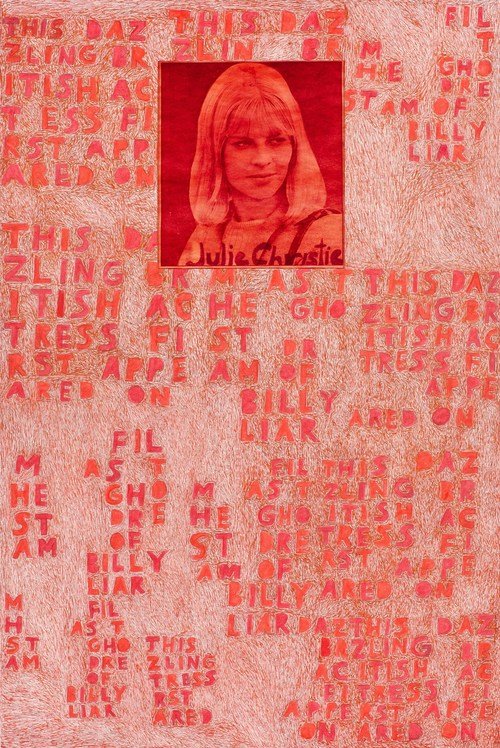
CBS Philly
Kambel Smith
Geraldo Gonzalez in the Delaware News Journal
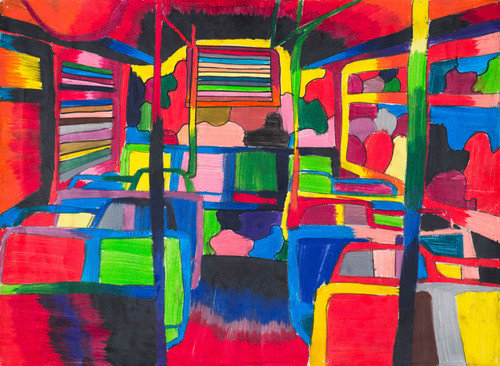
Metro Philly
Kambel Smith
Saturday, January 26, 2pm
Join us on the closing day of Becky Suss/Wharton Esherick for a conversation wtih Becky Suss; Wharton Esherick Museum's Executive Director, Julie Siglin, and Curator and Program Director, Laura Heemer; and Moderne Gallery's Founder and Co-Director, Robert Aibel.
A publication to accompany the exhibition will be available for purchase.
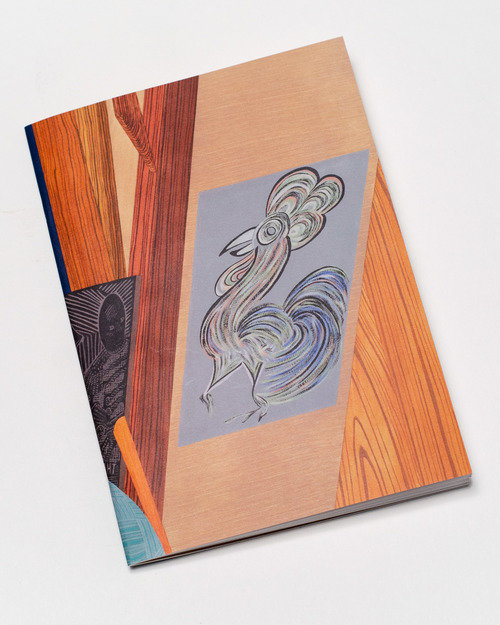
Outsider Art Fair in ARTnews
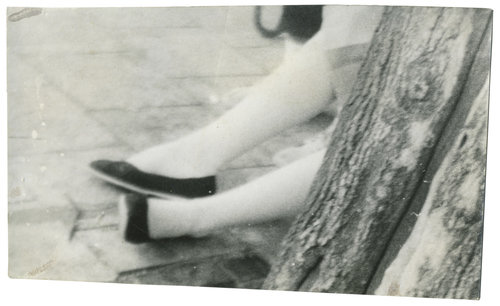
The Art Newspaper
Kambel Smith
Group show including Eamon Ore-Giron
Mandeville Gallery, Union College
Schenectady, NY
Jan 19 – Jun 16, 2019
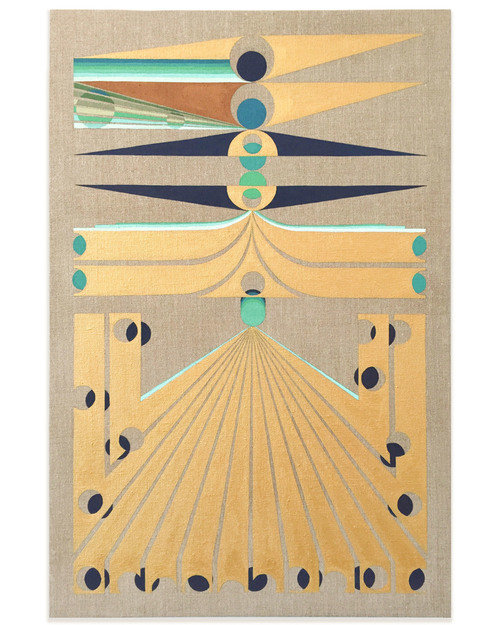
The New York Times
Kambel Smith
ARTnews
Kambel Smith
Edward M. Gómez on the Outsider Art Fair New York 2019 in Hyperallergic
Image: Queen Nancy Bell
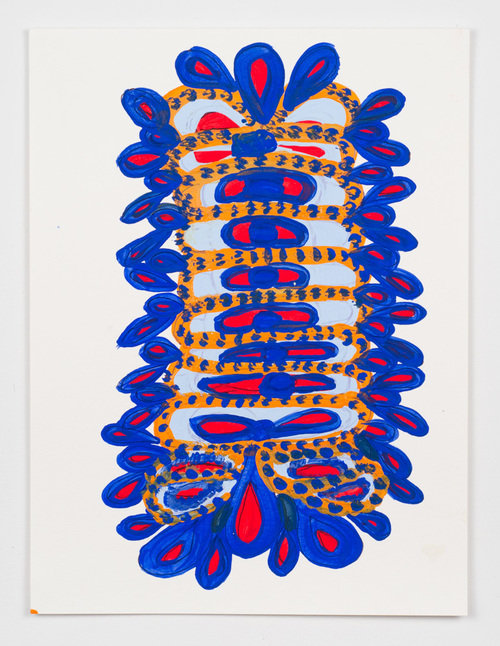
Mandy Palasik on Becky Suss/Wharton Esherick in The Artblog
Becky Suss
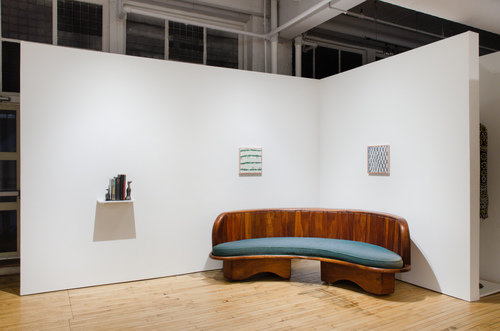
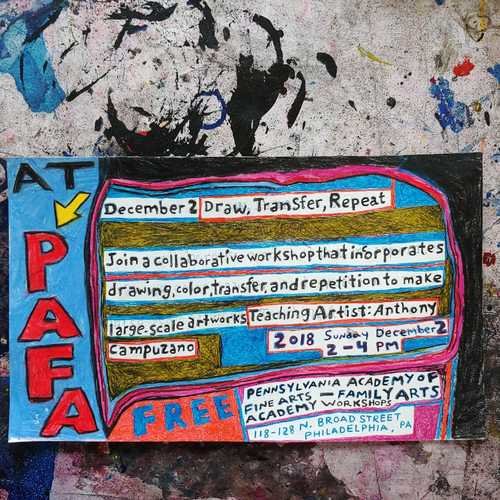
Drawing workshop led by Anthony Campuzano
December 2, 2018
2–4pm
Pennsylvania Academy of the FIne Arts
Join us at Fleisher/Ollman on the closing day of David Byrd: Patient Pondering for a conversation about the artist's life and work with the David Byrd Estate's Jody Isaacson.
Saturday, November 10
2pm
RedLine Art Center
Denver, CO
Nov 10–Dec 9, 2018
Group show featuring Sarah Gamble
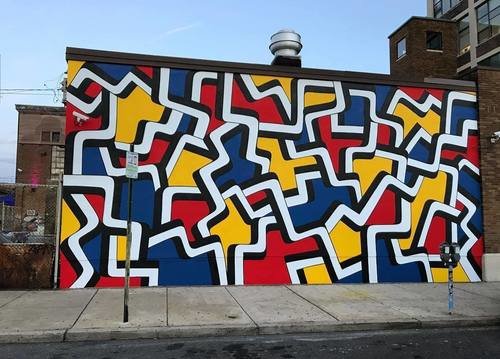
New mural by Isaac Lin at 421 N. 7th St, Philadelphia, in collaboration with Mural Arts.
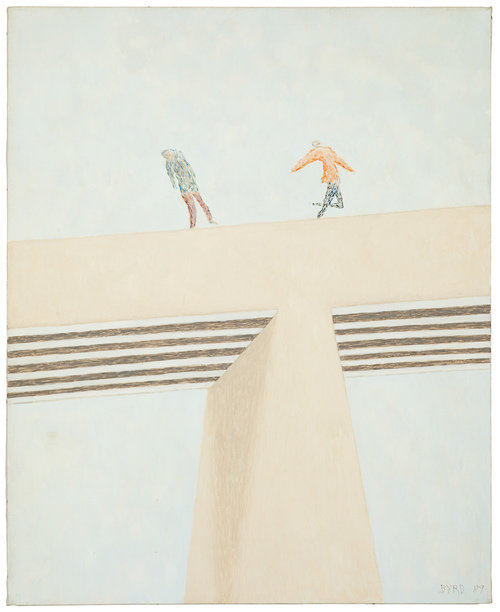
Lev Feigin on David Byrd in Hyperallergic
Edith Newhall in the Philadelphia Inquirer on Rochelle Toner at the Print Center
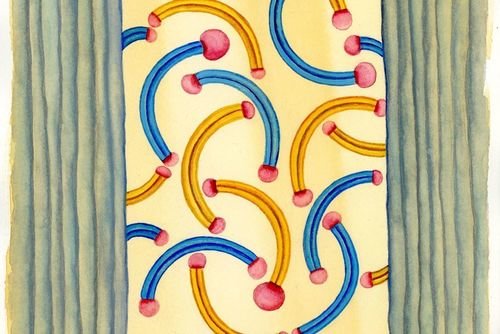
Group show featuring the Dufala brothers, organized by Rosario Güiraldes and Lisa Sigal
The Drawing Center
New York, NY
Oct 12–Dec 2, 2018
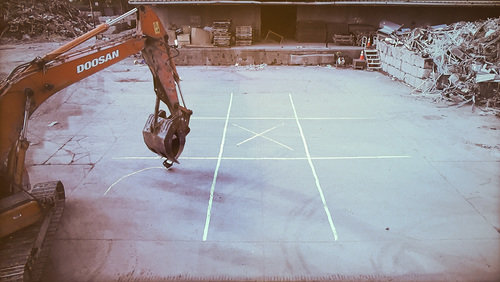
The premiere of Jennifer Levonian’s new animation
Temple Contemporary
Philadelphia, PA
Oct 18, 2018
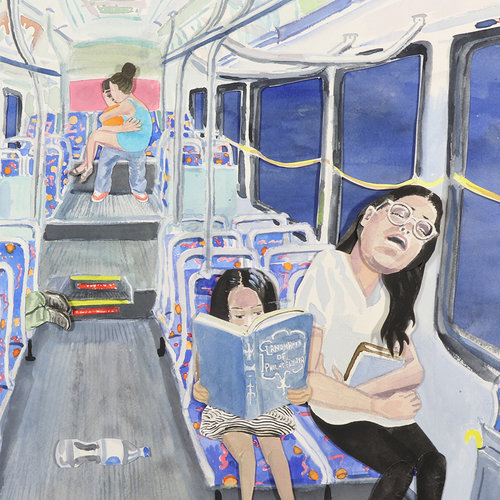
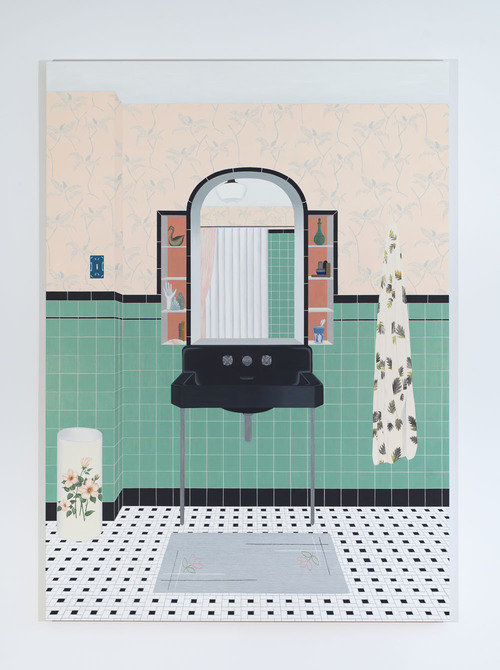
Organized by Philadelphia Contemporary
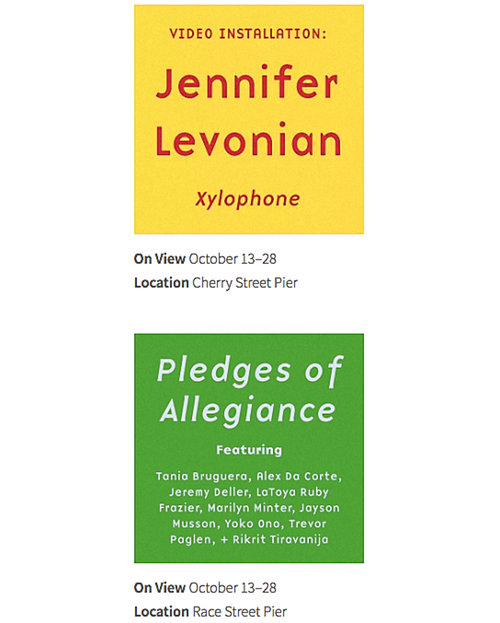
Jennifer Levonian’s Xylophone screens on the Cherry Street Pier
Jayson Musson's contribution to Pledges of Allegiance flies on the Race Street Pier
Philadelphia, PA
Oct 13–27, 2018
University of Michigan Museum of Art
Ann Arbor, MI
Oct 6, 2018–Jan 13, 2019
Needles and Pens
San Francisco, CA
Opening reception:
Saturday, October 6, 2018, 6–9pm
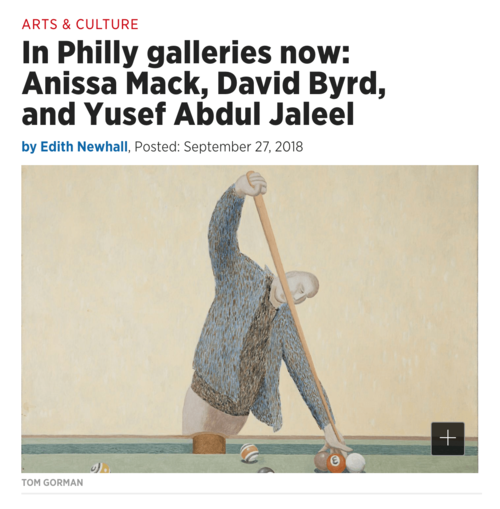
Edith Newhall on David Byrd: Patient Pondering
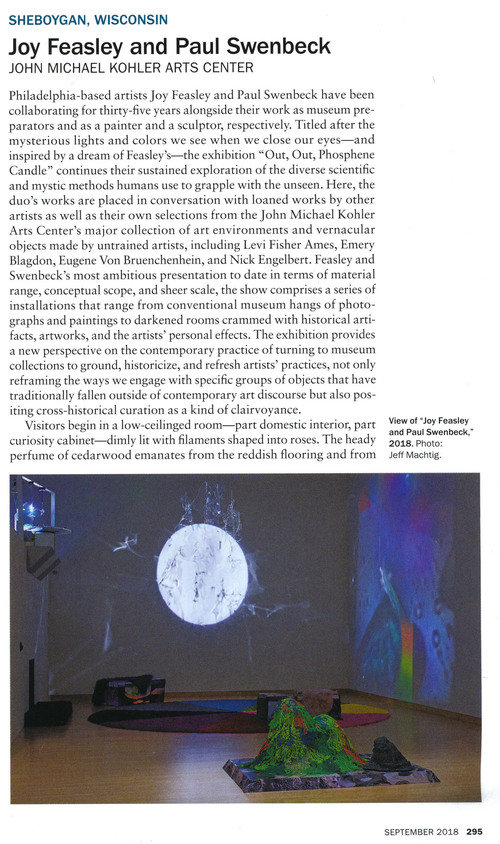
Bea Huff Hunter reviews Out, Out, Phosphene Candle at the John MIchael Kohler Arts Center
Group show including Eamon Ore-Giron, curated by Owen Duffy
Peana
Monterrey, Mexico
Sep 6–Nov 6, 2018
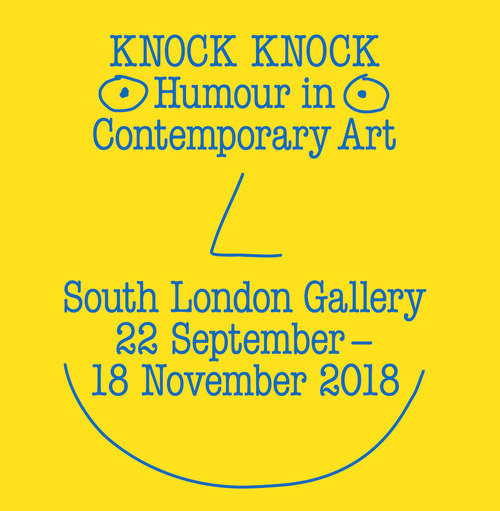
Group Show including Jayson Musson, curated by Margot Heller with artist Ryan Gander
South London Gallery, London
Sep 22–Nov 18, 2018
Becky Huff Hunter on Chris Corales’s A Passer-By in His Own Moment on Artforum.com
Aug 2–5, 2018
Jennifer Levonian's animation, Xylophone, is included in the fair's on-site program curated by Nato Thompson.
Presented by Adams and Ollman, Portland
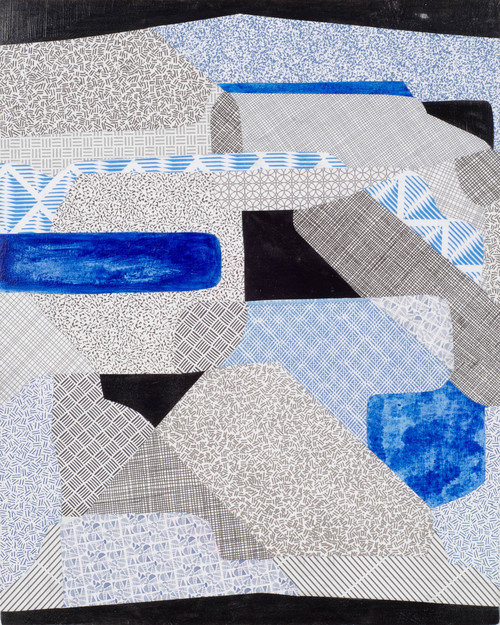
(group show)
Lisson Gallery
New York, NY
curated by Cory Arcangel and Tina Kukielski
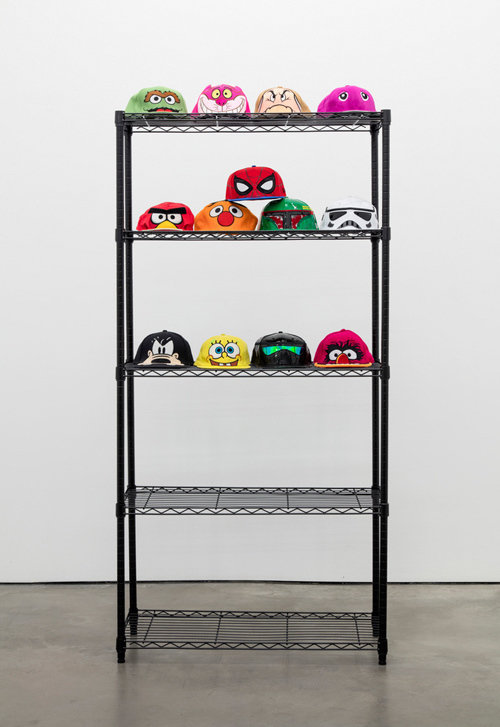
Adams and Ollman, Portland; and Chapter NY present a three-person exhibition including Joy Feasley.
Chapter NY
New York, NY
Jun 29–Jul 27, 2018
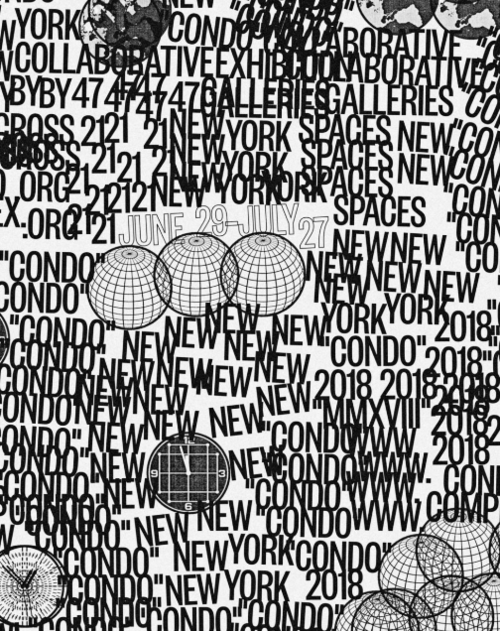
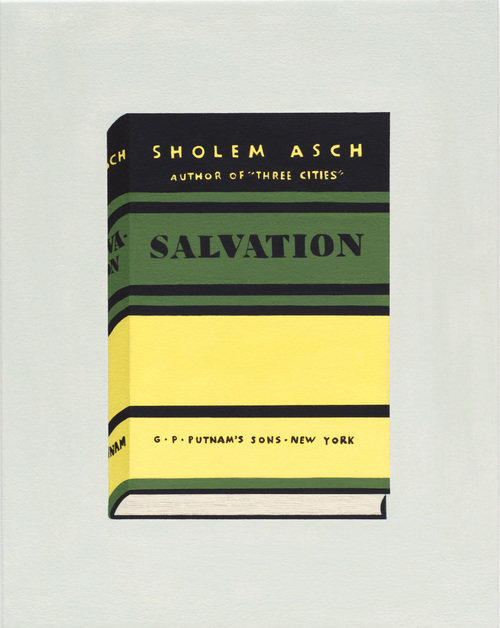
Jun 24–Oct 13, 2018
Museum of Contemporary Art
Chicago, IL
Group show featuring Jayson Musson
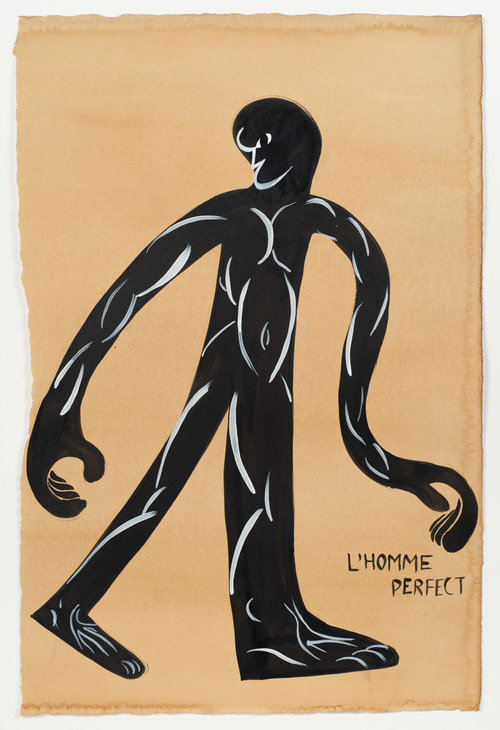
The annual White Columns benefit includes works by Felipe Jesus Consalvos, Julian Martin (donated by Arts Project Australia), Philadelphia Wireman, and Jayson Musson.
Friday, June 22, 2018, 7pm
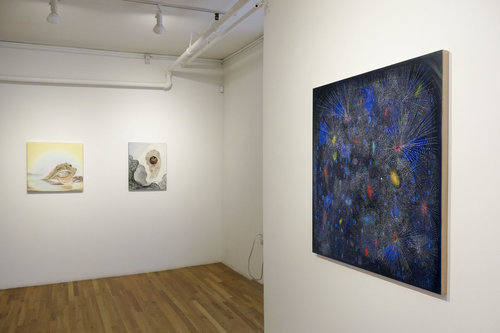
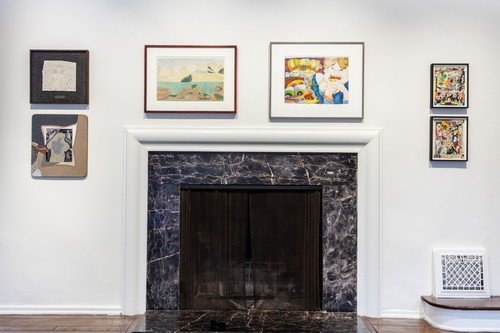
Intuit: The Center for Intuitive and Outsider Art
Chicago, IL
Jun 9, 2018–Jan 6, 2019
Group exhibition featuring ten artists including Joseph Yoakum and Lee Godie, curated by Kenneth Burkhart and Lisa Stone
Organized and traveled by Intuit: The Center for Intuitive and Outsider Art, and traveling to Halle Saint Pierre, Paris, March 23 - August 2, 2019; Prinzhorn Collection, Heidelberg, September 2019–January 2020; Collection de l’Art Brut, Lausanne, March 6–August 30, 2020; and Outsider Art Museum, Amsterdam, September 2020–March 2021.
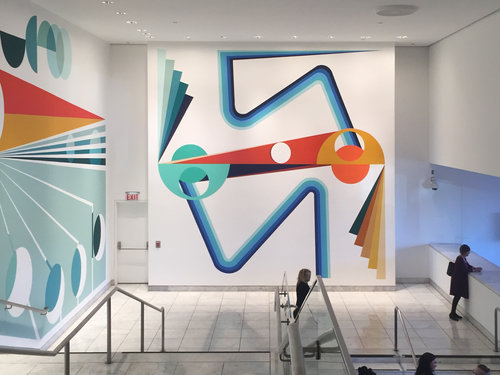
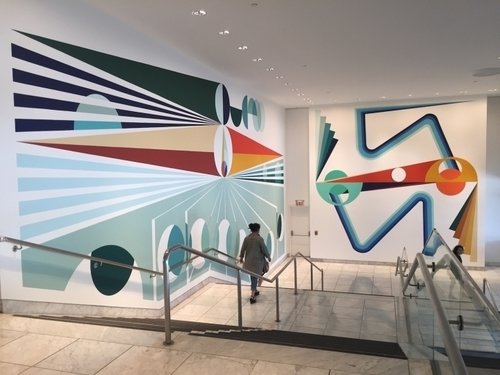
Made in LA
(Group show)
Hammer Museum
Los Angeles, CA
Jun 3–Sep 2, 2018
Organized by Anne Ellegood, senior curator, and Erin Christovale, assistant curator, with MacKenzie Stevens, curatorial associate.
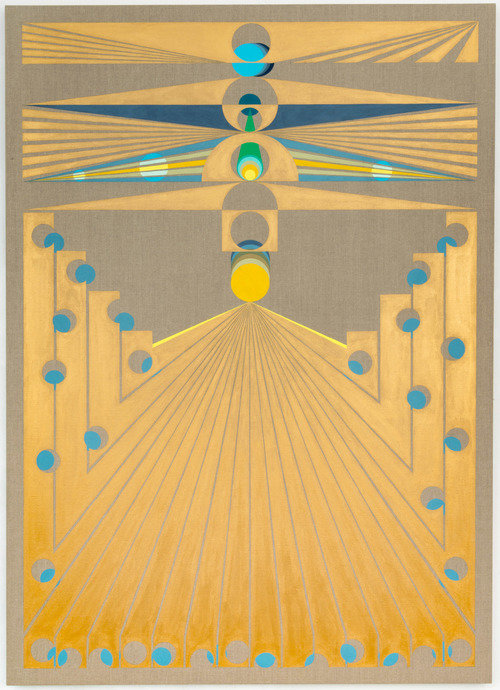
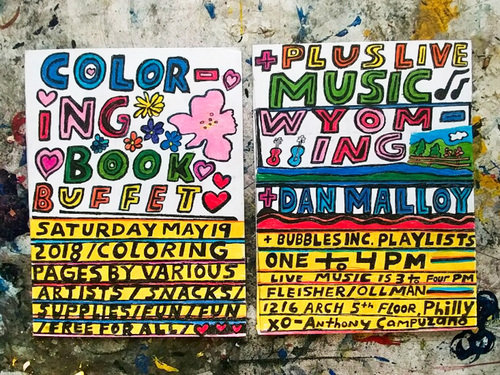
Campuzano has invited artists to submit coloring book pages for an all-ages afternoon coloring event at Fleisher/Ollman. Supplies provided.
Saturday, May 19
1–3PM: Coloring Book Buffet
3–4PM: Live Musical guests Wyoming and Dan Malloy
Fralin Art Museum
University of Virginia
Charlottesville, VA
May 18–Sep 30, 2018
Group show featuring Becky Suss
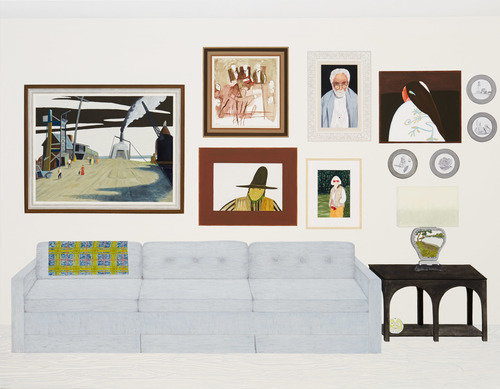
Anthony Campuzano: Venture Inward in Artnet News
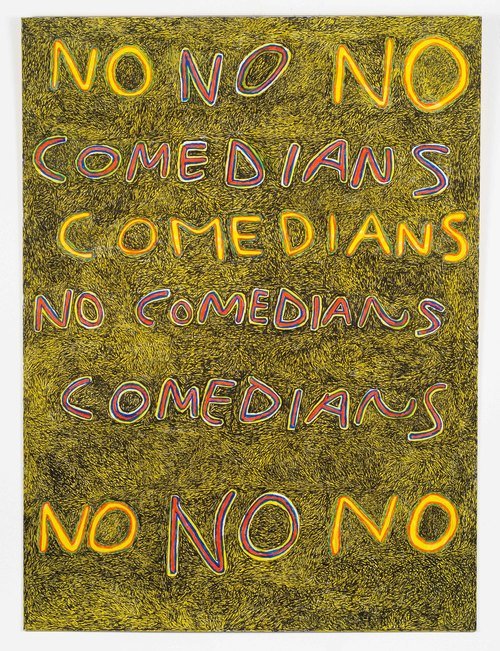
Press for Talisman in the Age of Difference at Stephen Friedman Gallery
UK artist Yinka Shonibare brings African and diaspora artists to London
—The Art Newspaper
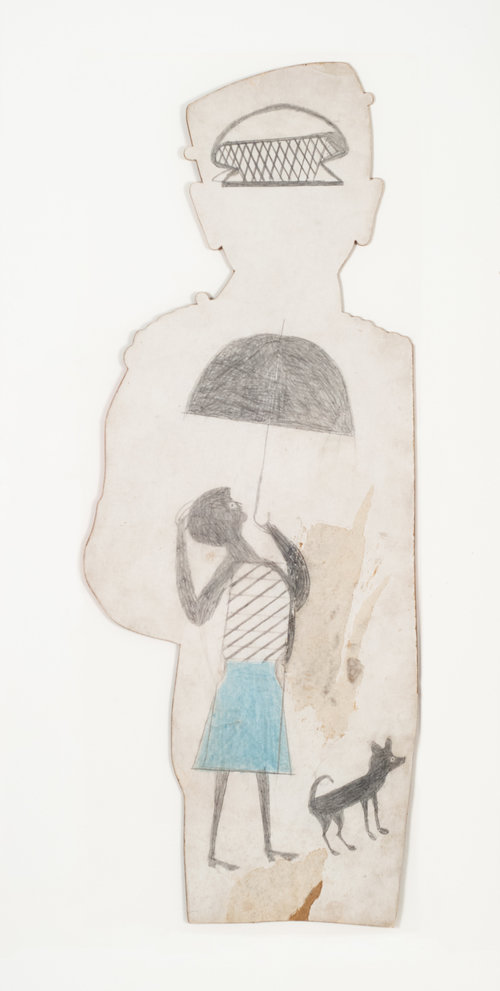
*update: to contribute toward Chris's family's present and future expenses, visit www.gofundme.com/chris-corales
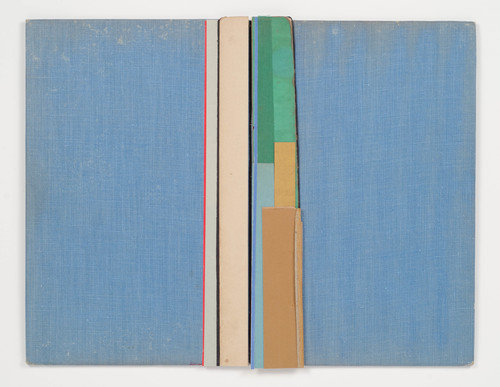
It is with great sadness that we share the passing of Chris Corales, an artist first introduced to Fleisher/Ollman by Chris Johanson in the 2011 summer show he curated for the gallery, entitled Introspective/Retrospective. At the opening reception of this exhibition Corales met, and fell in love with, then Philadelphia Museum of Art curator Adelina Vlas, and relocated to Philadelphia from Portland, Oregon soon after. The couple married and moved to Toronto a few years later, where Adelina took a curatorial position at the Art Gallery of Ontario. In 2015, they had a son, Nikola (Niko).
Chris was a good-humored character whose keen wit could light up a room. His signature constructions comprised of antique paper, old book covers, and binding tape imbued a minimal austerity with human warmth. While Chris lived in Philadelphia only a few short years, he made many friends in the art community here, and will be greatly missed. Our deepest sympathies go out to Adelina and Niko, and to all of Chris’ family and friends during this difficult time. A memorial for Chris will take place in Philadelphia this summer.
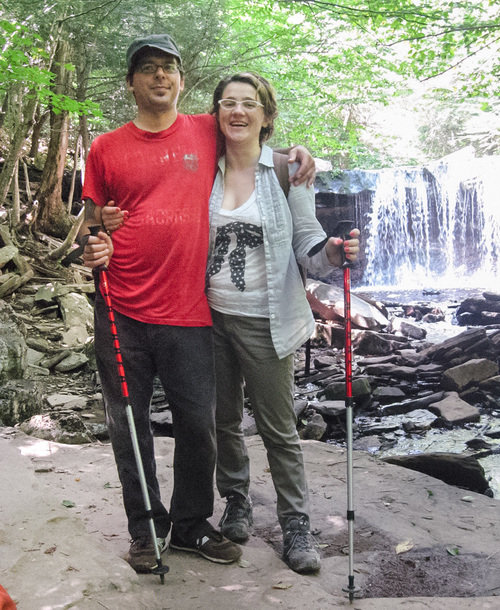
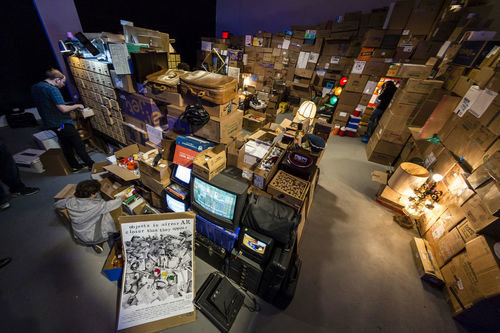
Steven and Billy Dufala have been invited to participate in the Drawing Center's 2018–2019 Open Sessions.
Bill Walton's first solo show outside of the U.S. opens with a private viewing Thursday, april 26, 2018
Bill Walton
Frith Street Gallery, London
Exhibition dates:
27 April 2018 – 23 June 2018
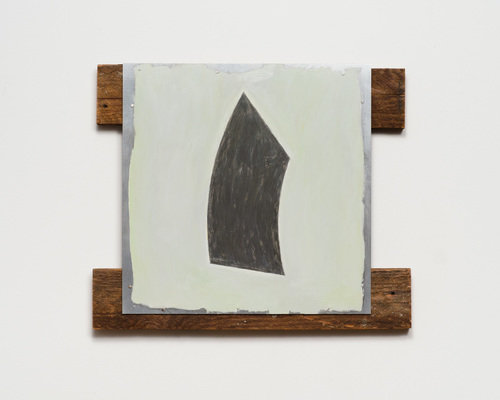
Edith Newhall in The Philadelphia Inquirer
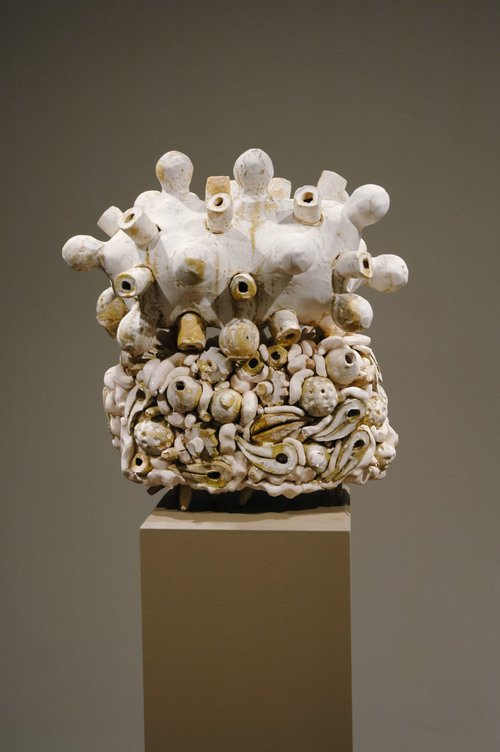
Annabeth Rosen has received a 2018 Guggenheim fellowship.
Mount Airy Contemporary at Intuitive Art Space
4236 Main Street, Philadelphia PA 19127
Apr 18–Jun 27, 2018
The Poetry Winner
Edge of Frame
Flatpack Festival
Birmingham, England
April 20, 2018
Video interview with Paul Swenbeck and Joy Feasley at Kohler Arts Center
(group)
John Michael Kohler Art Center
Sheboygan, Wisconsin
Feb 25–Sep 02, 2018
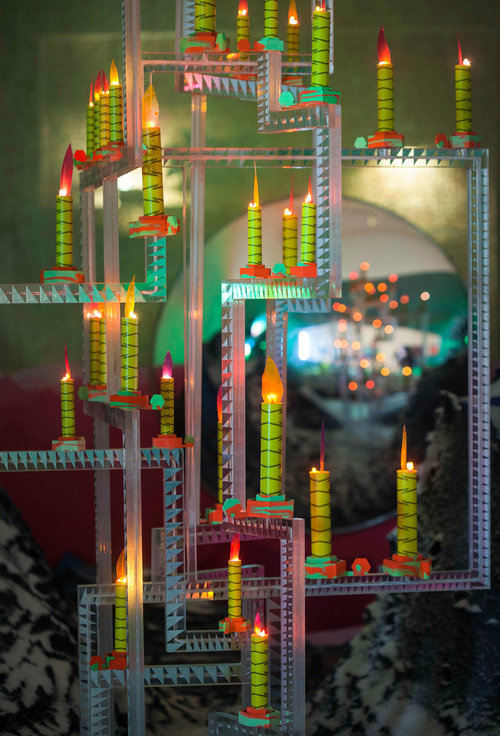
Photo: Kohler Co., John Michael Kohler Arts Center
“Conjuring the Demons and Mysteries of Society through Painting”
—Stan Mir in Hyperallergic
Kate Abercrombie, Trevor Winkfield, Collage as Painting
National Gallery of Art
Washington, DC
Jan 28–May 13, 2018
Curated by Lynne Cooke, and including Eugene Von Bruenchenhein, James Castle, Howard Finster, Sister Gertrude Morgan, Gladys Nilsson, Jim Nutt, Elijah Pierce, Horace Pippin, Christina Ramber, Martín Ramírez, Edgar Tolson, Bill Trayor, P.M. Wentworth, H.C. Westermann, Joseph Yoakum, Forrest Bess, Roger Brown, William Edmondson, Lee Godie, Morris Hirshfield, among others.
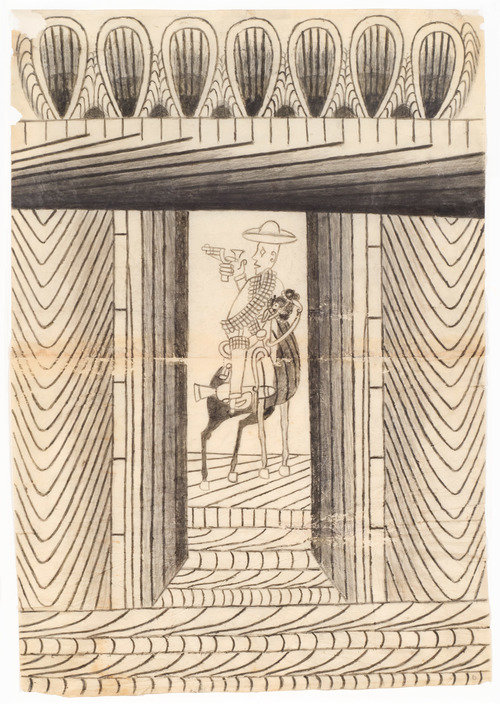
The Outsider Fair Once More Confirms That Art
Is Everywhere
The New York Times
Outsider Art Fair New York 2018
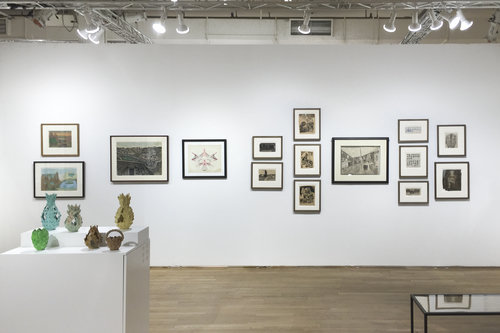
Pardon My Language (group)
Zidoun Bossuyt Gallery
Luxembourg
Jan 19–Mar 3, 2018
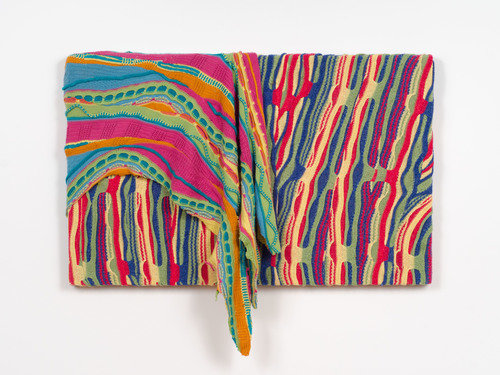
“Like a perfectly matched duet; In ‘Collage as Painting’ at Fleisher/Ollman, two artists’ works are a study in synchronicity”
—Edith Newhall
Kate Abercrombie, Trevor WInkfield, Collage as Painting
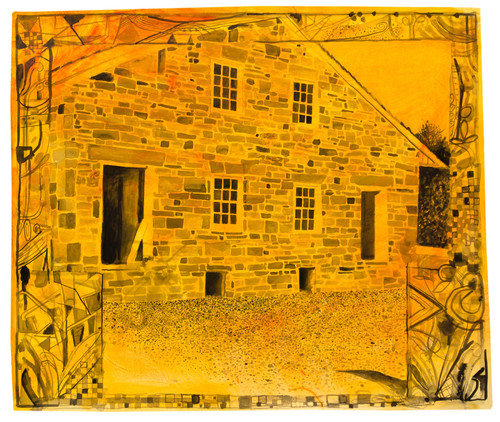
Adams and Ollman
Portland, OR
Oct 20–Nov 22, 2017
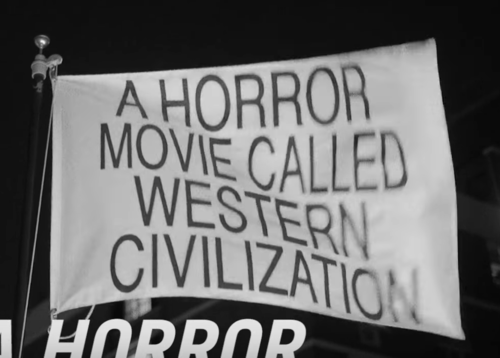
Jayson Musson and Alex Da Corte are among sixteen artists commissioned by Creative Time to create flags representing issues of personal significance that will fly, individually, above Creative Time's headquarters, as well as partner sites nationwide. Pledges of Allegiance was conceived by Alix Browne and developed in collaboration with Cian Browne, Fabienne Stephan, and Opening Ceremony.
Edith Newhall on Alchemy, Typology, Entropy in The Philadelphia Inquirer
The Barnes Foundation
Jun 30–Oct 2, 2017
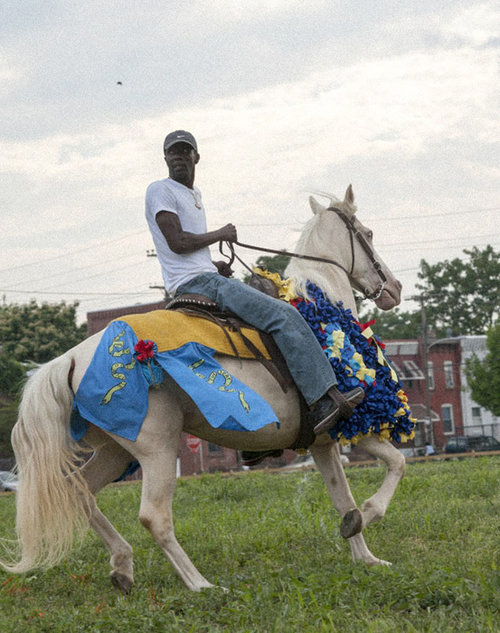
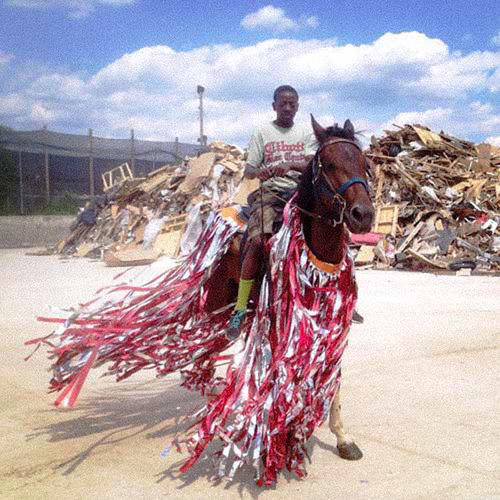
In 2014 artist Mohamed Bourouissa invited Philadelphia artists, including Anthony Campuzano & Kate Abercrombie, and Billy Dufala, to create costumes for the horses in a horse tuning event he was filming at a North Philadelphia stable. The resulting film, costumes, and ephemera have been exhibited at Kamel Mennnour, Paris; and the Stedelijk Museum, Amsterdam; and are currently on view at the Barnes Foundation, Philadelphia.
Eugene Von Bruenchenhein
John Michael Kohler Arts Center
Sheboygan, WI
Jun 25, 2017–Jan 14, 2018
The Times
FLAG Art Foundation
June 1 - August 11, 2017
A Mind in a Field of Time
(solo)
Marginal Utility,
Philadelphia, PA
Becky Huff Hunter reviews the exhibition in Artforum.
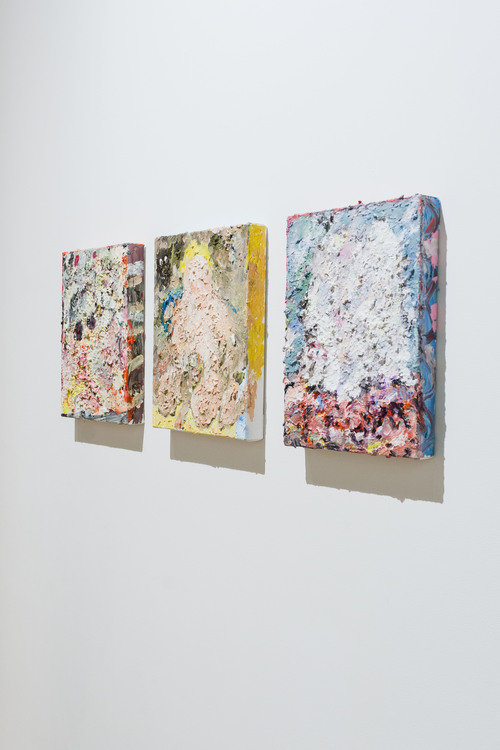
“Galleries: Chaos and cryptic meanings”
Edith Newhall in The Philadelphia Inquirer
Isaac Tin Wei Lin, Patrick Maguire, Reed Anderson, Sarah Walker
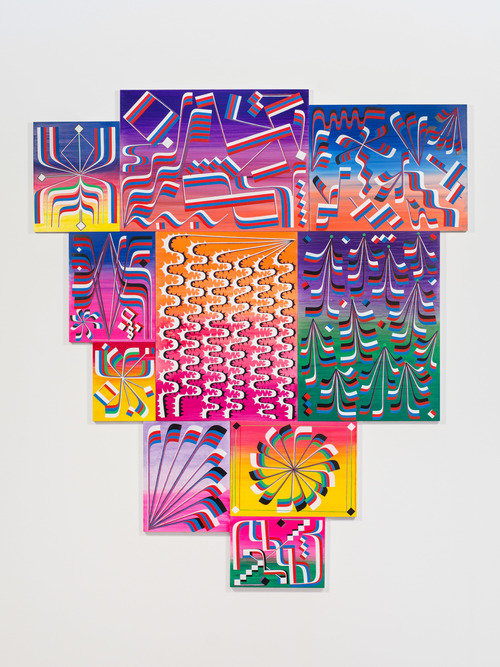
Philadelphia Museum of Art
Mar 31, 2017
A Dada-inspired, temporary installation in the galleries for the museum’s Final Fridays program.
in Hyperallergic
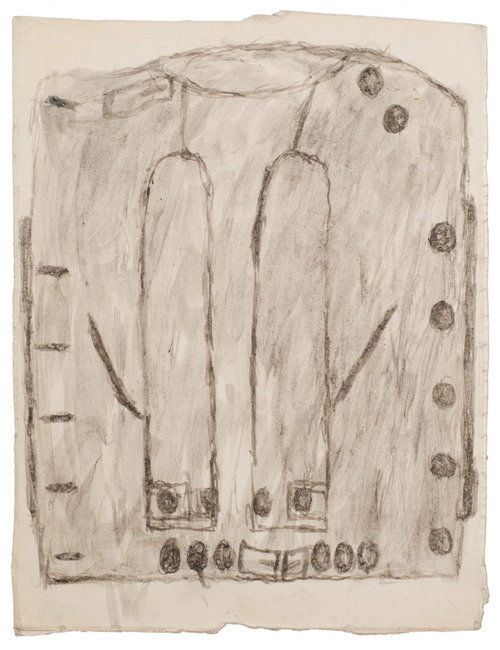
Woodmere Art Museum
Chestnut Hill, PA
Feb 04–May 21, 2017
Including The Dufala Brothers, Anne Minich, Rochelle Toner, and Bill Walton
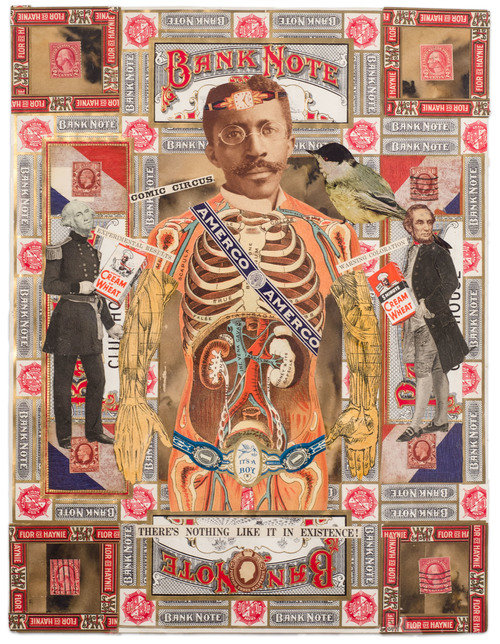
Marcia Wood Gallery
Dec 10, 2016–Jan 05, 2017
Roberta Smith on Dreamlands: Immersive Cinema and Art, 1905-2016 at the Whitney Museum in The New York TImes
Nov 12 – December 23, 2016
Luise Ross Gallery, New York
in ARTnews.com
Telfair Museums, Jepson Center
Sep 30–Nov 20, 2016
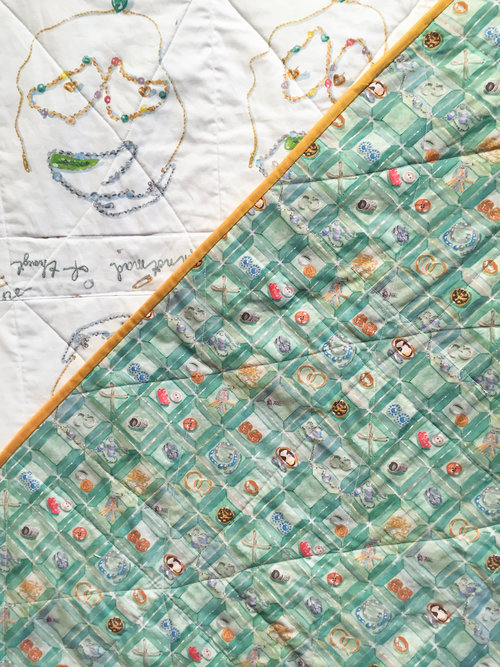
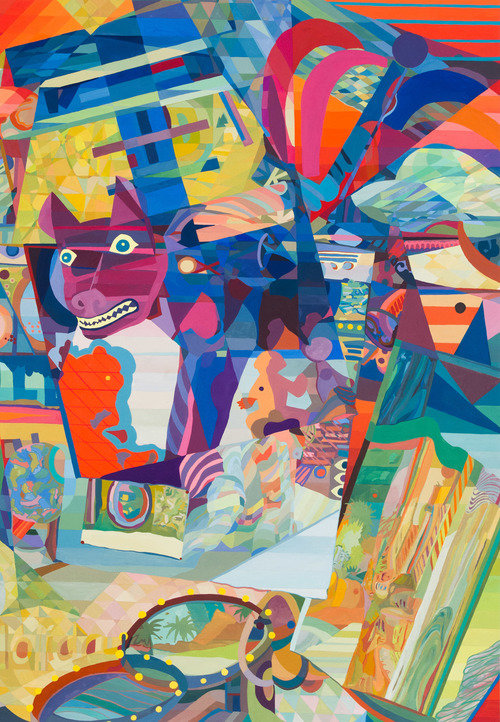
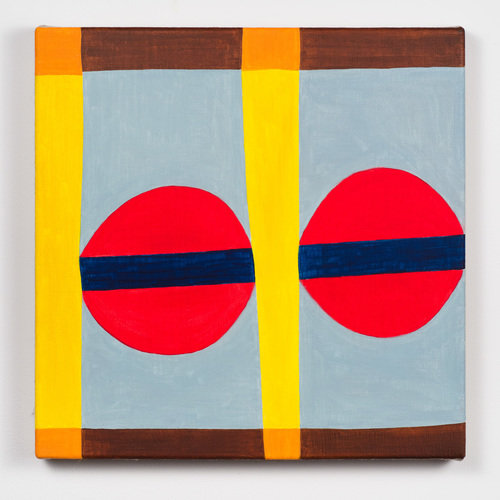
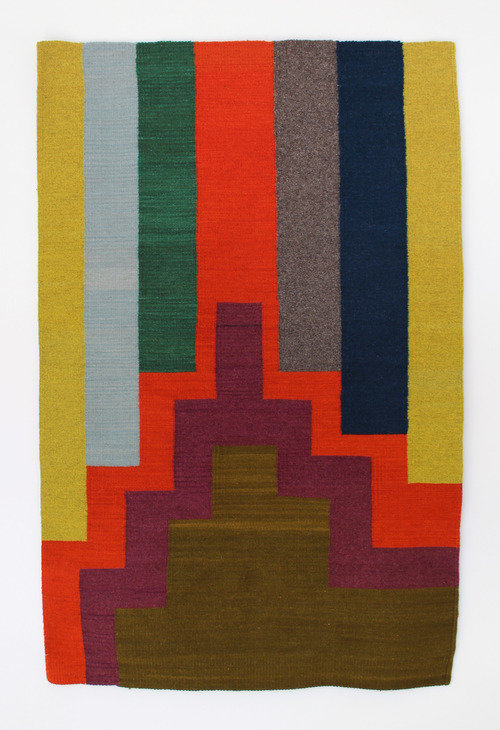
"In this moment of overwhelming election season stupidity, when so much of the media we encounter every day is message-manipulated nonsense, let us refresh the senses with some blessed higher-thinking abstraction. Color stimulates the mind. An orange circle, a deep green stripe. New Geometries, opening tonight (reception 6-8 pm) at the Fleisher/Ollman, provides an aesthetic sanctuary that hits the reset button in just the right way. The exhibit even has a little accompanying publication to take home with you."
Joey Sweeney in Philebrity.com
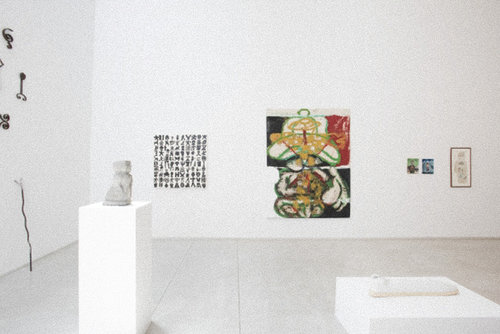
Billy and Steven Dufala, William Edmondson, and Bill Traylor are included in "A Being in The World" at Salon 94 Bowery, curated by Jayson Musson and Fabienne Stephan.
A Being in The World
June 29, 2016–July 29, 2016
Salon 94 Bowery
Adams and Ollman
Portland, OR
Jul 15–Aug 13, 2016
Including: Charles Burchfield, Joy Feasley, Johanna Jackson, Chris Johanson, Paul Swenbeck, Agatha Wojciechowsky
Bennington Museum
Bennington, VT
May 07–Jul 31, 2016
Press for Becky Suss at Institute of Contemporary Art, University of Pennsylvania:
Philadelphia Inquirer
Artfoum.com: Critics' Picks
Modern Painters: Artists to Watch

All of us here at Fleisher/Ollman mourn the loss of our neighbor and friend Marion ('Kippy') Boulton Stroud. Her sudden death is an immeasurable loss to Philadelphia and the art world at large. Renowned for her support of artists' projects in both fiber-based and new media, as well as for bringing international artists into our midst, Kippy was a boon to Philadelphia. She made the Fabric Workshop and Museum a place where truly inventive works of art could be realized and seen on the world stage.
Many of the artists Fleisher/Ollman represents created amazing works at FW&M with Kippy's unwavering support, including Howard Finster, Bill Walton, Tristin Lowe and Paul Swenbeck. We will always be indebted to her for this.
More than anything though, we'll miss her as a friend, cheerleader and artistic visionary. She challenged all of us to look beyond the known. No challenge was too big or too difficult that it couldn't be met. It is this quality of Kippy we will miss the most.
Personally, I am thankful for her support of the gallery and what we do. I hope she understood how much that support meant to me.
John Ollman
Felipe Jesus Consalvos makes an appearance on Harper's Magazine's Monday Gallery.
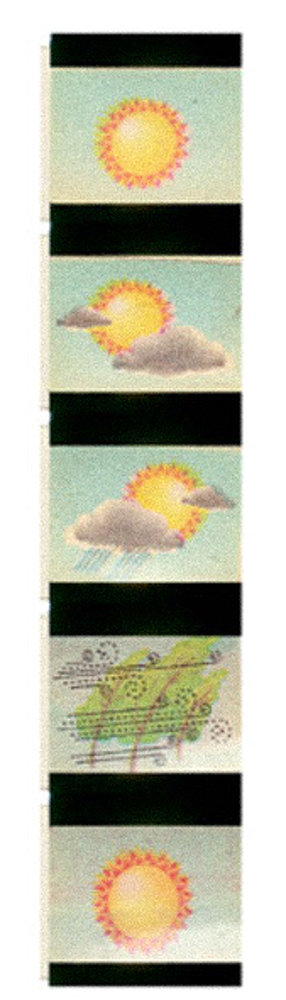
Campuzano's piece 'Forecast,' is on view at the Philadelphia Museum of Art for the first time since it was acquired by the Young Friends for the museum in 2013. All are welcome to a discussion and presentation of the work with Campuzano and Assistant Curator of Contemporary Art, Amanda Sroka.
Artist Talk with Anthony Campuzano
Wednesday, August 19, 2015
Starts at 7:15 p.m.
Location: Gallery 179
Free after admission to the museum
Swenbeck is included in:
Tiger Tiger
Salon 94 Bowery
Jul 07–Aug 21, 2015
Michael Assiff, Jules de Balincourt, Brian Belott, Katherine Bernhardt, Karin Gulbran, Shara Hughes, Marc Hundley, Misaki Kawai, Makiko Kudo, Nikki Maloof, Ryan Mrozowsky, Nicolas Party, David Benjamin Sherry, Yutaka Sone, Paul Swenbeck
Gamble and Swenbeck are both included in Cam Raleigh's group exhibition, 'The Nothing That Is: Chapter 1 DDDRRRAAAWWWIIINNNGGG,' curated by Bill Thelen and Jason Polan.
CAM Raleigh, Raleigh, NC
June 5–September 7, 2015
Open Field
Group show featuring Kate Abercrombie, Anthony Bowers, Shelby Donnelly, Chris Landau, Andrea Marquis, Lauren Sauder, Rebecca Saylor-Sack, Mary Smull, and Kate Stewart
Opening: Friday August 7, 6–10pm
August 7–30, 2015: Saturdays and Sundays, 2–6pm
Tiger Strikes Asteroid
319 N. 11th St, 2H
Philadelphia, PA
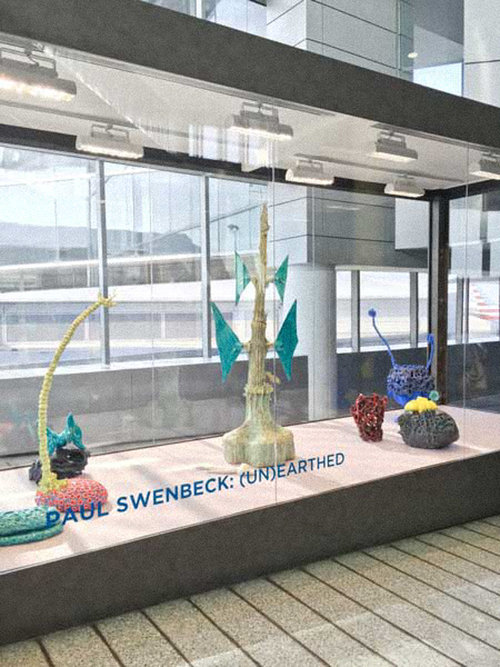
Paul Swenbeck's (Un)Earthed is on view for ticketed passengers in Terminal A-West at the Philadelphia International Airport, through January 2016.
July 16–August 15, 2015
Adams and Ollman
Portland, OR
Summer Group Exhibition
June 18- August 1, 2015
Edward Thorp Gallery
New York, NY
The Dufala brothers were invited to jury the 74th annual Woodmere Annual, which also features selections of their work.
Woodmere Annual
June 27–September 7, 2015
Gallery Talk with the artists
July 11, 3:00 pm – 4:00 pm
$15 ($10 members)
Closing Reception
September 7, 2:00 pm – 4:00 pm
Free and open to the public
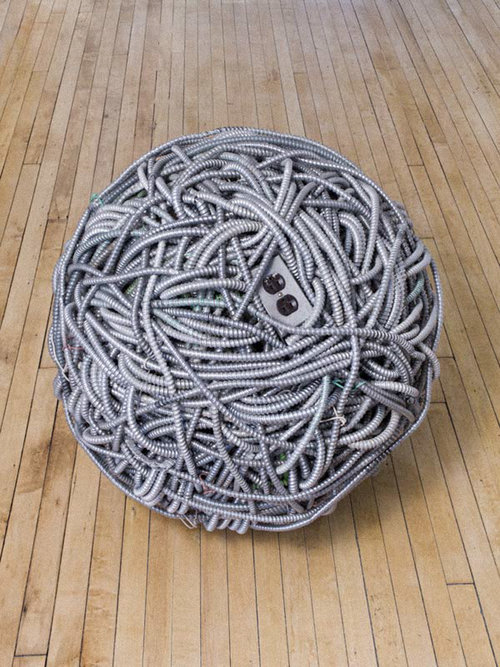
Anthony Campuzano is included in RE(a)D at Nathalie Karg Gallery, curated by Ryan Steadman.
RE(a)D
May 10–June 21, 2015
Nathalie Karg Gallery
291 Grand Street
New York, NY 10002
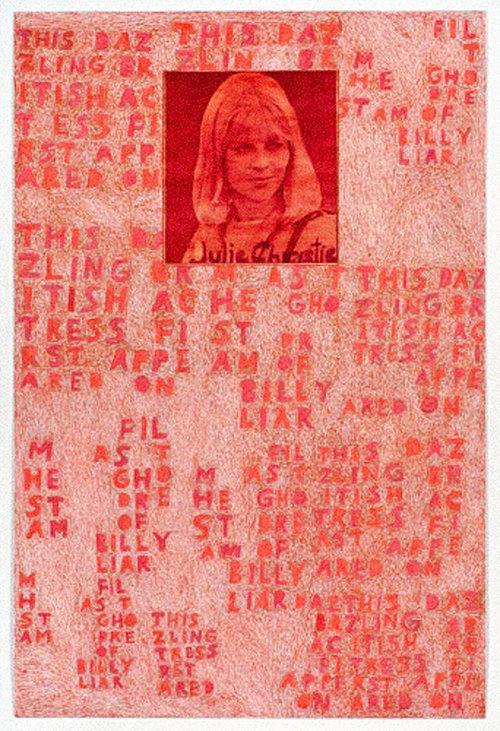
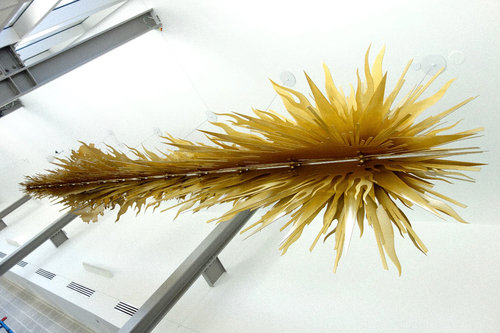
The dedication of Tristin Lowe's new public artwork, Shooting Star, will take place at the SWAT/Bomb Disposal/K-9 Headquarters in Northeast Philadelphia. The 32-foot long sculpture was a commission of Philadelphia's Office of Arts and Culture as part of the Percent for Art program.
Monday March 23, 2015 at 3PM
8501 State Road
Philadelphia, PA 19136
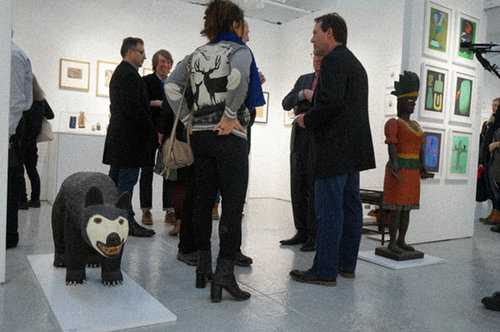
Preview: The Outsider Art Fair in New York –Dan Duray on ARTnews.com
Exploring an Expanded Field at the Outsider Art Fair in Hyperallergic (January 30, 2015)
On the Margins, but Moving Toward the Center. –Martha Schwendener in The New York Times (January 30, 2015)
Sarah Gamble’s Painted Portraits Of Alien Weirdos on beautifuldecay.com
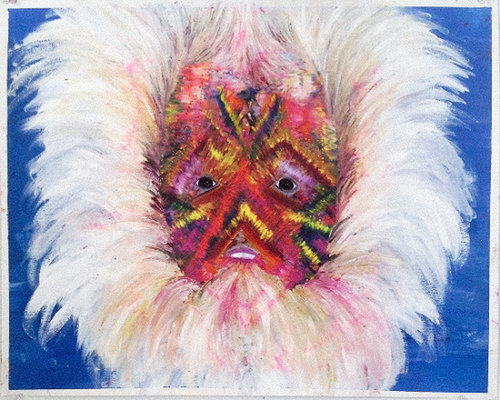
Hooloon Gallery
53 N. 2nd St, Philadelphia
Feb 7–Mar 15, 2015
Organized by Laris Kreslins, and including: Kate Abercrombie, Anthony Campuzano and the Dufala Brothers
Philadelphia's Mural Arts Program has enlisted the Dufala Brothers to participate in their Open Source, curated by Pedro Alonzo.

Moore College of Art and Design
Jan 23–Mar 14, 2015
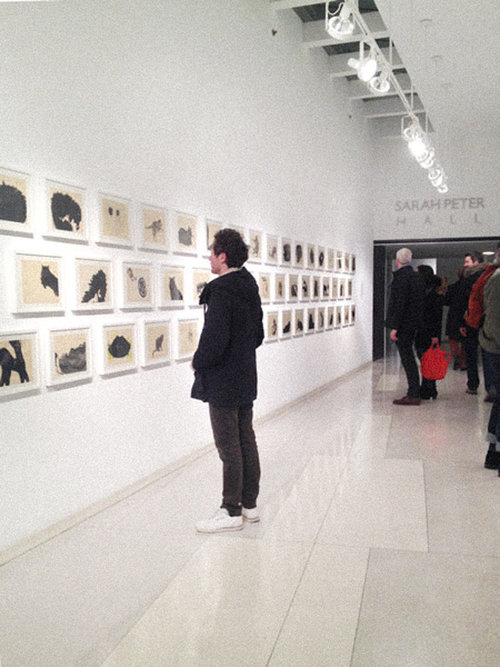
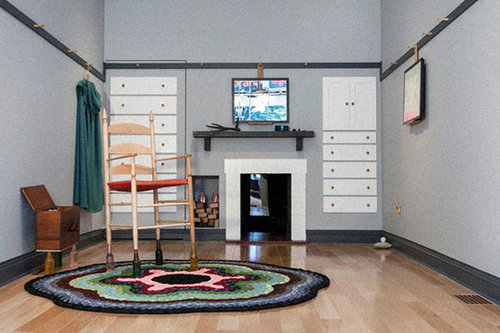
Feasley and Swenbeck's collaborative installation A Hatchet to Kill Old Ugly at the Fabric Workshop and Museum's New Temporary Contemporary, is an Artforum Critics' Pick.
Sarah Gamble is currently in the collective Listening In, Philly Artists Speak, at the Abington Art Center. Curated by members of the Philadelphia collective, Grizzly Grizzly.
Abington Art Center
515 Meetinghouse Road
Jenkintown, PA 19046
October 10-December 7, 2014
Gamble will be featured in a two-person exhibition at Adams and Ollman with Katherine Bradford.
Adams and Ollman
811 East Burnside #213
Portland, OR 97214
November 7-December 20, 2014
Jennifer Levonian's animation, Rebellious Bird, is featured in the group exhibition Strange Bedfellows, curated by Blair Murphy. Presented by Washington Project for the Arts
VisArts at Rockville
155 Gibbs Street, Rockville, MD 20850
October 17-November 23, 2014
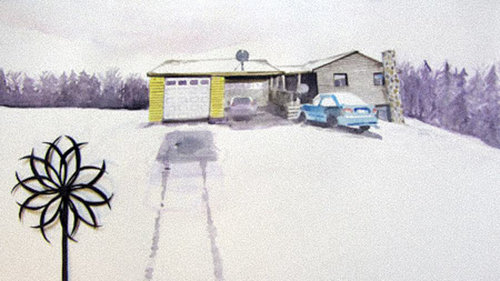
Becky Suss is included in Good Neighbors, an exhibition exploring notions of home and community.
The Berman Museum
601 East Main Street
Collegeville, PA 19426
October 14, 2014-January 11, 2015

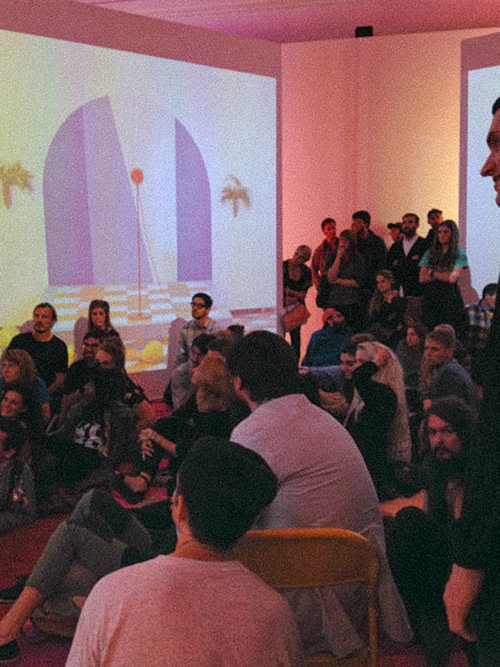
Longtime friends and first-time collaborators Alex Da Corte and Jayson Musson have created a major new commission for the Institute of Contemporary Art, University of Pennsylvania. Eastern Sports, a vignette-driven update of Thornton Wilder’s Our Town is presented as an in-the-round video installation. Organized by Assistant Curator Kate Kraczon.
Institute of Contemporary Art
118 S. 36th St
Philadelphia, PA 19104
Sep 19 – Dec 28, 2014
RVCA Gallery
1485 Haight Street
San Francisco, CA 94117
Oct 24, 2014–Jan 6, 2015
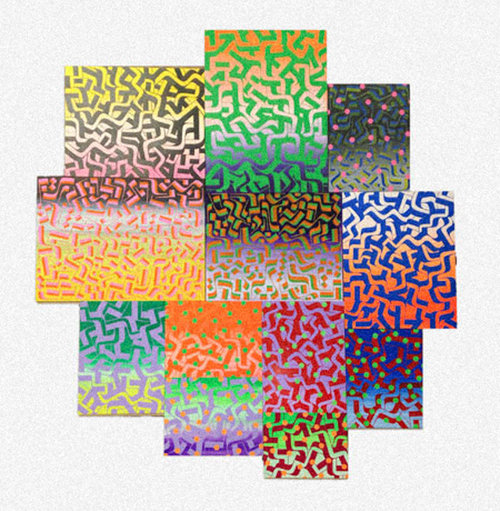
This collaborative installation of paintings, ceramics, furniture, sculpture and interior decor by Paul Swenbeck and Joy Feasley is inspired by Shaker spirit drawings and magic. The exhibition derives its title from a Shaker name for the Devil—“Old Ugly”—seen in spirit drawings, which the Shakers created to describe symbols seen in visions.
Fabric Workshop and Museum
The New Temporary Contemporary
1222 Arch Street
Philadelphia, PA 19107-2816
October 2, 2014–January 4, 2015
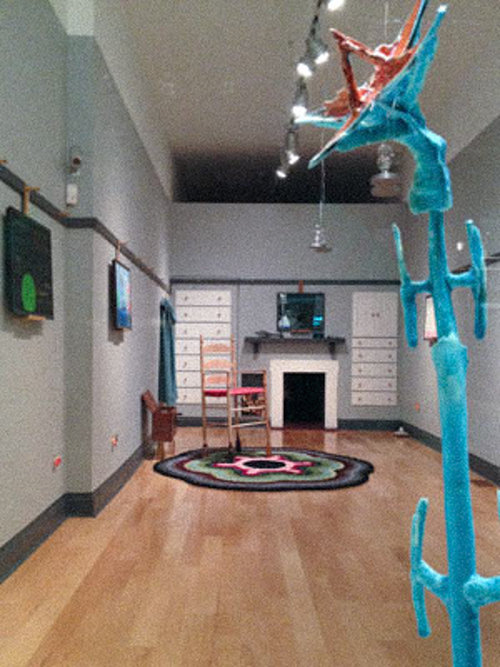
The Dufala Brothers recently spoke at TedxPhoenixville, the Colonial Theatre on September 27.
Geoff Sobelle's Object Lesson, for which Steven Dufala designed the sets, won three prizes at the Edinburgh Festival Fringe, inlcuding the Scotsman Fringe First Award, the Total Theatre Award, and the Carol Tambor Best of Edinburgh award.
The Right Amount of Wrong, a solo exhibition of the Dufala brothers' work, is currently on view, by appointment, at the West Collection Warehouse in Oaks, PA.
There will be fundraising/consciousness raising event for Billy Dufala's RAIR (Recycled Artist in Residency) organization, a non-profit whose mission is to create awareness about sustainability issues through art and design.
November 6, 6-9PM
Crane Arts Building
1400 N American Street
Philadelphia, PA 19122
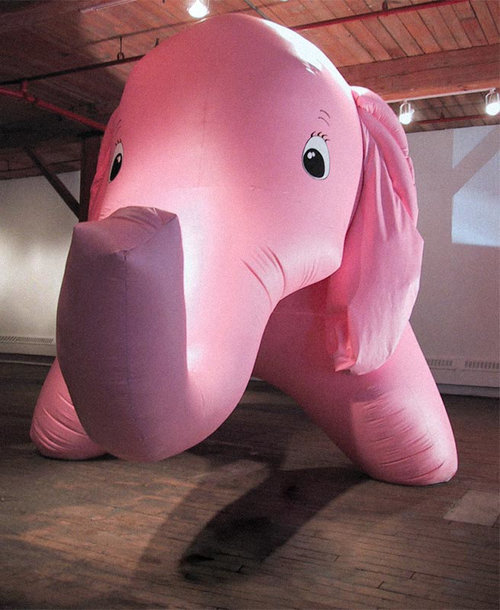
Tristin Lowe's 2001 piece, Dumbo, was in residence at Milk Studios during Made Fashion week to promote the Bill, Hillary and Chelsea Clinton Foundation's new initiative to raise awareness about the killing of African Elephants for ivory.
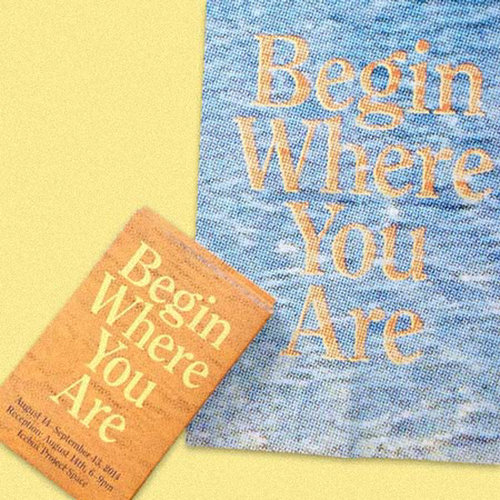
Icebox Project Space at Crane Arts
1400 N. American St., Philadelphia
Aug 14–Sep 13, 2014
Curated by Timothy Belknap, Ryan McCartney and Anna Neighbor, Begin Where You Are features 32 Philadelphia-based artists, including Anthony Campuzano, Sarah Gamble, Becky Suss and Paul Swenbeck.
Philadelphia Magazine picks Fleisher/Ollman as Philly's best art gallery in its annual Best of Philly Issue.
Kate Abercrombie and Anthony Campuzano, and RAIR Philly (with Billy Dufala) will costume two of the horses for this weekend's Horse Tuning Expo, created by artist Mohamed Bourouissa.
Sunday, July 13, 2014
4pm
2626 Fletcher St. Philadelphia, PA 19132
Free and open to the public
73rd Annual Juried Exhibition
Woodmere Art Museum
Jun 14–Sep 1, 2014
9201 Germantown Avenue
Philadelphia, PA 19118
Open House:
Saturday, June 28, 12-4pm
Free and open to the public
Gallery talk with juror Sarah McEneany:
Saturday, July 12, 3–4pm
Billy Dufala's Recycled Artist in Residency (RAIR) project collaborates with Simon Kim, Mary Ellen Carroll and Brian Zanisnik on three microexhibitions for ICA@50, the Institute of Contemporary Art, University of Pennsylvania's 50th anniversary exhibition program, running February–August, 2014.
Isaac Tin Wei Lin recently completed a multi-story mural commission at Facebook's headquarters in Menlo Park, CA.
Wednesday, March 12
Institute of Contemporary Art, University of Pennsylvania
Kate Kraczon (Assistant Curator, Institute of Contemporary Art) leads a conversation with Robert Cozzolino, John Ollman and Joseph Rishel, about the Chicago Imagists' influence on Philadelphia's art scene.
A group of Bill Walton works are currently on view in the Korman Galleries at the Philadelphia Museum of Art, in "Rohrer—Walton—Andrade: On Paper."
Anne Prentnieks on Time Produced Non Better
Eugene Von Bruenchenhein
Jennifer Levonian received the second place prize in the National Portrait Gallery’s annual Outwin Boochever Portrait competition
Featured on Dazed Digital's NO WAY! blog
TABAQUERO COLLAGE
The importance of a 1920s cigar roller from Havana in the evolution of collage art

Ryan Steadman on Anthony Campuzano at Churner and Churner.
Interview with Kate Abercrombie in Title Magazine
"Saltz: 20 Things I Really Liked at the Art Fairs" in New York Magazine
Philadelphia Museum of Art
Philadelphia, PA
Mar 3–Jun 9, 2013
Group show featuring James Castle, Bill Traylor, Eddie Arning, William Hawkins, Eugene Von Bruenchenhein, Joseph Yoakum, et. al.
Join us Friday August 24th from 6-8pm for the closing of A Complete Die. Quentin Stoltzfus will debut his new band, Light Heat, and album at 7pm.
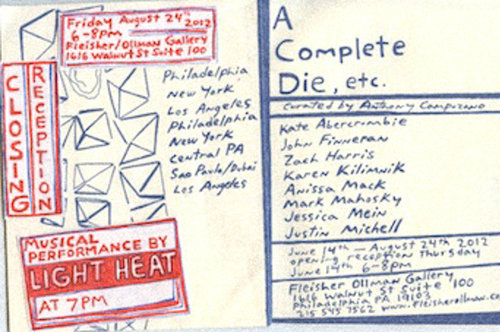
"Galleries: Artist-curator builds a show around a collection of dice."
—Edith Newhall in The Philadelphia Inquirer
The New Yorker
Artforum Critic's Picks
The Wall Street Journal
The New York Observer
Jayson Musson: Halcyon Days
July 11 - August 17
Salon 94 Bowery
243 Bowery New York, NY 10002
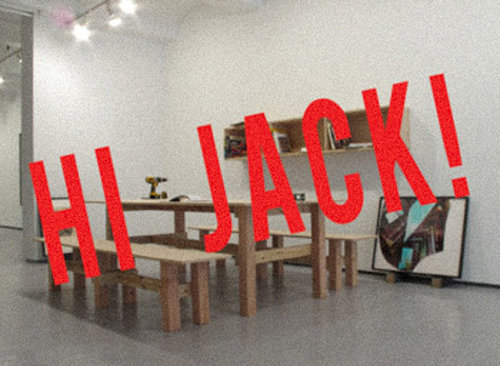
Hijack!
Anthony Campuzano, Bessma Khalaf, Esperanza Mayobre, Chris Mottalini, Odili Donald Odita, Mariah Robertson, Tyler Rowland, and Malick Sidibe
August 2-September 1, 2012
Jack Shainman Gallery
513 West 20th Street
New York
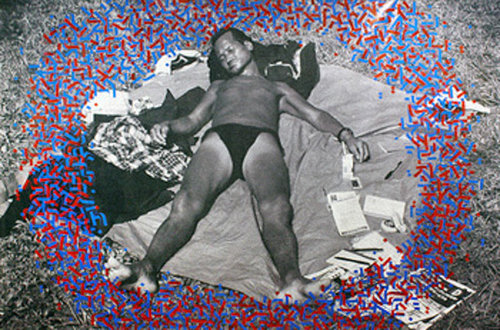
Isaac Tin Wei Lin: Last Words
July 20 through August 19, 2012
Park Life
220 Clement Street
San Francisco
Fleisher/Ollman is excited to announce that Alex Baker has been named the new director of the gallery. Baker most recently served as the senior curator, Contemporary Art at the National Gallery of Victoria, Melbourne, Australia, where he curated Ranjani Shettar: Dewdrops and Sunshine (2011), Harrell Fletcher: The Sound We Make Together (Melbourne) (2010), and Ricky Swallow: The Bricoleur (2009), among other exhibitions. Amy Adams, the outgoing director, said of his hiring "John Ollman and I couldn't be happier that Alex is joining the gallery, as his curatorial interests are closely aligned with Fleisher/Ollman's. He has a deep connection to Philadelphia and we are confident that his knowledge, skills and passion will propel the gallery and our program to new and interesting places."
Prior to his appointment with the National Gallery of Victoria, Baker was the curator of contemporary art at the Pennsylvania Academy of the Fine Arts and associate curator at the Institute of Contemporary Art, Philadelphia, where he organized exhibitions with artists including Robert Ryman, Ellen Harvey, Barry McGee, Chris Johanson, Margaret Kilgallen, and Laylah Ali, among others. Indelible Market: Barry McGee, Stephen Powers, and Todd James, originally developed by Baker at the Institute of Contemporary Art in 2000, toured to the Venice Biennale in 2001. With Toby Kamps, he co-curated Space Is the Place, an exhibition about space travel and contemporary art, which toured through Independent Curators International (2007-2008).
"Closing Time: You, Me, We, She at Fleisher/Ollman Gallery."
–Katherine Rochester in The Philadelphia Weekly
Nell McClister highlights Jennifer Levonian as the Editor's Choice in Bomb Magazine's Spring 2012 issue.
bombsite.com
The New York Times' Roberta Smith reviews the current Bill Walton shows at James Fuentes and JTT Galleries in the New York.
nytimes.com
Will Heinrich in the New York Observer reviews the Bill Walton shows in New York.
galleristny.com
Jennie Hirsh reviews Joan Nelson and Paul Swenbeck in Art in America.
For their installation at the DCCA, the Dufala brothers continue their ongoing investigations of domesticity and its ephemera.
Curated by Maiza Hixson
February 10 - May 13, 2012
Constance S. and Robert J. Hennessy Project Space
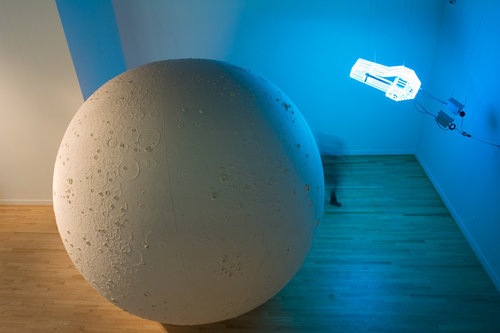
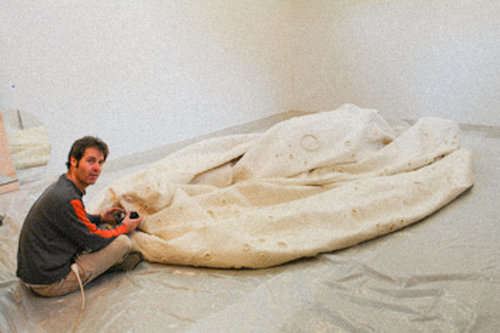
Provocative, mysterious, and altogether otherworldly, Under the Influence features two interconnected works by Philadelphia artist Tristin Lowe--Lunacy, a giant rendering of the moon created in felt, and Visither I, a neon light sculpture.
Under the Influence will be on view at the Philadelphia Museum of Art from October 22 through January 29, 2012.
In conjunction with the release of The Art Prophets: The Artists, Dealers, and Tastemakers Who Shook the World
At Fleisher/Ollman on Thursday, November 10 at 7pm
Jennifer Levonian will screen her latest film, The Oven Sky, with a live performance by New York-based artist and singer Rachel Mason on Thursday, October 20 at 6:30pm at the Institute of Contemporary Art, Philadelphia.
The Animate Art! series foregrounds the recent interest that artists have shown in a variety of animation practices within the museum context. Through conversation with artists from a variety of geographic locations we will consider a variety of questions, including: the relationship between animation and other media; contemporary artists' engagement with the histories of art and film; the role of music; the differences among various forms of animation; and animation's treatment of history, time, and place.
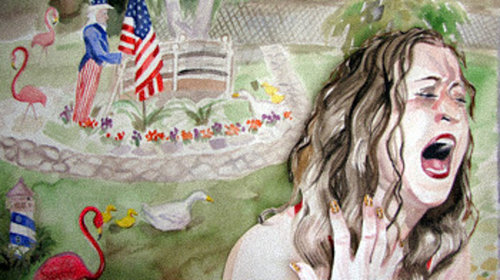
here. is an exhibition that considers how “place” is not simply the geographic locality where an artist lives and works but also the juice of lived experience—the subject matter, material, concepts and freedoms that this space provides. Recognizing how place influences and infiltrates each artist’s work in diverse and complicated ways, here. explores how a sense of place exists in the work of artists from six particular regions—Philadelphia, Cincinnati, Phoenix, Raleigh-Durham, Detroit and Kansas City.
The exhibition, on view at the Pennsylvania Academy of the Fine Arts, runs from October 22 through December 31.
Inspirational Information is a group exhibition that features work by Isaac Lin, Jason Musson, Sam Belkowitz, Matt Pruden, Kim Walker, Jonas Sebura, Corkey Sinks, Jesse Butcher, David Harper, Barbara Jenkins, Joel Parsons, Jamie Diamond, Lee Arnold, and Alex Gartelmann. The exhibition is an open examination of the subconscious drives that inspire art making practices.
Inspiration Information opens on October 21 at the Maas Building at 1325 Randolph Street, Philadelphia.
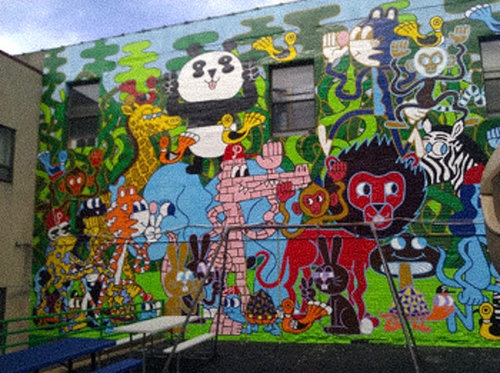
Gallery artist Isaac Tin Wei Lin has created a very special mural at the Mitzie Mackenzie Playground at 927 Spring Street in Chinatown in Philadelphia. Please join us at the dedication today, Sunday, September 18 at 2pm.
Museum of Contemporary Art, North Miami, FL
Films will also be on view September 10 - October 8 at the de la Cruz Collection, 23 NE 41st Street, Miami, FL 33161, tel: 305 576 6112, www.delacruzcollection.org
OPTIC NERVE XIII FINALISTS: John Bonafede, Brian Bress, Jennifer Campbell, L. Ashwyn Collins, Christina Corfield, Kasia Houlihan, Eunjung Hwang, Karlo Andrei Ibarra, Richard Jochum, Jennifer Levonian, Jillian Mayer, Tara Nelson, Zachary Ordonez, Perfect Lives, Carlos Charlie Perez, Sarada Rauch, Ruben Millares & Antonia Wright.
In recognition of it\'s 15th anniversary, the Museum of Contemporary Art, North Miami broadened the scope of its annual Optic Nerve Film Festival. This year, for the first time, submissions were accepted from artists around the country, in addition to those from South Florida. This wider application pool allows MOCA to create new connections and contexts for the participating artists.
\"MOCA\'s Optic Nerve program is designed to provide emerging artists with an important venue in which to show their works and we want this year\'s program to represent the most innovative and important film and video being created in the United States today. Encouraging new work and making it accessible to our audiences is an important part of our mission,\" said MOCA Executive Director and Chief Curator Bonnie Clearwater.
September 7 – December 4, 2011
Reception: Wednesday, September 7, 6-8PM
Exhibition walkthrough with curator Ingrid Schaffner: Wednesday, September 7, 5PM, ICA Members Only
The Institute of Contemporary Art presents Bill Walton\\\'s Studio in the Project Space. This exhibition recreates the unique environment of the minimalist artist, a key figure in the Philadelphia art community for nearly 50 years.
Walton, a commercial printmaker by trade and later an instructor at Moore College of Art and Design (1974-1990), was often more interested in the materials used for printmaking—wood, lead, steel—than in the finished product. His studio contained an exhibition area so he could display his work in progress in order to judge whether or not it was finished, a crucial part of his studio practice. At the time of his death in 2010, Walton\\\'s studio was a small miracle of order. Tools and materials were arranged as carefully as works of art. Indeed it was not always simple to tell the tools from the work, to judge whether an artful arrangement of screws and bolts was waiting to be used or to be admired.

Featuring the Dufala Brothers and Isaac Tin Wei Lin
September 10, 2011 - December 4, 2011
The works featured in this exhibition are a lively, arresting, and timely celebration of ten Philadelphia artists, ranging in age from 25 to 50, who are currently making art on paper.
Each of these artists is represented by a small group of works demonstrating the strength and diversity of talent that exists in the city today. With ingenious, elaborate details and the inventive layering of materials, a number of artistic techniques and processes can clearly be seen. Still, there is an underlying seriousness of purpose and a desire to confront the dilemmas of today’s world that is prevalent throughout.
Subjects, therefore, may vary from the abuse of Iraqi prisoners at Abu Ghraib to the proliferation of trash in the environment, from concern for architectural heritage to the gritty everyday life of the city’s streets. Some disquieting issues are faced directly, while others are addressed with edgy humor or are ironically masked by great beauty.
The ten artists on view are Astrid Bowlby, Steven and Billy Dufala (who operate in collaboration), Vincent Feldman, Daniel Heyman, Isaac Tin Wei Lin, Virgil Marti, Joshua Mosley, Serena Perrone, Hannah Price, and Mia Rosenthal. Some of them are also known for their work in other mediums, such as installation, video, sculpture, and painting. Collectively, they represent an important facet of the remarkable work being produced in Philadelphia today.
Curator
Innis Howe Shoemaker, The Audrey and William H. Helfand Senior Curator of Prints, Drawings, and Photographs
Location
Berman and Stieglitz Galleries, ground floor
Gallery artist Jennifer Levonian is included in LOL: A Decade of Antic Art, at the Contemporary Museum in Baltimore through September 4, 2011
June 10-September 4, 2011
"LOL: A Decade of Antic Art" is a survey of recent artworks which either riff off or intervene on the real. "LOL" includes works by Kendall Bruns, Kahty Chen Milstead, Chto Delat?, Patrizia Giambi, Gimhongsok, Larry Hammerness, Jonathan Horowitz, Katie Kehoe, Nina Katchadourian, Larry Krone, Jennifer Levonian, Ryan Mulligan, My Barbarian, Dan Perjovschi/Nedko Solakov, William Powhida, Rob Pruitt, David Schafer, Alysse Stepanian/Philip Mantione, Joey Versoza and the Yes Men!
Contemporary Museum
100 West Centre Street
Baltimore, MD 21201
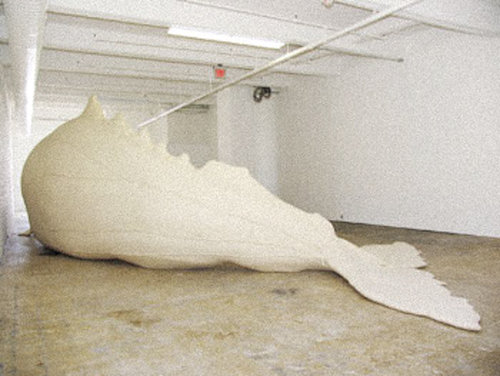
Gallery artist Tristin Lowe will be exhibiting Mocha Dick at the Virginia Museum of Fine Arts in Richmond, VA.
Tristin Lowe: Mocha Dick
Virginia Museum of Fine Arts
21st Century Gallery
200 N. Boulevard
Richmond, VA 23220
July 23 - November 27, 2011
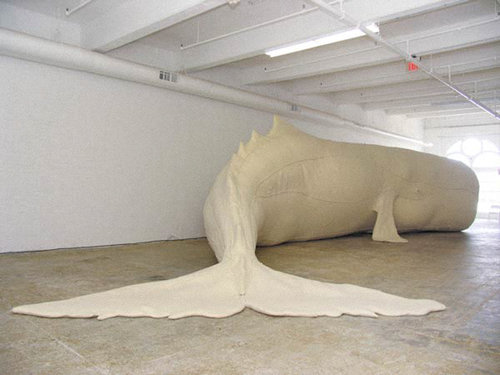
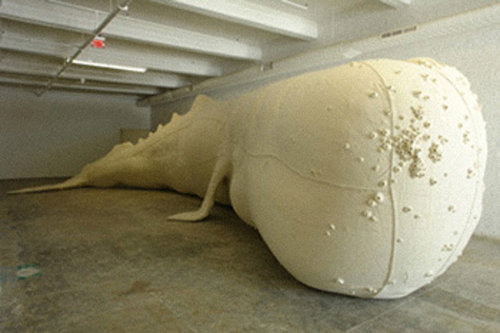
Tristin Lowe’s colossal sculpture Mocha Dick is a fifty-two-feet-long recreation of the real-life albino sperm whale that terrorized early 19th-century whaling vessels near Mocha Island in the South Pacific. Mocha Dick, described in appearance as “white as wool,” engaged in battle with numerous whaling expeditions and inspired Herman Melville’s epic Moby-Dick (1851). Lowe worked with the Fabric Workshop and Museum in Philadelphia to make the sculpture: a large-scale vinyl inflatable understructure sheathed in white industrial felt.
Tristin Lowe: Mocha Dick is organized by the Virginia Museum of Fine Arts and curated by John B. Ravenal, Sydney and Frances Lewis Family Curator of Modern and Contemporary Art. The sculpture is on loan courtesy of the West Collection, Philadelphia and was created in collaboration with the Fabric Workshop and Museum, Philadelphia.
Gallery artists Bill Walton, Felipe Jesus Consalvos and the Philadelphia Wireman are included in:
THE MEDICINE BAG
MACCARONE GALLERY
630 Greenwich Street
New York, NY 10014
July 9 - August 13, 2011
Artists Include:
Carol Bove
John Chamberlain
Felipe Jesus Consalvos
Ann Craven
Jess
Joseph Cornell
Lee Godie
Eli Hansen
Charles Harlan
Sheila Hicks
Paul Lee
Philadelphia Wireman
Oscar Tuazon
Bill Walton
Gallery artist Anthony Campuzano is included in:
Drawn to Disaster
Institute of Contemporary Art, Maine College of Art
522 Congress Street
Portland, Maine 04101
June 22 – Sunday, August 7, 2011
In this age of the 24-hour news cycle the media bombards us with sensationalist imperatives, looking towards the next storyline, ignoring the vulnerability of those left behind when journalists leave. In this exhibition artists examine the ephemerality of news reports and conjure the complexities of disorder, anger, and optimism that can follow disaster.
Featuring work by: Anthony Campuzano, Dave McKenzie, Christian Holstad, Carlos Motta, Sun Xun, Dominic McGill, Stacy Howe, Deb Sokolow, Yael Bartana, Daniel Guzmán, and Lisi Raskin.
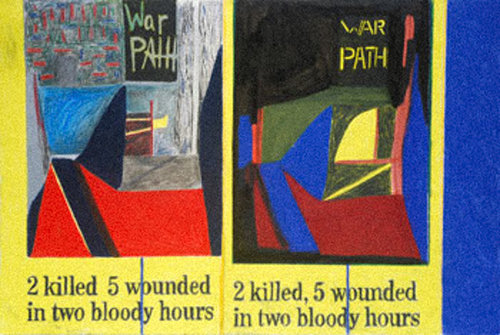
Bruce Pollock is included in two recent exhibitions:
Senior Artist Initiative, 5th Biennial
Pearlstein Gallery
Drexel University
3215 Market Street
Philadelphia, PA 19104
June 20 - July 28, 2011
Grey Matter
The Painting Center
547 West 27th Street
New York, NY 10001
June 21 - August 6, 2011
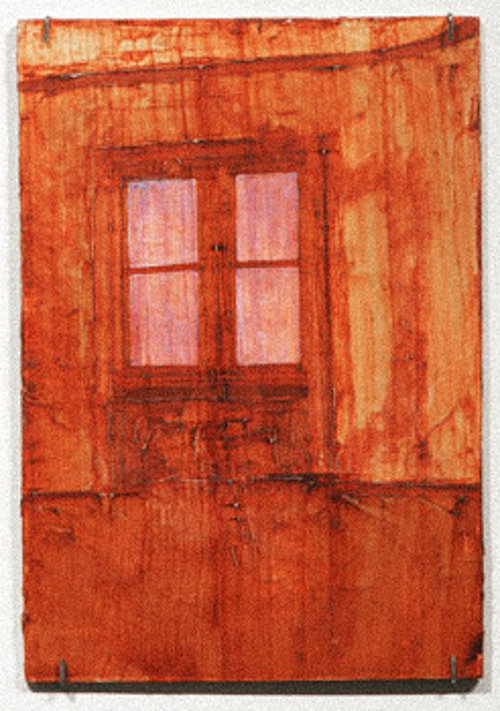
Gallery artist Annabeth Rosen's work is included in Overthrown: Clay Without Limits, at the Denver Art Museum through September 18, 2011.
Overthrown: Clay Without Limits
Denver Art Museum
June - September 18, 2011
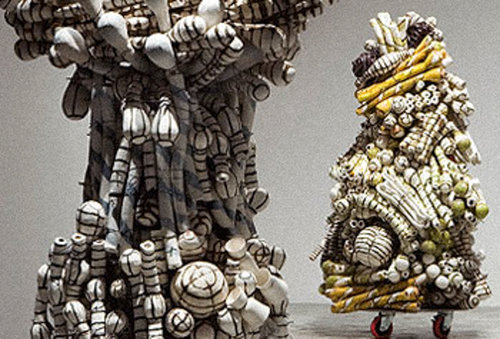
Gallery artists Steven and Billy Dufala\'s work will be included in:
Urbanism: Reimagining the Lived Environment
Pennsylvania Academy of Fine Arts
Fisher Brooks Gallery, Samuel M.V. Hamilton
Building
July 2 – September 4, 2011
Philadelphia has long been a cultural center and, indeed, when PAFA was founded, Philadelphia was the most vibrant city in the Republic. A cradle for American art for over two centuries, it is now a city where hundreds of artists live and where hundreds more are being trained in its art schools and universities. Philadelphia is also a center that, over the past decade, has attracted artists away from other major cities, providing not only a richly supportive artistic community but also affordable working spaces and good transport and communications. The city provides a dynamic and vital environment that can be perceived in much of the work that is currently emerging from artists’ studios. In this context, Urbanism provides an opportunity to look at four emerging artists from Philadelphia who, in various ways, re-focus the idea of the urban through a lens that explores the dreams, experience, and potential of the lived environment.
Employing a variety of media, Steven and Billy Blaise Dufala, known as the Dufala Brothers, create three-dimensional works that touch upon the absurd, while giving new meaning to discarded and homeless objects. Refashioning the everyday in ways that are unexpected and humorous, a dumpster can become a coffin and a toilet bowl can be transformed into the seat of a tricycle. In this repurposing of common objects, the Dufala Brothers question not only the nature and logic of consumer culture, but they also challenge us to think again about what art is and what it can be. Born in Philadelphia, Steven Dufala and Billy Blaise Dufala both studied at PAFA. They are both on the teaching staff of PAFA.
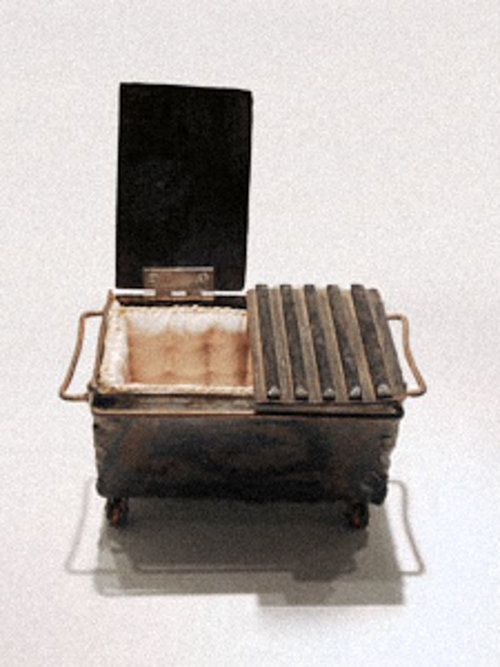
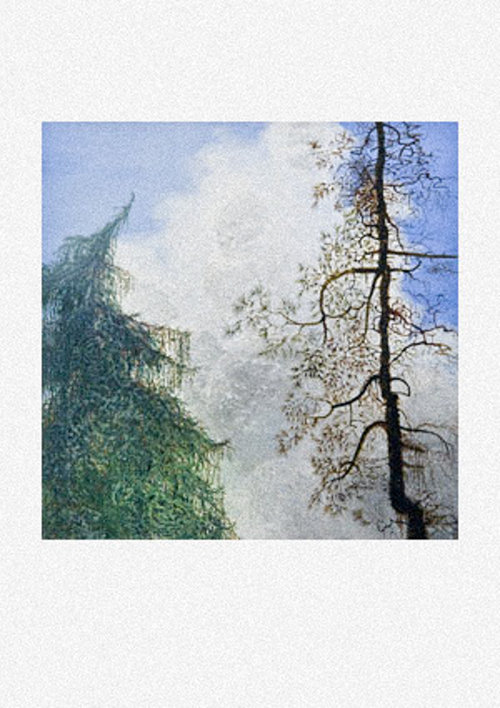
Joan Nelson
New Paintings
Michael Kohn Gallery
8071 Beverly Boulevard
Los Angeles, CA 90048
July 15 - August 27, 2011
The Michael Kohn Gallery is pleased to present new paintings by New York-based artist, Joan Nelson. In 1989, Nelson was selected to be in the prestigious Whitney Biennial. Known for working within a Postmodern sensibility, Nelson combined minimalist form and art historical content culled from artists ranging from Titian to Turner.
Her choice to paint on a simple form—a square, wooden box—is a nod to such Modern Masters as Donald Judd. Transcending into the realm of sculptural objecthood, Nelson\'s paintings have a distinctly contemporary feel while cultivating their place within a long history of landscape painting.
Her newest work continues to combine Minimalist form and Post-historical subject matter while capturing a complexity that brings new life to her unique practice. Inspired by the beautifully lush and remote area in which she lives, Nelson keeps a visual database in her mind that she draws from for her paintings. This process of internalizing her surroundings allows her to represent more the presence of a tree or vine, for example, as opposed to its mere representation.
Playing with the idea of what nature is, and subsequently her role as an artist within it, Nelson brilliantly and subtly manipulates paint and allows it to realize its own nature and materiality.
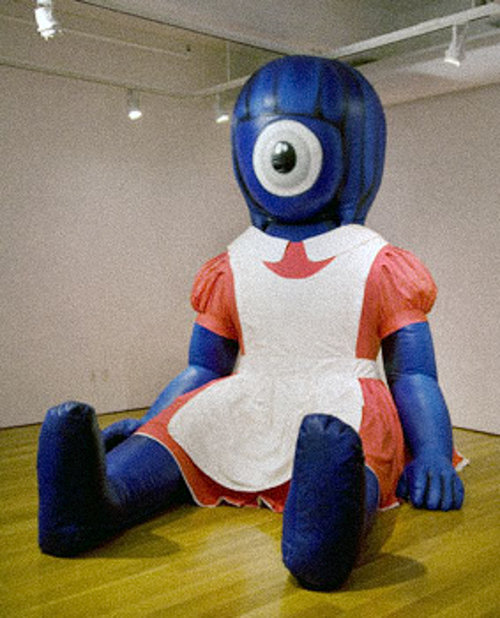
Gallery artist Tristin Lowe is included in:
Close at Hand: Philadelphia Artists from the Permanent Collection
Fabric Workshop and Museum
June 3 - late summer 2011
Tristin Lowe will be exhibiting Alice, 1998, the 19.5-foot bright-blue girl, made of inflatable, vinyl-coated fabric, who will be wearing a new "Alice in Wonderland" inspired dress embroidered with images of psychotropic mushrooms.
Fabric Workshop and Museum
1214 Arch Street
Philadelphia, PA 19107
215.561.8888
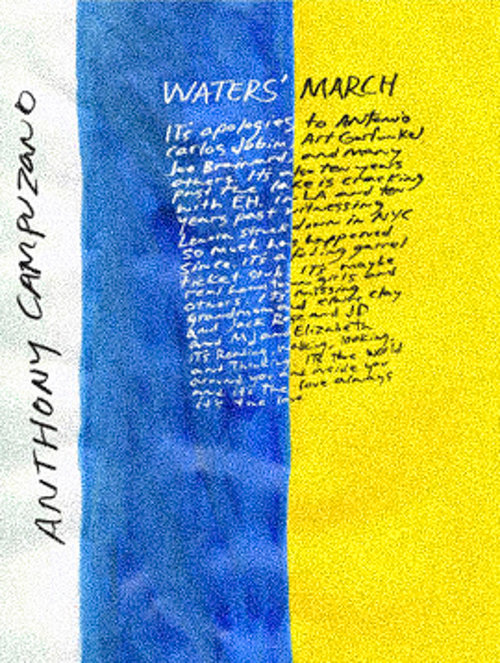
Gallery artist Anthony Campuzano is opening a solo exhibition at Churner and Churner on Thursday, May 5. “Waters’ March” features new drawings in which Campuzano combines found texts with his own writings about personal experiences.
Churner & Churner
205 10th Ave (between 22nd and 23rd Street)
New York
Please join us on Wednesday, April 20 at 7pm
for Problematic Automatic: A Night of ART THOUGHTZ.
Screenings of a curated selection of ART THOUGHTZ, Hennessy Youngman's YouTube musings on the art world and its codes, rituals, quirks and personalities, will be followed by a Q&A with the internet phenom and self-appointed "Row home racounteur."

Join us at Fleisher/Ollman on Saturday, April 30 at 3pm for a walk-through of The Usefulness of Useless Things with curator Jonathan Berger
At 4pm there will be a screening of documentation from Guy de Cointet's Tell Me, performed at the Museum of Modern Art, New York, in 1980.
Berger will discuss the themes within the exhibition and the varied histories and practices of the participating artists. Along the way, learn about the curator's unorthodox approach to exhibition-making, based in his own practice of conceptual collage and assemblage. Berger's projects often include materials that are collected, sought out, and re-contextualized, combining new and old, traditional and non-traditional, popular and obscure and static display and events. His most recent curatorial projects include Stuart Sherman: Nothing Up My Sleeve, presented in November 2009 at Participant Gallery, New York, as a major contribution to the 2009 PERFORMA Biennial. He is presently organizing Peter Schumann: Black and White, the first major retrospective exhibition of Bread and Puppet Theater's founding director, scheduled to open at the Queens Museum in 2012. Future curatorial projects include Exuma, the Obeah Man, scheduled for 2013, and Andy Kaufman: On Creating Reality a retrospective exhibition tentatively scheduled for 2014.

Tristin Lowe's sculpture Mocha Dick, a 52 foot long whale made of felt, will be on view at the John Michael Kohler Arts Center in Sheboygan, Wisconsin through May 15.
John Michael Kohler Arts Center
608 New York Avenue
Sheboygan, Wisconsin
Ars Nova Workshop is excited to present this special duo performance with guitarist and banjoist Eugene Chadbourne and percussionist Tatsuya Nakatani. These two sonic adventurers have been working together since 2007, merging their diverse musical languages to create a unique world of cosmopolitan sound.
Guitarist and banjoist Eugene Chadbourne has been fusing experimental rock, bluegrass, free jazz, blues and noise since he began making music in the mid-1970s. Equally inspired by the sounds of Appalachia, Jimi Hendrix, John Coltrane, and Captain Beefheart, he has formulated a musical language and category of his own. Over the years he has worked with John Zorn, Henry Kaiser, Fred Frith, Derek Bailey, Han Bennink, Sun City Girls, Aki Takase, and many other leading experimental musicians. Originally from Osaka, Japan but currently living in Eaton, PA, Tatsuya Nakatani has articulated his own percussive style that combines free jazz, rock, noise and traditional Japanese folk music. In order to capture this vast aural landscape, his drum kit is supplemented with gongs, cymbals, singing bowls, bells, and metal objects. He has released over 50 recordings, and his recent releases include his Map project with guitarist Mary Halvorson and bassist Reuben Radding which released an album in 2010 called Fever Dream on Taiga, a solo album titled Abiogenesis on his HH Productions imprint, and a duo release titled Essences with trumpeter Forbes Graham on Blaq Lghtn.
At Fleisher/Ollman
8pm
$12
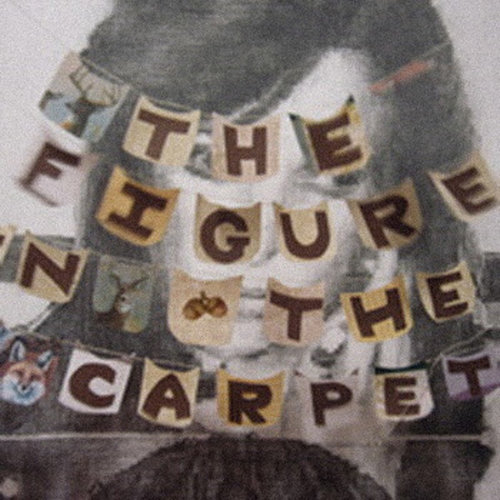
The Bank and Trust is composed of the work of more than 20 artists whose work responds to the present state of the U.S. economy, as well as issues of trust, security, and value in today's society. Jennifer Levonian will screen The Figure in the Carpet (2006), the artist's first animation which centers around a woman and her band of chorus girls who pull off a bank heist by mesmerizing the bank staff with a Busby Berkley-style dance number. The exhibition is on view through June 4.
Arts Exchange Gallery
31 Mamaroneck Ave
White Plains, NY
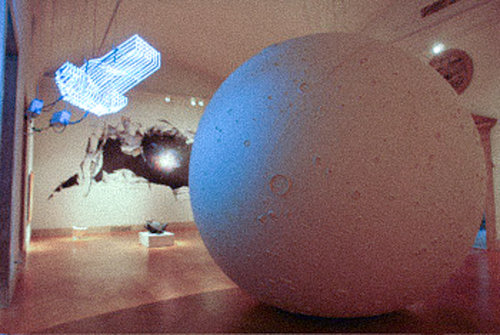
Tristin Lowe's installation Under the Influence: Lunacy and Visither 1, commissioned by the Museum of Art, Rhode Island School of Design, will be on view at the annual Invitational Exhibition of Visual Arts at the American Academy of Arts and Letters through April 10.
American Academy of Arts & Letters
633 West 155th Street
New York, NY
Paul Swenbeck's work is included in MIDWINTER: Embrace The Darkness at Columbia College Chicago. MIDWINTER is the day on the calendar when there is the least amount of daylight and the longest period of night. It is on this day when the balance between light and dark swings decidedly in favor of the dark. Inspired by this time of year, the group exhibition MIDWINTER: Embrace The Darkness is curated by Justin Witte and will highlight the work of artists who pull from the notion of darkness, not only in its absence of light, but in its references to that which is invisible, unknowable or ignored. Participating artists include: Dana Carter, Joy Feasley, Roxane Hopper, Irena Knezevic, Michael Robinson and Craig Yu.
The exhibition at the Glass Curtain Gallery opens on January 24 and runs through March 2, 2011.
The exhibition Anatomy Academy is arranged around pivotal period case studies in which artists, scientists, and doctors focused on important issues in human anatomy from 1805 (the founding of PAFA) through the end of World War I (1918). The exhibition will include drawings, photographs, paintings, sculpture, ephemera, and material culture that deal with changing conceptions of the body over time in Philadelphia scientific and artistic culture. Artists featured in the exhibition will include Charles Willson Peale, William Rush, Thomas Eakins, Christian Schussele, Thomas Anshutz, Charles Grafly, Marcel Duchamp, Robert Henri, Ivan Albright, John Sloan, and a newly commissioned work by the collective TODT.
Anatomy Academy will be on view at the Fisher Brooks Gallery at the Samuel M.V. Hamilton Building from January 29 through April 17, 2011
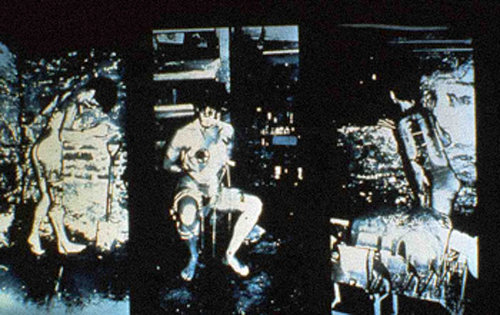
An exhibition of the work of Felipe Jesus Consalvos is on view at Andrew Edlin Gallery. The exhibition features Consalvos' trademark large-scale collages, several which are double-sided, and a selection of sculptural objects – including a grouping of collaged kaleidoscopes and binoculars, a guitar and jeweled violin. The exhibition is on view from December 16, 2010 through January 29, 2011.
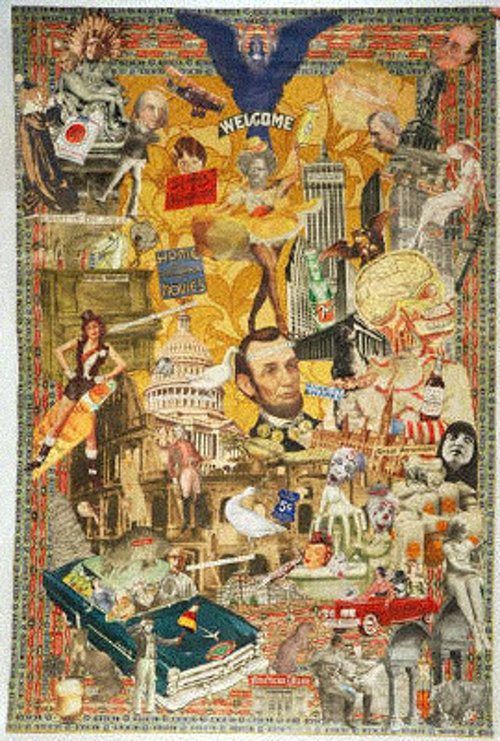
A selection of ceramic works by Mei-ling Hom are on view at Cavin Morris in the exhibition, CONTAINED EXCITEMENT: PLEASURES OF THE VOID which runs from Saturday, December 11, 2010 through Saturday, January 22, 2011. Also included in the exhibition are: Emogayu, Lizzie Farey, Polly Jacobs Giacchina, Yoshitaka Hasu, Deirdre Hawthorne, Mei-Ling Hom, Kentaro Kawabata, Shozo Michikawa, Drew Nichols, Takao Okazaki, Hyungsub Shin, Polly Adams Sutton, Akiko Tanaka, Tyrone Tripoli, Shannon Weber, and others.
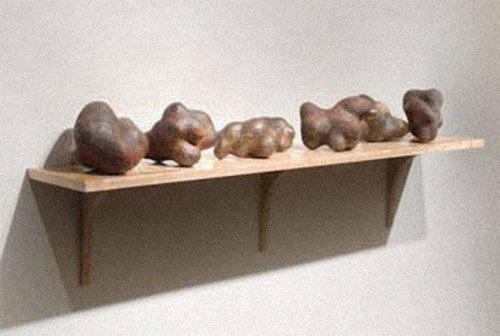
An epic installation of Luis Romero's small paper and cardboard works is on view in the exhibition Day Job, opening Thursday, December 9 at the Drawing Center. This exhibition curated by Nina Katchadourian looks at the relationship between an artist's "day job" and his or her creative practice. Artists in the exhibition are Chris Akin, Pasquale Cortese, Elizabeth Duffy, Caroline Falby, Alex Gingrow, Tom Hooper, Alexa Horochowski, Dawn Hunter, Michael Krueger, Shawn Kuruneru, Deanna Lee, Mary Lydecker, Raul J Mendez, Julia Oldham, Alex O’Neal, Roberto Osti, Zach Rockhill, Luis Romero, Travis LeRoy Southworth, Alfred Steiner, Justin Storms, Harvey Tulcensky, and Jonathan Wahl.
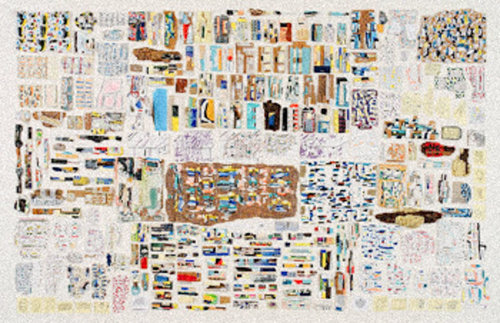
Gallery artist Alex Da Corte will participate in the group exhibition, New Skin for the Old Ceremony for which curators Lorca Cohen and Darin Klein asked artist-filmmakers to "reimagine and interpret" Leonard Cohen's 1974 album of the same name. The show will also feature work by Theo Angell, Peter Coffin, Weston Currie, Brent Green, Christian Holstad, Lily Lanken & Sylvan Lanken, Lucky Dragons, Brett Milspaw, Kelly Sears, and Tina Tyrell.
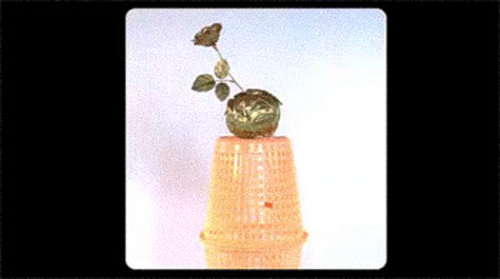
Annabeth Rosen's large-scale ceramic sculptures are on view in Meulensteen Gallery's Project Space. The exhibition runs through November 6th.
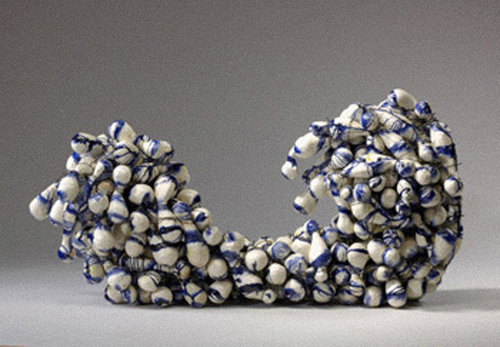
Andrew Herman's work can be seen in Nowhere: Selections from the Archives of the Hand Drawn Map Association at Arcadia University Art Gallery. The show is on view from September 23 until November 7.
The Hand Drawn Map Association (HDMA) is an ongoing archive of user-submitted maps and other diagrams created by hand. The collection includes examples ranging from spontaneously rendered directional maps to those charting fictional sites and unusual places, including drawings by historical figures such as Abraham Lincoln, Ernest Shackleton and Alexander Calder.
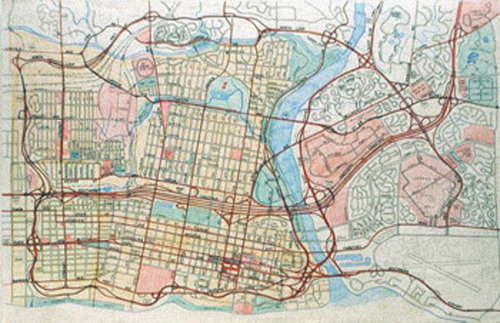
A selection of Memory Jugs will be on view alongside work by Bianca Beck and Joshua Brand in the exhibition, I Live My Thoughts, on view from September 12 through October 17.
Laurel Gitlen
261 Broome Street
New York, NY 10002

Steven and Billy Blaise Dufala's solo exhibition, Problemy, plays with the humble yet hugely important artifacts of daily life. The exhibition includes new drawings, paintings, digital prints, and sculptures, as well as site-specific installations on the Haverford College campus.
Cantor Fitzgerald Gallery, Haverford College
September 3 -October 8, 2010
Opening Reception: Friday, September 3, 5:30-7:30pm
Gallery Talk: Thursday, September 16, 4:30-6pm
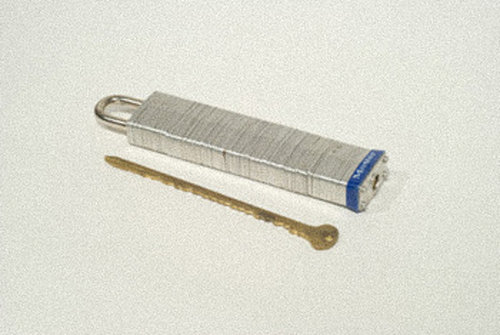
Gallery artist Isaac Lin's site-specific installation, One of Us, transforms the upstairs gallery at the Print Center into a sea of patterned prints and larger-than-life-sized, free-standing painted cutouts. The show runs from September 7 to November 20, 2010, with a reception on Thursday, September 16 from 5:30–7:30pm.
The Print Center
1614 Latimer Street, Philadelphia
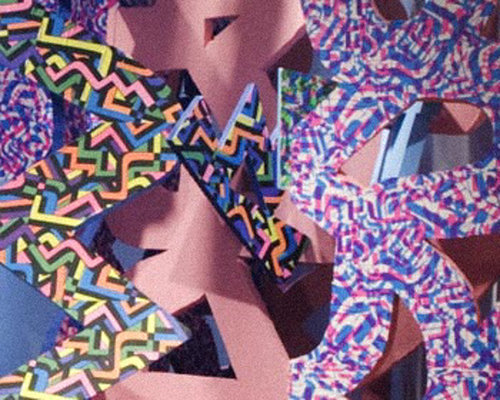
Janet S. Fleisher, founder of the Janet Fleisher Gallery, which became Fleisher/Ollman Gallery in 1997, passed away on August 2, 2010.
Read the obituary from the Philadelphia Inquirer here.
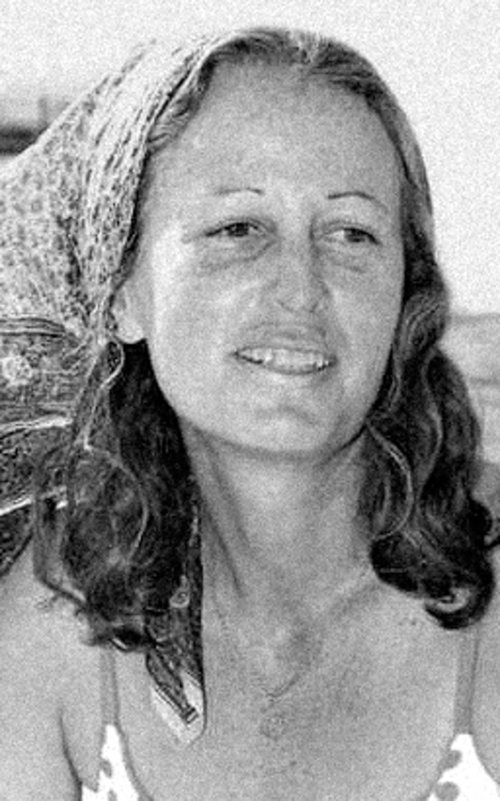
Jennifer Levonian's Holy Donuts!,2008 will be screened as part of Plastic Summer, curated by Stamatina Gregory and Erin Sickler.
"In the annual abdication of work, school, life, and ethics (at least for some), beaches and boats, summer houses and amusement parks become the projection for a fantasy of escape and absence of responsibility. As constructed as a screensaver, as ubiquitous as a discounted package holiday, this idea of summer can seem infinitely plastic and artificial. With a nod to playfulness and a wink at the surreal, the nine videos in Plastic Summer both embrace and interrogate the visual language of summer."
Works by Elia Alba, Kim Collmer, Eteam, Jillian McDonald, Tea Makipaa, Tom Pnini, Jaye Rhee, and Carrie Schneider will also be on view.
August 26, 7-10pm
601 ART SPACE
601 W. 26th Street, Suite 1755
New York, NY 10001
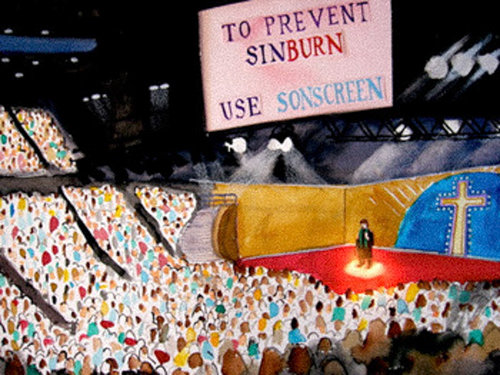
Frank Bramblett has taught at Tyler School of Art for the past 38 years. As a small gesture of appreciation, a group of his former students will exhibit artwork made with Frank in mind.
Anthony Campuzano, gallery artist,will have on view a new sculptural piece made specifically for the exhibition.
August 27 - September 21, 2010
Opening reception: Friday, August 27, 7-9
The Elkins Estate
1750 Ashbourne Road
Elkins Park, PA 19027
Fleisher/Ollman mourns the passing of friend and artist Charles Fahlen. There will be a memorial service for Fahlen in the gallery on Saturday, September 25th at 5pm. Read the Philadelphia Inquirer's obituary here.
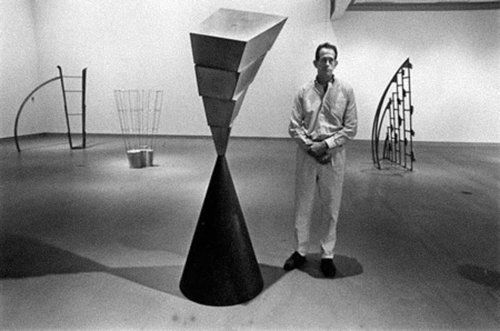
On O'Connor's current show at Fleisher/Ollman, C'OD(e)R, Nell McClister writes: "this is a fresh and promising phase of experimentation in inquiry unmoored, a bold investigation into the struggle to make sense of existence, in art and beyond." Read the full review online here or download the PDF here.
Cellar Door, curated by Marie Heilich, opens July 14 in the Front Room at the Contemporary Art Museum St. Louis. The exhibition, which includes work by Alex Da Corte, Trevor Reese, and Justin Visnesky, focuses on "the landscape of a production and consumption based society" where "artists have taken on the role of editor rather than creator...[t]hrough selecting, documenting and ultimately placing objects in an art context." Cellar Door runs through August 1.
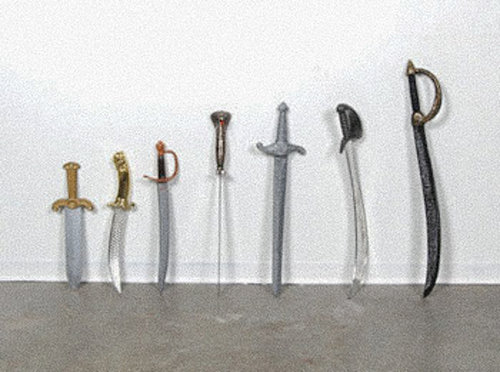
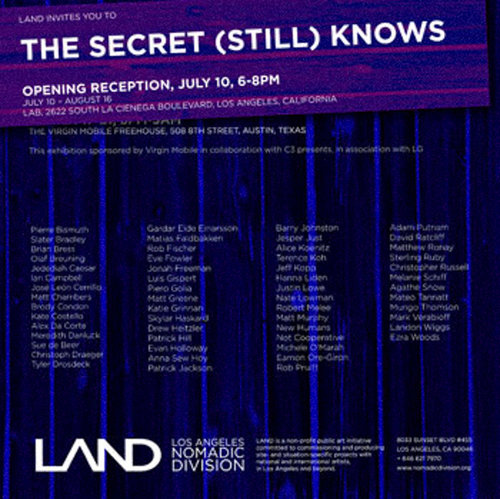
Alex Da Corte will be participating in "The Secret (Still) Knows," organized by LAND, the Los Angeles Nomadic Division, a non-profit public art initiative committed to commissioning and producing site- and situation-specific projects with national and international artists.
The exhibition runs from July 10 to August 16 at LAB, 2622 South La Cienega Boulevard, Los Angeles.
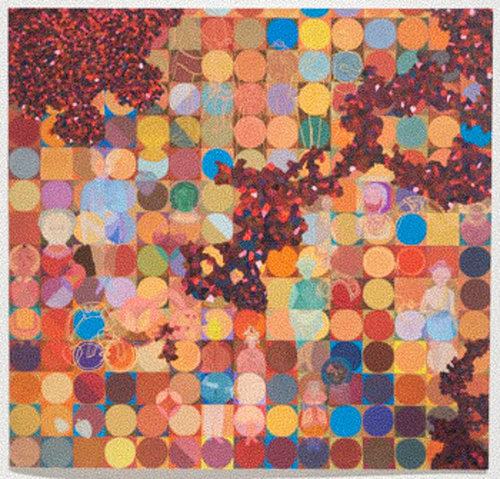
A review of exhibitions of work by Kate Abercrombie and John J. O'Connor, on view at the Fleisher/Ollman Gallery, is now featured in the Philadelphia Citypaper. Robin Rice describes Abercrombie and O'Connor as examples of "the promising younger artists whom Fleisher/Ollman Gallery has shown recently," comparing their "[p]rocesses and elements of automatic (chance-based) surrealism" to those of the self-taught artists the Gallery also represents.
Download review here, or read the review online.
"making, joining and repairing" and "C'OD(e)R" are on view through August 20th.
This July, Anthony Campuzano will transform ICA's second floor gallery into a free form art school and working artists' studio, both free and open to the public. Campuzano has invited peers (including gallery artists and friends Kate Abercrombie and Jack Sloss), mentors, professors and other special guests to provide art instruction in various media, discuss past and current projects, screen favorite videos and films, and contribute work on view throughout the month. Grounding this program is a series of re-staged lessons that Campuzano found formative in his development as a young artist. Classes start July 1. The full schedule is available here.
Ann Landi, of ARTnews, wrote about Campuzano's upcoming project in the magazine's
June issue.
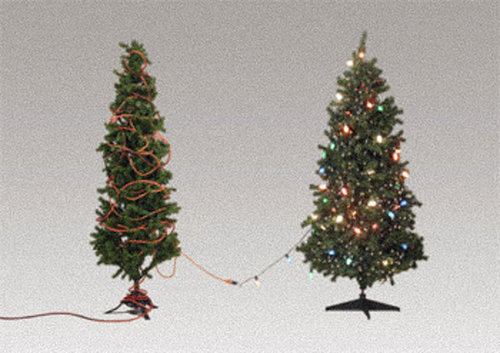
Fleisher/Ollman Gallery is pleased to announce Alex Da Corte's participation in "Christmas in July" at Yvon Lambert, New York, a group show curated by Simon Castets. The exhibition will also feature the work of John Baldessari, Lynda Benglis, Michael Brown, Heman Chong, Douglas Gordon, Christian Holstad, Jonathan Horowitz, Matt Keegan, Keegan McHargue, Marepe, Kris Martin, Aleksandra Mir, Sarah Ortmeyer, Ariel Schlesinger, Roman Signer, Katja Strunz, and Nick Van Woert. Opening reception Thursday, July 1, from 6-8. Exhibition runs through July 31.
Fleisher/Ollman Gallery is pleased to announce the participation of Anda Dubinskis in the Philadelphia "Art in the Open" festival. "Art in the Open" brings a selected group of artists to the Schuylkill Banks to inspire new ways of seeing the river and the city it runs through. From dawn until dusk on June 9th through 12th, the artists will work outside, between the Water Works and Locust Street, and at Bartram's Garden, in a transparent creative process open to everyone.
Fleisher/Ollman is pleased to announce Jina Valentine's inclusion in "natural renditions" at Marlborough Chelsea. The exhibition, which opens June 3 and runs until July 9, "is comprised of twenty-two artist who use a number of disparate materials, processes and techniques to create work that evokes organic forms and phenomena." Valentine's Poisonous Books, a large construction on paper from 2009, will be on view.
Koboku Senju + Eric Carbonara
Fleisher/Ollman Gallery
Friday, May 28
8:00pm
$10 Admission
Please join Ars Nova Workshop at Fleisher/Ollman for the U.S. debut of Norwegian/Japanese quintet Koboku Senju, meaning "selection of dead trees." Band includes Tetuzi Akiyama (guitar), Toshimaru Nakamura (no-input mixing board), Martin Taxt (tuba), Eivind Lønning (trumpet), Espen Reinertsen (tenor saxophone + flute).
Philadelphia-based chaturangui player Eric Carbonara opens the evening.
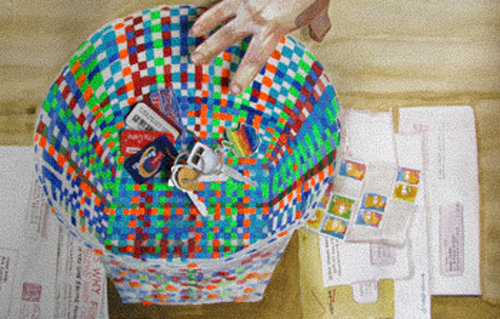
"Breathless," organized by Paul Young, features recent video works by two contemporary East Coast artists. Jennifer Levonian and Sari Carel both use animation practices to explore personal, formal and social tensions found in everyday experiences. Exhibition runs May 20 to June 17 at the Pacific Design Center, West Hollywood, CA.
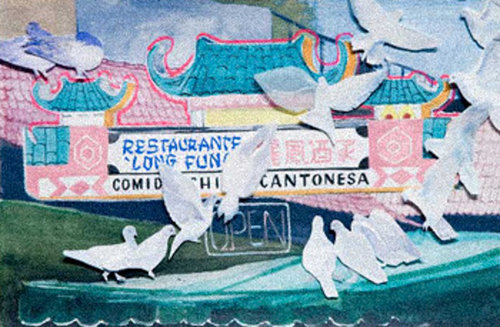
This year, as part of the 2010 Visiting Artist Lecture Series, "Elemental: Earth Air, Fire, Water - Art and Environment," the Santa Fe Art Institute has invited artists who focus on environmental awareness to exhibit and lecture. By presenting artists' sensitivity to the plight of the planet - in works of art ranging from ancient and indigenous objects to contemporary forms and multimedia visions, the exhibition and related lectures will provide a deeper understanding and connection to our natural world. Exhibition runs June 4 to August 27, and a lecture with Levonian will be held on August 23.
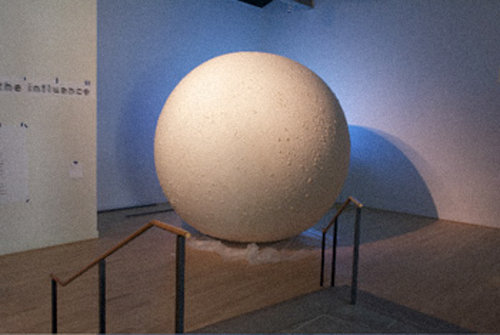
The moon, Earth's only satellite, has been a source of mystery and wonder since the beginning of history. Scientists have studied the moon's physical characteristics for millennia, and artists and writers have been inspired by its powerful presence. Using low-tech (but labor-intensive) methods and material, sculptor Tristin Lowe (American, b. 1966) has created a moon to fill the Museum's lower Farago Gallery by covering an inflatable sphere, twelve-and-a-half feet in diameter, in white felt. "This sculpture, entitled Lunacy, is both surprising and contemplative" explains Judith Tannenbaum, the Museum's Richard Brown Baker Curator of Contemporary Art. "This piece is a reflection of his longtime fascination with science related to the moon and the cosmos, and at the same time is an astonishing feat of craftsmanship." A fabric with ancient origins, felt absorbs energy, light, and sound. The surface of Lunacy is composed of fourteen felt sections hand-worked and sewn together. A myriad of raised craters and rings approximate the moon's terrain rather than replicating its actual geological features.
A Sense of Humor examines the many faces of humor in art, whether lighthearted tongue-in-cheek work, biting witticism that stabs at the politics of today, or quirky objects that call to mind the familiar. Through installations, paintings, sculpture, photographs, video, and audio, the 22 featured artists arrive at humor from many different points of view.
Artists include: Erwin Wurm, José Carcavilla, Barnaby Barford, Matt Stuart, Laurina Paperina, David Shrigley, Tim Hawkinson, Jean Lowe, Bill Amundson, Gregory Scott, Richard Saja, Jeffu Warmouth, Fanny Allié, William Wegman, Joel-Peter Witkin, Daniel Carr, Erika Rothenberg, Steven and Billy Blaise Dufala, Charles Krafft and Mike Simi.
Exhibition runs from June 20 to September 26 at the John Michael Kohler Arts Center, Sheboygan, WI.
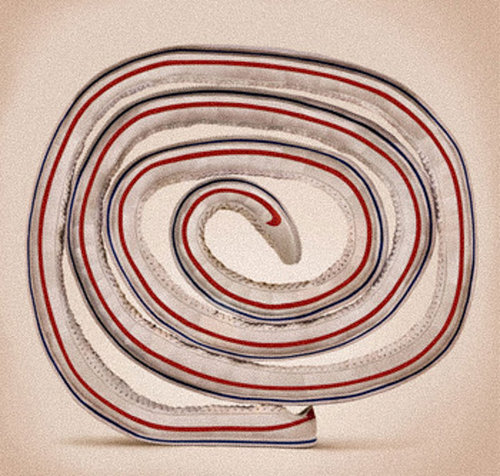
"Body of Work: New Perspectives on Figure Painting" is part of the National Museum of Women in the Art's biennial exhibition series Women to Watch, featuring emerging artists from the states and countries in which the museum has outreach committees. Each exhibition focuses on a specific medium or theme. "Body of Work" will be on view at NWMA from July 2 to September 12.
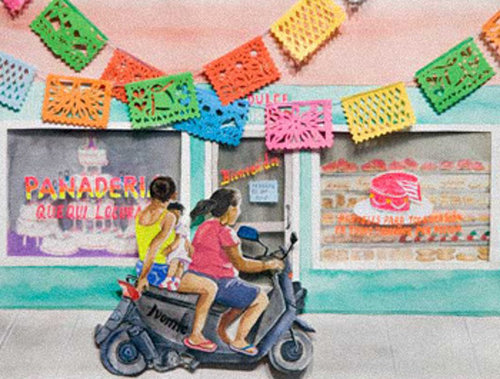
Edith Newhall reviews Jennifer Levonian and Anthony Campuzano at Fleisher/Ollman, and Levonian at the Philadelphia Museum of Art. Read the review here.
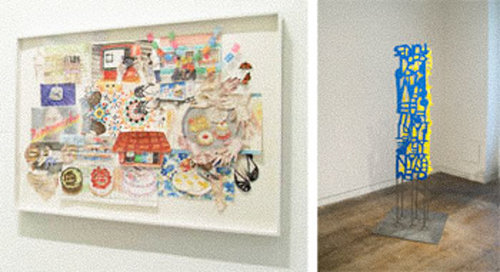
Steven and Billy Blaise Dufala have won an Obie Award in machine design for their work in "Machines Machines Machines Machines Machines Machines Machines," presented last summer at New York's Here Arts Center in association with Rainpan 43.
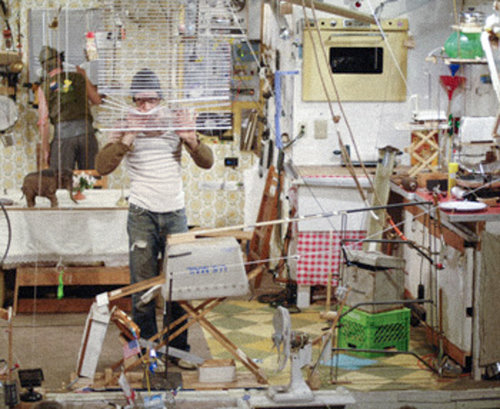
Gallery artist Isaac Lin's show at Fleisher/Ollman, "A Place Near Here" was reviewed in ARTnews' May 2010 issue. Download the review here.
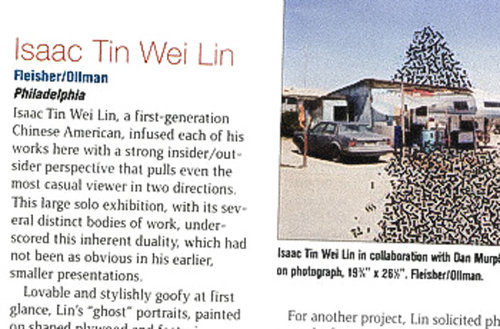
Fleisher/Ollman Gallery congratulates Bruce Pollock on the exhibition "Magic Well: Drawings and Paintings," now on view at the Shenzhen Art Museum in Shenzhen City, China.
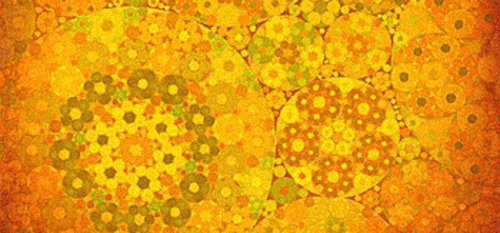
Jennifer Levonian and Adelina Vlas, Assistant Curator of Modern and Contemporary Art, will discuss the artist's work, including "Take Your Picture with a Puma," the stop-motion animation made using watercolor and collage, currently on view as part of the Live Cinema/Histories in Motion exhibition series.
Sunday, May 16, 2:00 PM in the Van Pelt Auditorium. Free after Museum admission.
Event made possible with support from The Pennsylvania State Committee of the National Museum of Women in the Arts.
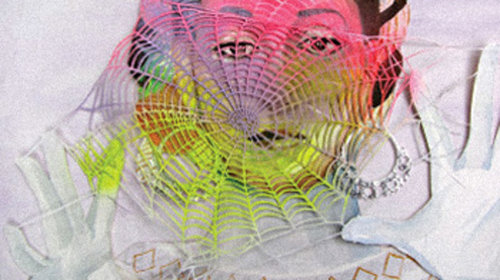
The Philadelphia Museum of Art is screening Jennifer Levonian's animation "Take Your Picture with a Puma" as part of its Live Cinema/Histories In Motion exhibition series. Also on view are many of the watercolor and collage drawings Levonian used to create the video. The exhibition runs from April 30 to May 31.
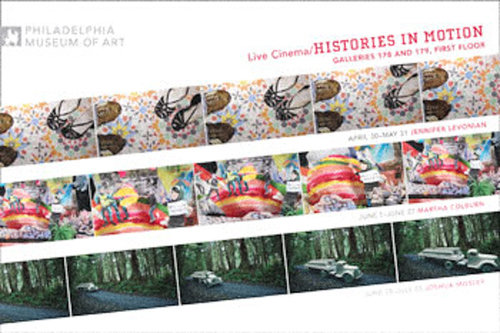
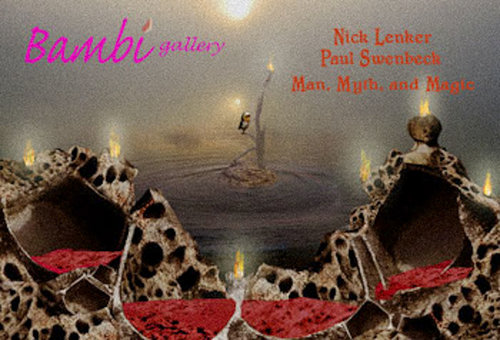
Gallery artist Paul Swenbeck and Nick Lenker present collaborative works at Bambi Gallery, Philadelphia. The exhibition, "Man, Myth, and Magic," runs from April 1 to 25.
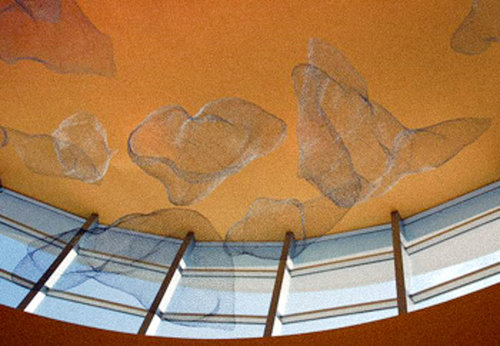
The City of Philadelphia’s Percent for Art Program and the Philadelphia International Airport Exhibitions Program are pleased to announce the completion of a new public artwork in conjunction with the Terminal D-E Expansion and Modernization Project. At a ribbon-cutting ceremony on February 16th, the artist Mei-ling Hom joined Mayor Nutter and other dignitaries to officially dedicate Cloud Sphere in conjunction with the opening of the new Terminal E Hammerhead area of the Airport.
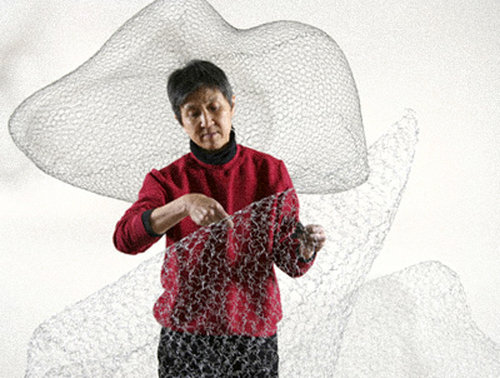
Cloud Sphere consists of 45 three-dimensional cloud forms intricately shaped through the twisting and bending of stainless steel hex netting. The forms, which are each unique in shape and size, occupy the overhead space of the Rotunda, located at the end of Hammerhead terminal. During the day, sunlight causes the mesh forms to become more ethereal and elusive; at night, the clouds become more assertive as the edge lighting sets the upper walls aglow and casts dramatic cloud shadows on the walls. Throughout history, clouds have played a major role in Chinese art and culture as they symbolize never-ending fortune, happiness and luck. The shimmering cloud forms provide a respite of calm amidst the activity of flight departures and arrivals and create an ephemeral, dream-like moment.
The Percent for Art Program of the Office of Arts, Culture and the Creative Economy commissions exceptional and enduring works of site-specific public art by renowned and emerging artists for City buildings. Philadelphia’s public art collection is recognized as the largest and most remarkable in the world. Since 1959, more than 300 works of art have been commissioned through the City of Philadelphia’s Percent for Art ordinance.
Steven and Billy Blaise Dufala will be included in an upcoming exhibition at Slought Foundation, Philadelphia. "Solitary Pleasures" is a provocative exhibition exploring the theme of masturbation and other forms of solitary pleasure, including smoking, drinking, reading, and art itself. The exhibition will feature historical works, contemporary works, and work by younger artists that present different visual representations of solitary pleasures. In addition, texts, quotations, and other research material will offer a larger historical context for appreciating the multiplicity of solitary pleasures in contemporary culture. A visual lineage including artists such as Durer, Titian, Giorgione, Hans Baldung Grien, among others will be suggested through reproductions, while quotations from Diogenes, Diderot, Rousseau, Kant, Freud, Irigaray, Foucault, Derrida, and others will offer an intellectual and historical context for the exhibition. Instead of trying to be exhaustive, the exhibition speculates on the possibilities posed by the subject of solitary pleasures. "Solitary Pleasures" runs from March 26 to April 21.
Gallery artist Jennifer Levonian will be featured at the 700IS Reindeerland Experimental Film Festival, Iceland. The festival runs from March 20 to 27, 2010. Levonian will be screening "You, Starbucks" - a stop-motion animation using collage and watercolor.
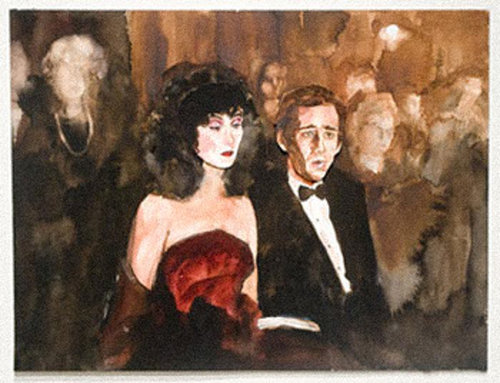
Galleries: Small, bold works dazzle in a big space
By Edith Newhall
Luis Romero's obsessively constructed and painted paper assemblages and quirky line drawings easily could lead you to believe he's a self-taught artist. That, and the fact that he's showing his works at the Fleisher/Ollman Gallery, which besides showing contemporary artists has a long history of introducing the efforts of the un-art-schooled, makes that possibility seem all the more likely.
In fact, Romero has spent more time in school than out of it. A Puerto Rican who lives in Chicago, he has a degree in philosophy, literature, and film from Boston University; a certificate from the National School of Plastic Arts (Escuela Nacional de Artes Plasticas) in Mexico City; and an M.F.A. in painting and drawing from the School of the Art Institute of Chicago.
Romero's paper assemblages take up most of his show and are the work you see first as you enter the main gallery. They're made up of multiple torn pieces of paper that he paints, then staples together to form rough grid patterns. As busy and childlike as this mode of construction sounds, it results in surprisingly elegant, bold geometry.
His abstract line drawings, on the other hand, bring to mind the contours of pre-Columbian Mexican pottery, as well as the stylized, repetitive shapes common to the paintings of Chicago imagists Roger Brown, Christina Ramberg, and Jim Nutt.
Having seen Romero's work in two group shows here, I would not have imagined it in a show of the scale he now has - his pieces are generally small and would seem ideally suited to an intimate box of a gallery - but his percolating grids take over Fleisher/Ollman's wide-open main space as if they were made to be there.
Represented by a selection of collages in Fleisher/Ollman's small gallery is Ray Yoshida, a Chicago imagist who counseled countless students during his decades as a painting professor at SAIC (Romero was one, as were Roger Brown, Elizabeth Murray, Robert Storr, and many others, myself included). He also was a master of the seemingly passing enigmatic observation that would leave a student desperately guessing at its real meaning. Yoshida's collages of images, cut from comic books and glued to paper in tidy grids, are as mysteriously witty as he was, an invitation to an inscrutable code that would never be cracked.
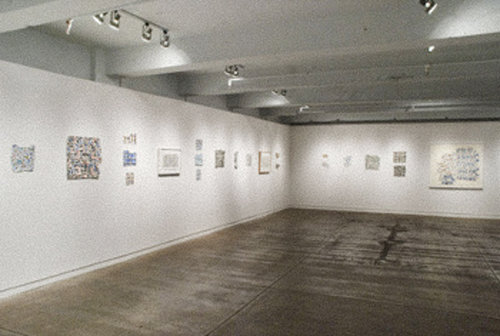
David Ebony of Art in America has named Fleisher/Ollman Gallery one of the ten best booths at this year's Armory Show Modern.
Ebony writes: "It would be difficult to find a better example of Ed Paschke's work than the 1970 painting of a figure playing an accordion on view here. Corresponding with canvases by Christina Ramberg, whose figurative abstraction closely relate to those of the Chicago Imagists, it was the centerpiece of a booth containing sculpture by William Edmondson and the Philadelphia Wireman. Recent works by young artists, such as the team of Steven and Billy Blaise Dufala, more than held their own here. Known for focusing on environmental issues in their works, the brothers showed large watercolors of the floating islands of plastic bottles and other refuse that litter the oceans, as well as a peculiar, jerry-built machine sculpture that resembles a yellow power saw."
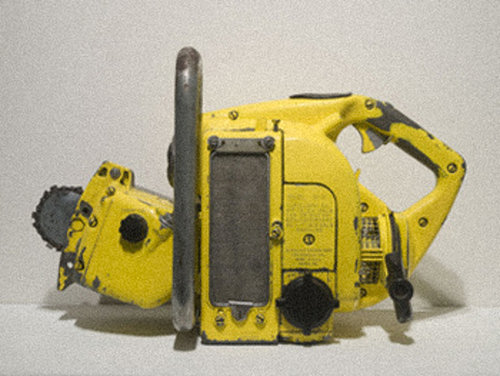
Gallery artist, Jennifer Levonian will be featured in ARCO Madrid's Cinema Loop curated by Paul Young and Carolina Grau. ARCO Madrid 29 International Contemporary Art Fair runs from February 17 through February 21.
Take Your Picture With a Puma, Jennifer Levonian's newest low-tech animation, made from watercolor, drawing, and collage, follows an American tourist on her quest for authentic experiences in Mexico, aided only by a Lonely Planet guidebook. In her search for offbeat locations, she inevitably travels the well-trodden path of other like-minded tourists. Surrounded by cruise ships, open air markets, cat fights, and teenagers making out, the tourist-protagonist finds an unlikely friendship in a Mexican bakery.
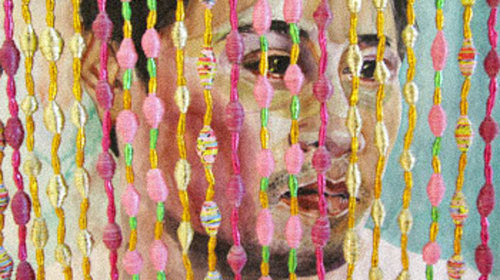
The newest issue of Megawords is available now! Join Megawords at Fleisher/Ollman for a release party on Thursday, Janary 14 from 6:30 to 9pm.
Megawords will be showing a selection of short films by Adams and Itso from Denmark, and Mattias Wermke and Mischa Leinkauf from Berlin, whose work was previously seen in Philadelphia at the Megawords storefront. Their films document the construction of architectural surprises in public spaces.
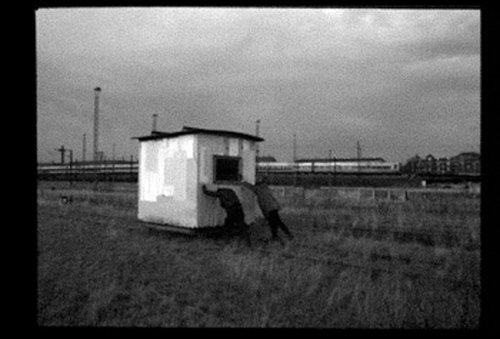
Organized by Stamatina Gregory
January 8 - February 13, 2010
Opens January 8 6:00 PM - 8:00 PM
Read-Only-Memory brings together works by Anthony Campuzano, Graham Dolphin, and Molly Larkey, all of which incorporate acts of analogue transcription. Characterized by the meticulous, almost devotional labor of recreating found, journalistic, pop, or literary texts, these works stand as extreme acts of obsolete protocol, investigating the lapses of time and information between reading, writing, and reception.
Independent curator Stamatina Gregory recently completed the Whitney Lauder Curatorial Fellowship at the ICA in Philadelphia and curated a large group exhibition of contemporary photography at the FLAGArt Foundation. She is also a doctoral candidate at The Graduate Center at the City University of New York.
Winkleman Gallery
621 West 27th Street
New York, NY 10001
www.winkleman.com
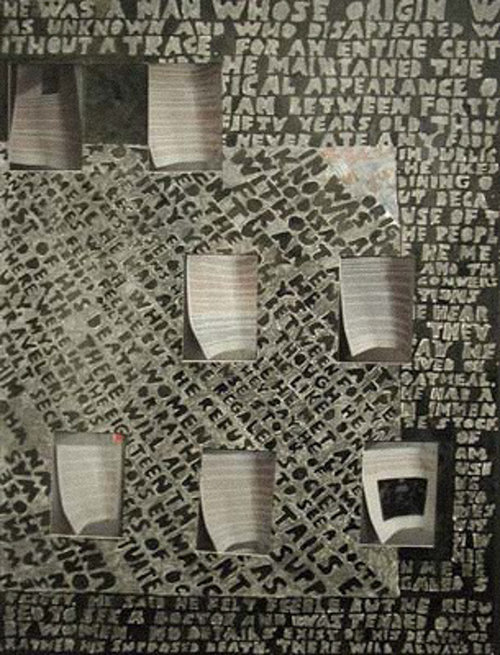
Three animations by gallery artist, Jennifer Levonian, will be on view at Wexner Center for the Arts (Ohio) from January 1 through January 28.
Wexner will be continuously screening You, Starbucks (2006); Holy Donuts (2008); and Levonian's newest piece, Take Your Picture with a Puma (2009).
For more information: www.wexarts.org
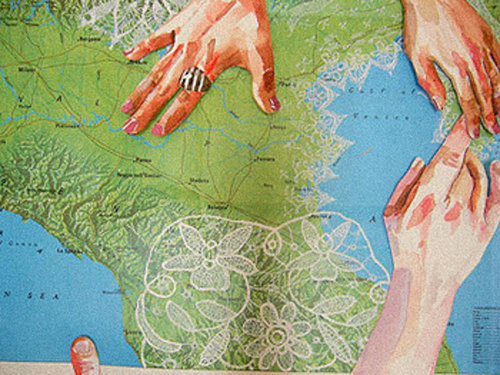
Friend and gallery artist, Jina Valentine, is currently spending one year in Paris, France on a residency through the Stanford Studio for Humanities at the Cité International. You can read about her travels and discoveries here:
www.obsolescentforecasts.blogspot.com
If you need convincing that you should add another site to your dailies:
"saturday afternoon, at 14:30, we arrived at the Closerie Falballa-- the site itself is in Périgny-Sur-Yerres, approximately 2 hours by train/bus/walk from centre-ville Paris... the closerie falbala was executed between 1971-1973 by Dubuffet and a team of technicians. it's quite a grand accomplishment, and is representative of the Hourloupe Cycle for which he's most known. the site is nestled away in the woods, and was damp and slippery with wet leaves when we arrived. the Closerie, the garden-simulacrum is just large enough to feel like a site, once you're in it, but not so grand as to feel like a park, say, and is larger than monumental sculpture--or more inviting anyway. and our group numbered about 10 people--two families, including a set of talkative toddlers, and locals from the banlieu. i'll update this post with pictures soon, but what was really most striking about being there, navigating this undulating, black and white terrain, was watching the way in which the groups' shapes and colors interacted with the piece. imagine this: a blond woman in fur coat, 50ish, stockings, and 3 inch heels with a toddler modifies her movements to the terrain and to the child run-amok. i mean at first you'd think the site seems out of place (stark white and black on earth-tones). within the closerie, you realize we the visitors are quite out of place there--tripping, wobbling around, and interrupting each others' views of the work with our brightly colored, awkward bodies."
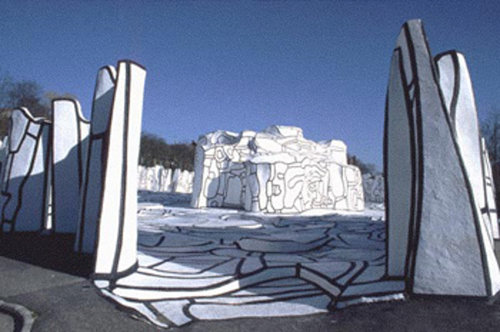
Radical Computer Music
Thursday, December 3 at 6:30pm
Radical Computer Music is a performance and talk by Goodiepal, a renowned yet controversial Scandinavian electronic musician and professor of music composition. Goodiepal is currently touring the states, spreading his new theories.
Goodiepal

Please join us on Saturday, November 14th at 2pm for a discussion, led by gallerist John Ollman, of Back to Earth, our homage to the 1989 exhibition Magiciens de la Terre, which has inspired Fleisher/Ollman and its programs for many years.
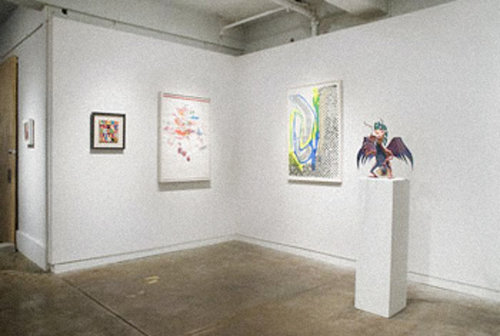
Marcy Hermansader will be exhibiting new works in "Back Through Black", Nov. 22, 2009 - Feb. 21, 2010, Brattleboro Museum and Art Center. The exhibition is made possible with support from the Vermont Arts Council and the National Endowment for the Arts.
An exhibition, organized by Aaron Krach, featuring artists whose use text "to say nice things" includes gallery artists, Anthony Campuzano, Alex Da Corte and Mark Mahosky.
Other artists in the show include: Nicole Docimo, Alyssa Duhe, Carl Ferrero, Dana Frankfort, Patrick Fry, Incidental, Chris Johanson, Cary Leibowitz, Gillian MacCleod, Heath Nash, Jack Pierson, Megan Plunkett, Franklin Preston, Trevor Reese, Alyce Santoro, Reed Siefer, Sighn,Micky Smith, Charlie Welch, Shawn Wolfe.
Saturday and Sunday, October 24 and 25
1pm – 6pm
206 Rivington Street, #4D (between Ridge and Pitt)
New York, NY 10002
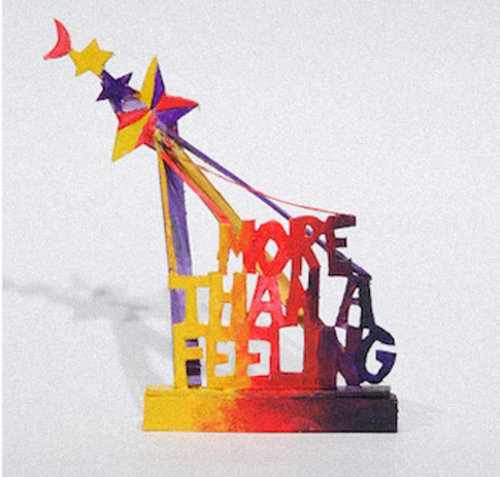
Between Spaces
On view October 25, 2009 - April 5, 2010
For the second time in P.S.1 history, the junior curatorial staff will produce and organize a large-scale group exhibition. Between Spaces will include film, installation, photography, and sculpture that address themes of nostalgia, a preoccupation with materiality, and the creation of illusionistic and psychological shifts in space. Playing the role of alchemist, each artist in Between Spaces will recast familiar materials and objects such as wood, paint, mirrors, moving blankets, Plexi-glass, Venetian blinds, and metal grating to make the ordinary strange.
Artists: David Altmejd, Martin Soto Climent, Alex Da Corte, Robert de Saint Phalle, Cheryl Donegan, Zak Kitnick, Sam Moyer, Heather Rowe, Melanie Schiff, Marc Swanson, and Penelope Umbrico
Organized by Tim Goossens and Kate McNamara, P.S.1 Curatorial Assistants.
P.S.1 Contemporary Art Center
22-25 Jackson Ave at the intersection of 46th Ave
Long Island City, NY 11101

Fleisher/Ollman is currently accepting submissions for the 7th annual Winter Invitational exhibition which will be on view at the gallery from December 11, 2009 through January 9, 2010.
Submission Guidelines
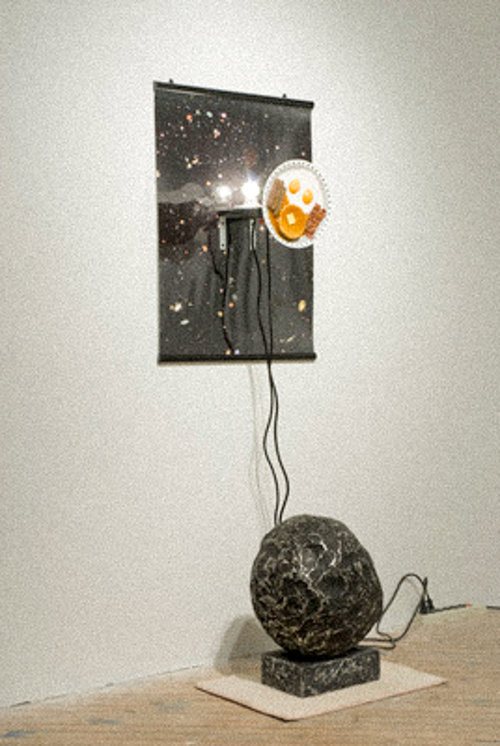
Tuesday, October 13, 8pm
THIRD MAN TRIO
Han Bennink, drums
Michael Moore, reeds
Will Holshouser, accordion
$12 General Admission
Presented by Ars Nova Workshop
Since the demise of the legendary and critically-acclaimed Trio Clusone -featuring Han Bennink, Michael Moore and Ernst Reijseger - in 1998, the jazzcommunity has been anxiously awaiting a vehicle for composer Moore and the raucous Bennink to carry on with their peculiar melodic, harmonic and rambunctious work. Following a near decade-long search, Bennink and Moore, both members of Misha Mengelberg's Instant Composers Pool, found the ideal "third man" in Brooklyn-based accordionist Will Holshouser. Holshouser, a student of Anthony Braxton, has collaborated with Antony and the Johnsons, David Krakauer & Klezmer Madness, Maria Schneider and Regina Carter.
One of the founding fathers of European improvised music, Bennink (b.1942) has performed with Sonny Rollins, Wes Montgomery, Eric Dolphy and Dexter Gordon. With fellow Dutch pioneers, pianist Misha Mengelberg and saxophonist Willem Breuker, he founded the musicians’ collective Instant Composers Pool in 1967, with which he still performs. Since, Bennink has collaborated frequently with Steve Lacy, Roswell Rudd, Peter Brötzmann, Derek Bailey and Dave Douglas, among others. A student of Jaki Byard and Gunther Schuller, Moore is also known for his work with Fred Hersch and Jewels and Binoculars.
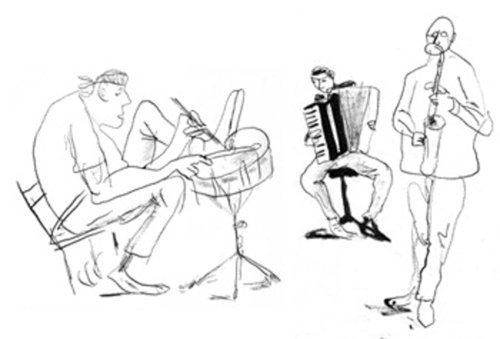
Art to Make You Laugh (and Cry)
by Randy Kennedy
"Nicely fed, I walked over to the Fleisher/Ollman Gallery, a 47-year-old center for the work of self-taught artists which has also, since 1997, focused on contemporary artists whose work reflects the influence of such outsider art. The show on view, “Frenz,” which ends on Saturday, is a good, oddball one, with pieces by 11 artists who were chosen by the indie musician Will Oldham."
Read the rest of the article here
Thursday, September 24, 8pm
DIGITAL PRIMITIVES
Cooper-Moore, diddly-bo + banjo
Assif Tsahar, tenor saxophone + bass clarinet
Chad Taylor, drum set + m\'bira
$12 General Admission
Presented by Ars Nova Workshop
As a composer, performer, instrument builder, storyteller, teacher, mentor, and organizer, Cooper-Moore has been a major, if somewhat behind-the-scenes, catalyst in the world of creative music for over 30 years. As a child prodigy Cooper-Moore played piano in churches near his birthplace in the Piedmont region of the Blue Ridge Mountains of Virginia. His performance roots in the realm of avant-jazz date to the NYC Loft Jazz era in the early 1970s. His first fully committed jazz group was formed in 1970 - the collective trio Apogee with David S. Ware and drummer Marc Edwards. Sonny Rollins asked them to open for him at the Village Vanguard in 1973, and they did so with aplomb. A recording of this group was made in 1977, and later issued as Birth of a Being on hatHut under Ware’s name. Following an evidently rather trying European tour with Ware, Beaver Harris and Brian Smith in 1981, Cooper-Moore returned home and completely destroyed his piano, with sledgehammer and fire, in his backyard. He didn’t play piano again until some years after, instead focusing his energies from 1981-1985 on developing and implementing curriculum to teach children through music via the Head Start program.
Returning to New York in 1985, he spent a great part of his creative time working and performing with theatre and dance productions, largely utilizing his hand-crafted instruments. It was not until the early 90s, when William Parker asked him to join his group, In Order To Survive, that Cooper-Moore’s pianistic gifts were again regularly featured in a jazz context. For this rare Philadelphia appearance, he performs with the collective Digital Primitives featuring Israeli tenor saxophonist and bass clarinetist Assif Tsahar, known for his work with Cecil Taylor, Rashied Ali, Peter Kowald, William Parker and Hamid Drake; and drummer Chad Taylor, a member of the Chicago Underground Duo and Iron and Wine, and a major contributor to Chicago's post-rock scene where he has recorded or collaborated with Tortoise, Isotope 217, Stereolab, Sam Prekop and Jim O'Rourke.
Fleisher/Ollman has a Flickr stream! Check back often for pictures of current and past exhibitions, as well as works from the back room which might not otherwise find their way on to our web site. We will be updating often.
flickr.com/photos/fleisherollman
Fleisher/Ollman was recently featured on Grace Bonney's blog: Design Sponge.
designspongeonline.com/2009/07/fleisherollman-gallery---frenz.html
Gallery artists, Steven and Billy Blaise Dufala, have designed the intricately futile machines that are featured in machines machines machines machines machines machines machines, which is currently onstage at Here (New York).
machines machines machines machines machines machines machines explodes the world of garage tinkers and backyard engineers in a ridiculous theatre piece featuring the world\'s most complicated machines set to perform the simplest tasks. Following the formula, \"the most of amount of effort for the least amount of gain,\" three chowderhead geniuses reach for the heights of mechanical ingenuity to reveal the depths of human idiocy.
Machines x 7 focuses on a trio of fretful men (Rainpan co-founders Geoff Sobelle and Trey Lyford along with Pig Iron\'s Gabriel Quinn Bauriedel) who may or may not be brothers living in what may or may not be a postapocalyptic world. In constant fear of an unnamed and unseen enemy, they grow increasingly paranoid and wire their bunker with an enormous array of machines constructed from debris.
HERE
145 Sixth Avenue
NY, NY
Fleisher/Ollman is pleased to spread the good news that the following old friends, new friends and amazing artists have been named the 2009 Pew Fellows:
Marc Brodzik, Anthony Campuzano, Sarah Gamble, Daniel Heyman, Ken Kalfus, Jennifer Levonian, Robert Matthews, Frances McElroy, Ben Peterson, Marco Roth, Ryan Trecartin, Nami Yamamoto
Pew Fellowships in the Arts, a program of The Pew Center for Arts & Heritage, was established by The Pew Charitable Trusts in 1991 and awards grants to artists working in a wide variety of performing, visual and literary disciplines.
Dynamic duo
by Edith Newhall
"Few artworks in Philadelphia can inspire the jaw-dropping awe that Tristin Lowe's single, gigantic felt replica of a whale, Mocha Dick, at the Fabric Workshop and Museum, does (and will do all summer). By contrast, the two-person show Lowe is sharing with Paul Swenbeck at Fleisher/Ollman Gallery has the feeling of a collaboration, of two friends playing off each other's whims." [...]
Read the rest of the article here
Fabric Workshop features Philly artist
By Edward Sozanski
"[...] Tristin Lowe's contribution, a monumental sculpture, is a piece that would normally dominate such a group show; perhaps it does if one sees it last. It's not only enormous, but improbable - a life-scale, 52-foot-long sperm whale, Mocha Dick, executed in ivory-colored industrial felt stretched over an inflatable vinyl armature. [...]"
Read the rest of the article here
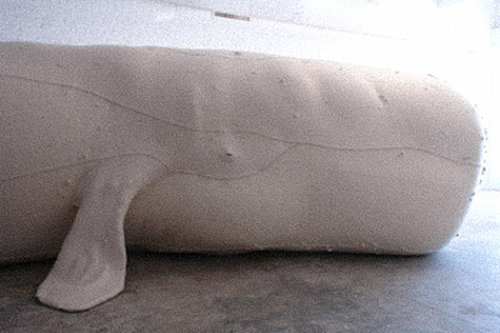
Tristin Lowe will be unveiling his newest work-a 52 foot long sculpture of a sperm whale at the Fabric Workshop and Museum’s newly renovated galleries. The exhibition which runs from April 27 through the end of the summer also includes work by Virgil Marti, Peter Rose and Ryan Trecartin.
Inspired by Mocha Dick, the notorious male sperm whale that lived in the Pacific Ocean in the early 19th Century and which was the model for Herman Melville’s Moby Dick, Lowe has created his version of the iconic leviathan out of felt. The piece was made in conjunction with the Fabric Workshop and Museum.
Isaac Resnikoff, gallery artist, will be exhibiting two works at Acuna-Hansen in Los Angeles. The Complete History of the U.S.A, version 1 & 11, previously exhibited at Fleisher/Ollman in the exhibition Rip, Rig and Panic and a new sculptural piece, Little Freedon, will be on display.
The exhibition opens on March 28 and runs through May 2.
www.ahgallery.com
427 Bernard Street
Los Angeles, CA
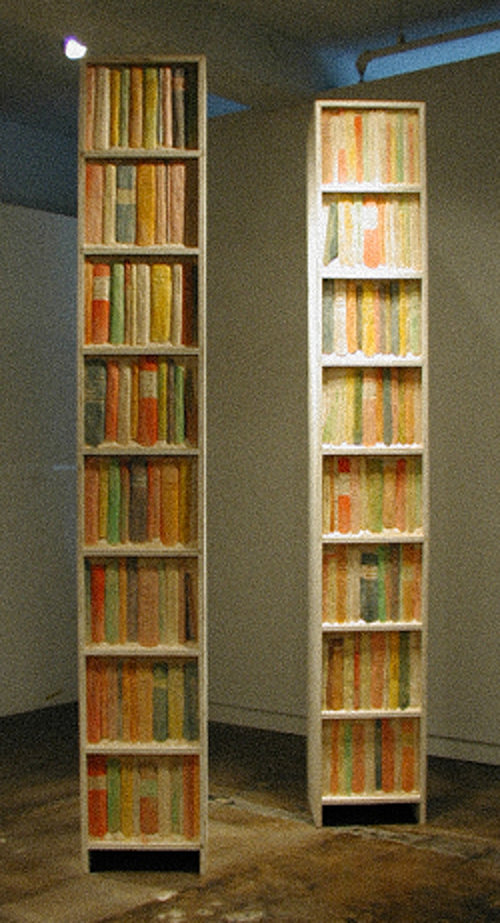
2/27/09
We are thrilled to announce that gallery artists, Steven and Billy Blaise Dufala, were awarded the West Prize Grand Prize, a cash award of $25,000.
The West Prize, in its inaugural year, was selected from an open call for early career artists. 3,600 artists from 73 countries submitted 18,000 works for consideration.
The Dufala Brothers "Ice Cream Truck Tank," along with work from the other nine finalists—Rob Carter, Brian Cooper, Jonas Criscoe, Thomas Doyle, Deborah Hamon, James Johnson, Georg Parthen, Ann Toebbe, and Nathan Vincent—will be on exhibition at the NEXT Art Fair, in Chicago, May 1-4, 2009.
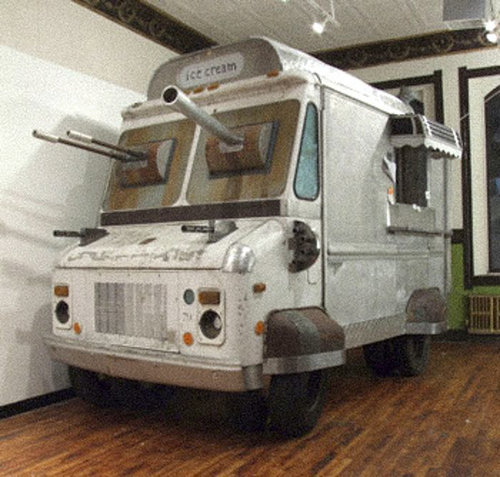
Drawing in the World at Rosenwald-Wolf Gallery at the University of the Arts is a quietly powerful show, in which Sid Sachs examines how drawing functions on many levels by painters, sculptors, architects, craftspersons, cartoonists, conceptual artists, filmmakers, appropriationists and visionaries. There are many drawings which show process, drawings as objects, as well as examples of finished drawings. The drawings are from some of major artists of the 20th and 21st centuries, as well as rising stars.
Gallery artists Anthony Campuzano, Jina Valentine, Andrew Herman, and Isaac Resnikoff have work included, alongside Polly Apfelbaum, Jennifer Bartlett, Mel Bochner, Lee Bontecou, Charles Burns, William Daley, Sergei Eisenstein, Joel Fisher, Sidney Goodman, Joseph Grigely, Louis Kahn, Daniel Liebeskind, Cynthia Lin, Sherry Levine, Mark Lombardi, Henry Moore, Joshua Mosely, Matt Mullican, Judy Pfaff, Ellen Phelan, Martin Ramirez, Steve Riedell, Perry Steindel, Mark Stockton, and Stephen Talasnik.
Tom Vance was awarded an Individual Creative Artist Fellowship 2009 from the Pennsylvania Council on the Arts.
Additionally, the artist is scheduled for an upcoming exhibition at the Philadelphia International Airport. Please check back for more information.
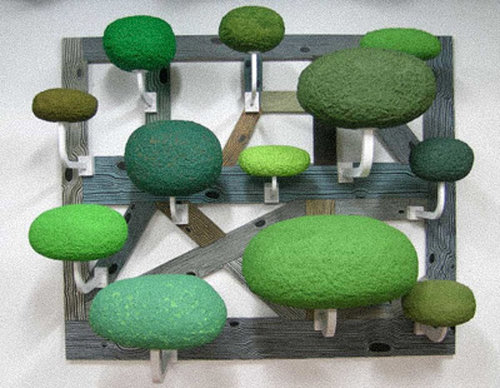
Gallery artist, Paul Swenbeck, will be included in the ICA Philadelphia's show, 'Dirt on Delight: Impulses that Form Clay' opening January 16th and running through July 12, 2009. The show will present the work of twenty-three artists who have created significant work in clay. The artists in 'Dirt on Delight' run across the full spectrum of conventional delineations between fine arts, crafts and outsider practices. Eugene Von Bruenchenhein is also included in the exhibition.
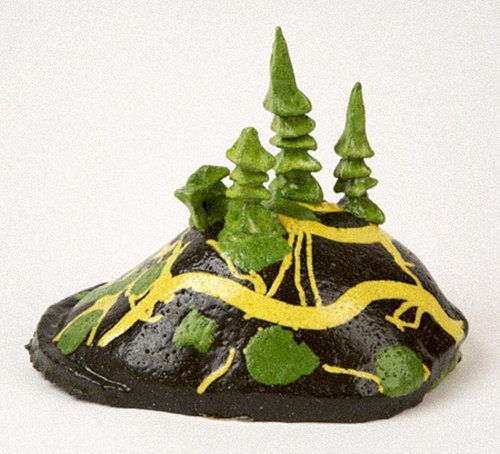
Touch Sensitive is Anthony Campuzano's first major museum outing. Touch Sensitive is an apt name for what promises to be an informative and engaging exhibition of new and select drawings, products of the artists intense collecting, scrutinizing, distillation of news, personal notes, history, obituaries, and popular culture. Anthony's ability to make meaningful connections between disparate things and to generate a significant personal resonance between the viewer and his many famous and not so famous subjects, nears a place of sweet perfection. Simultaneously, the artist makes you feel anonymous, famous, important, young, old, fragile and invincible. Do see the show.
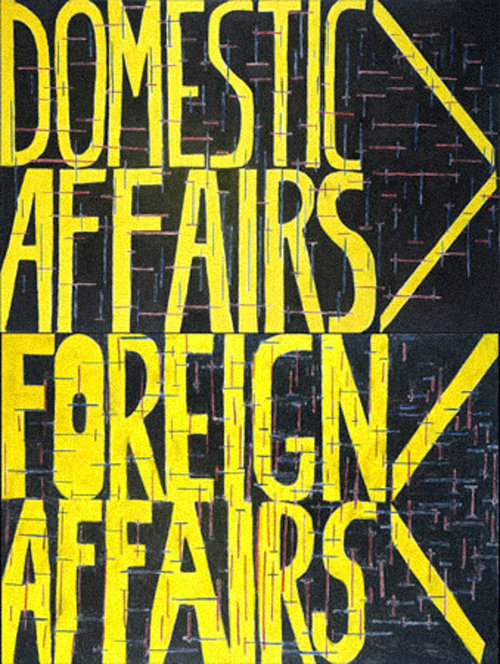
On January 19, Fleisher/Ollman will host the debut screening of the documentation of Philadelphia artist Andrew Brehm's "Landman and the Thunderbird," an ambitious performance which he produced this past Fall. For three days Brehm sequestered himself in the courtyard of the North Philadelphia warehouse where he keeps his studio, equipped with a reservoir of water and assorted warehouse-variety debris. The setting is one of Philadelphia's neighborhoods hit hardest by de-industrialization, population loss, unemployment, poverty and crime. Various surreal theatrics ensue, injecting elements of fantasy—both comical and nightmarish—into what might otherwise pass as straight-up SURVIVOR:Kensington Edition. The result is poignant commentary on free-will, poverty, homelessness and existence.
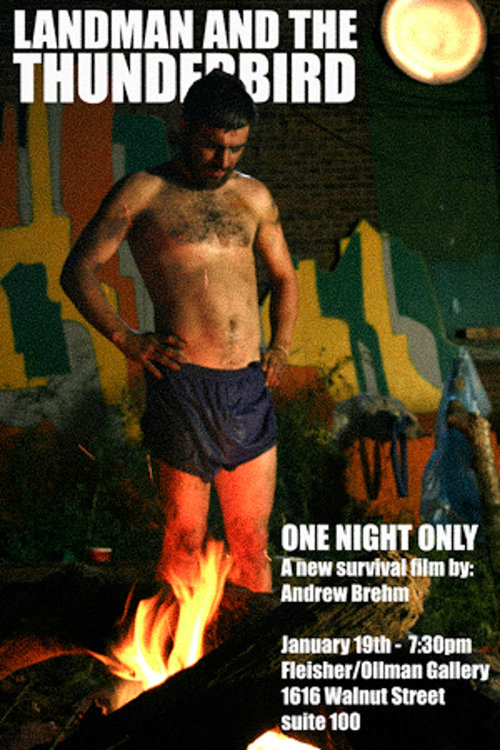
Congratulations to the Dufala Brothers who have been named as one of the 10 West Prize Acquisition Finalists for 2008. Steven Dufala and Billy Blaise Dufala, artists, collaborators, and brothers, will be exhibiting in You Open So Early, You Close So Late, our annual group exhibition in December and in Trophy, a solo exhibition at Fleisher/Ollman in early Spring.
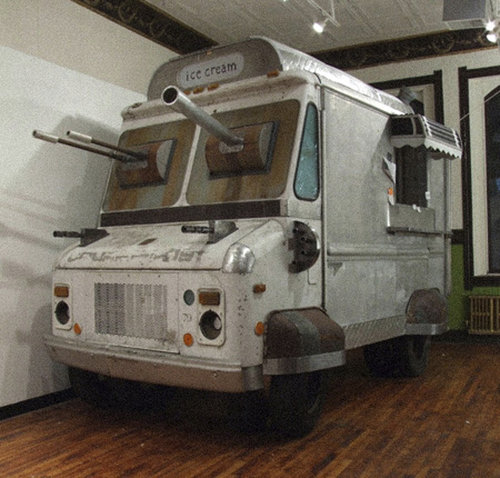
Please join us on Saturday, November 8th at 2pm for an informal walk-through of the exhibition, Castle in Context.
Gallerist John Ollman will lead a discussion exploring the myriad, sometimes surprising affinities between Castle's work and that of the diverse group of artists on display in Fleisher/Ollman's current exhibition.
Castle in Context will be on view through December 6th.
19 November 2008 | 5:00–7:00pm
Ibrahim Theater, International House, 3701 Chestnut Street, Philadelphia
Changing the Canon: Self-Taught Artists Film Screening and Panel Discussion
James Castle: Portrait of an Artist
A film by Jeffrey Wolf
Introduction by Molly Dougherty, Executive Director, Foundation for Self-Taught Artists
Brendan Greaves, Folklorist, University of North Carolina
John Ollman, Director, Fleisher-Ollman Gallery
Ann Percy, Curator of Drawings, Philadelphia Museum of Art
Jeffrey Wolf, Film Producer and Director
Wendy Steiner (moderator), Founding Director, Penn Humanities Forum
Born deaf, James Castle (1900–1977), a self-taught American artist who refused to read, write, or otherwise communicate except through art, used soot, saliva, and found materials such as ads and food wrappers for his creations. Today, major museums throughout the U.S. collect his work.
In association with the exhibition James Castle: A Retrospective at the Philadelphia Museum of Art (October 14, 2008–January 4, 2009), the Penn Humanities Forum presents the Foundation for Self-Taught Artists’ new documentary on Castle, with a panel discussion to follow on the radical changes in the canon of art reflected in the new acceptance of self-taught artists.
Cosponsored by the Foundation for Self-Taught American Artists and
International House, Philadelphia.
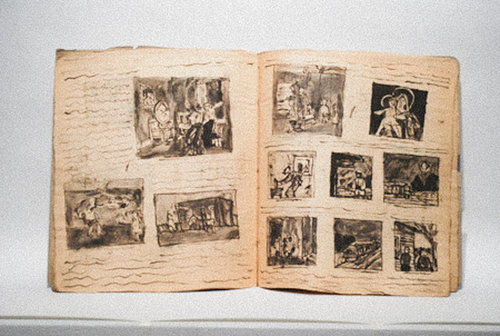
Gallery artist, Annabeth Rosen, will be showing new and beautiful work at Gallery Paule Anglim, San Francisco, through November 1.
www.gallerypauleanglim.com
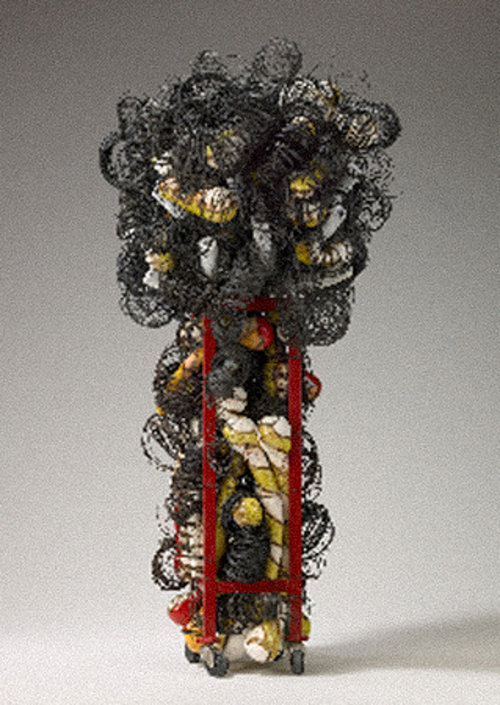
Anthony Campuzano, maker of amazing and obsessive distillations of news, phrases, history, and the like, was the featured on the NADA Emerging Artist Page in September's L Magazine.
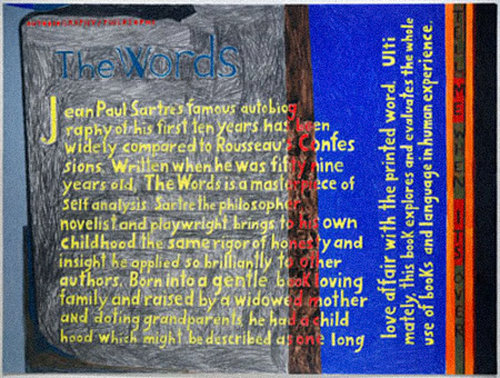
Area 919 presents a selection of works from the past 25 years of TODT, the radical art collective who have been active on the international art scene since the late 1970's. If you missed Fleisher/Ollman's 2007 show, "TODT AFTER NEXT" do not make this mistake again. If you're already familiar, you'll need no nudging.
The show runs from September 25th (Area 919's grand opening) until November 8th.
http://www.area919.com/art/
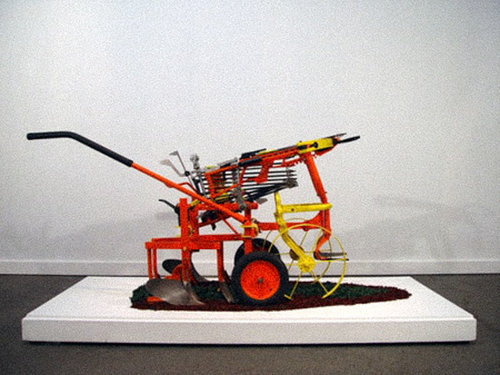
Bruce Pollock's exhibition, Levity, of recent paintings will be on view at Delaware Center for the Contemporary Arts from October 3 though November 16. Opening Reception will be held on Friday, October 3 from 5-9pm.
www.thedcca.org/
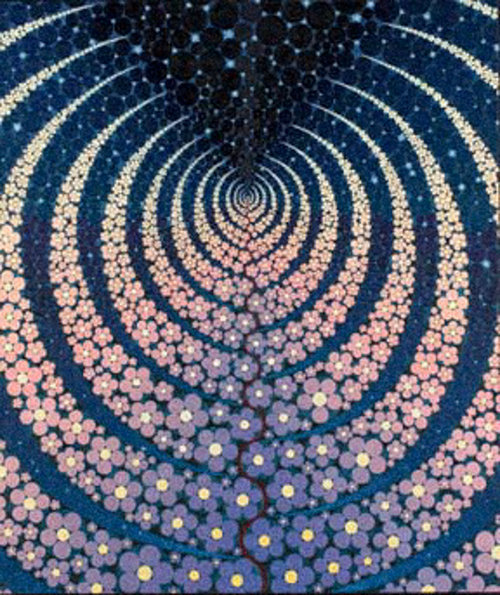
Alex Da Corte, gallery artist, is participating in a group exhibition at the Asia Song Society. Opening Reception: Saturday, August 9, 6-9PM.
45 Canal Street.
Participating artists:
Mosco Aa, Marina Abramovic;, Rita Ackermann, Robbii Albright, Jesse Alpern, Brian Anderson, assume vivid astro focus, Leo Babsky, Matthew Bangs, Tim Barber, Jean-Michael Basquiat, Michael Bilsborough, Aaron Bondaroff, Lizzi Bougatsos, Jen Brill, Kadar Brock, Cecily Brown, Nicholas Bruder, Simon Castets, Marcus Chang, Peter Coffin, Dan Colen, Anna Craycroft, Jey Crisfar, Alex Da Corte, Jules de Balincourt, Pia Dehne, Jen DeNike, Frederic Detjens, Rafael Doctor, Yasmine Dubois, Angela Dufresne, Rachel Ebgi, Gardar Eide Einarsson, Max Emerson, Patrick Ervell, Rachel Feinstein, Patrick Fink, Sean Fitzgerald, Leo Fitzpatrick, Yvonne Force-Villareal, Griffin Frazen, Casey Fremont, Todd Fuchsi, Luis Gispert, Trevor Good, Tim Goossens, Douglas Gordon, Kathy Grayson, Brad Greenwood, Jack Greer, Patrick Griffin, Elizabeth Huey, Gerrit Huning,Christian Jankowski, Joe Kay, Brian Kenny, Zak Kitnick, Scott Keightley, Sophia Lamar, Erik Anders Lang, Stu Lewicky, Shawn Mackinnon, Blake Mawson, Gloria Maximo, Theo Mercier, Tris Vonna-Michell, Justin Miller, Stephen Miranda, Misshapes, Slava Mogutin, Shamim Momin, Michael Nevin, Juan Antonio Oliveras, Yoko Ono, Rick Owens, Erica Papernik, William Parks, Malte Paulsen, Adam Pendleton, Kembra Pfhaler, Jack Pierson, Job Piston, Elvis Presley, Doreen Remen, Jen (JR) Reynolds, Aurel Schmidt, Stella Schnabel, Lianne Schulmann, Ethan Scott, Jeremy Shaw, Cindy Sherman, David Benjamin Sherry, Alexander Shulan, Taryn Simon, Lucien Marc Smith, Jade and Dash Snow, Bella Stahl, Jaime Szczepanski, Francesco Vezzoli, Michael Wang, Andy Warhol, Jorn Weisbrodt, Daniel Wickerham, David Wojnarowicz, Jordan Wolfson, Blake Wood, Anton Zolotov
Gallery artist and dear friend, Isaac Resnikoff, is in the one day exhibition, Hinterland, at Mackey Garage on Friday, June 20, with Manuela Mark, RJ Messineo, Camilo Ontiveros, and Raimund Pleschberger. Please stop by Mackey Garage, located at 1137 - 1141 South Cochran Avenue, if you are in LA.
Gallery artist Anthony Campuzano has contributed two works to the Chris Churchill-curated exhibition 'Everything Else' at Franklin Parrasch Gallery from June 17th to August 30th. The fourth in a series of exhibitions dedicated to human evolution and the creative process, artists this time include Jason Adkins, Bryan Bowie, Jason Frazier, Misaki Kawai, KAWS, Michael J. Kelly, Wook Kim, Wes Lang, Sandra Eula Lee, Rebecca Potts, George Stoll, Keith Tallett, Xavier Vellhan, Jocko Weyland, and Jesse Wine. The delightful Parrasch gallery is located at 20 West 57th Street, New York City, on the Seventh floor, and on the web at franklinparrasch.com
Gallery artist Bruce Pollock will be appearing, with Isabel Albrecht, Sharka Hyland and Sebastian Rug, in a show entitled 'Line and Time and Space' at Philadelphia's Gallery Joe. Joe is located at 302 Arch Street and the show runs from May 2nd through June 28th, and you are heartily encouraged to visit and see Pollock's works on paper in depth.
Fleisher/Ollman is co-hosting and compèring the book release for Jayson Scott Musson's "Too Black For BET" book, published by Free News Press. 6-10pm, Friday the 11th April, at the Mad Decent Mausoleum on Spring Garden Street. It promises to be both a family affair and a wild ride. Fleisher/Ollman will be debuting three new silkscreens from Musson at Art Chicago later in the month, April 25th-28th.
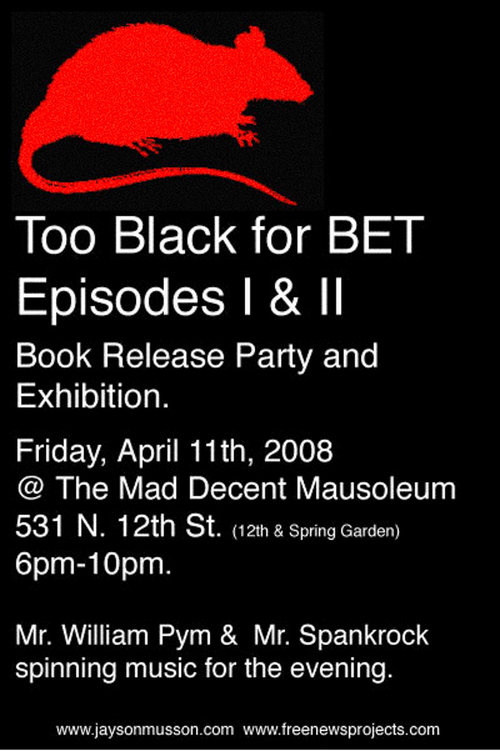
Friday, April 18th marks our biggest and strongest opening at the gallery in some time, Jack Sloss and Alex Da Corte's LOVE EXPLOSION. Full press releases to follow next week, but this news serves as information about the afterparty. We are throwing our party at Johnny Brenda's in Fishtown, in concert with the opening bacchanal of Heartworks, a week-long exhibition and benefit for the Mazzoni Center in downtown Philly. The gig on Friday night brings together an extraordinary array of performers, and we highly recommend you buy tickets in advance. The downstairs will be free, but the upstairs needs a ticket, and these will sell out soon. Please go to inliquid.com for more information and to buy tickets. We shall see you there.
There has been a nicely prismatic array of reaction to 2000 Years of Sculpture, the show at Fleisher/Ollman until March 8th. Here are responses in varying degrees of detail ahead of the printed press later this week. The show came out exactly as we had hoped, and the photos in these blogs show many angles.
matthewstheyounger.blogspot.com
freenewsprojects.blogspot.com
watchingpaintdryphilly.blogspot.com
Gallery artist Bruce Pollock is appearing in a group show among the boutique hotels and liquor bars of the Lower East Side in New York. GeoMetrics occurs at Gallery 128, 128 Rivington Street, from November 7th to December 8th.
galleryonetwentyeight.org
The time has come, once again, to rouse the troops. Submissions for this year's Winter invitational are due Monday, November 5th by 5PM.
Pass it on.
Full details here
Gallery artist Anthony Campuzano has created his first lithograph at the invitation of the 2007 Philagrafika Invitational Portfolio. It's a fine corollary to the American history and picking apart of the war machine present in the exhibition currently hanging at Fleisher/Ollman, now through October 27th. Produced in collaboration with the Brandywine Workshop, the print is in an edition of 35.
http://www.philagrafika.org/portfolio-2007.html

There will be an event at the gallery this Friday from 5 to 7 pm. At the event there will be an atmosphere of the most appropriate sort as we click into gear for another season, gentle and quiet and always slightly out of step with the rest of the Philadelphia art world. The evening marks the release of 'Lament', a publication commemorating a performance by Martha McDonald at the storied Bartram's Garden in Philadelphia on an evening in late summer, 2006. Known for extravagant and baroque site-specific work, the Bartram's piece is McDonald's most pared-down work to date, and the clear, compact book reflects a new sort of logic with its juxtapositions of raking photographic documentary from the performance with chapters of floss embroideries containing a minimal, unfolding narrative about loss and the evolution of the species. We are delighted to be displaying the embroideries for the first time on Friday, and delighted to be distributing copies of the book, gratis, to all visitors. Though the embroideries will be on view through next week, consider this a one-night-only event, and join us to celebrate with McDonald and 'Lament'.
Fleisher/Ollman Gallery
1616 Walnut Street suite 100
Friday, 7th September 2007
5-7pm
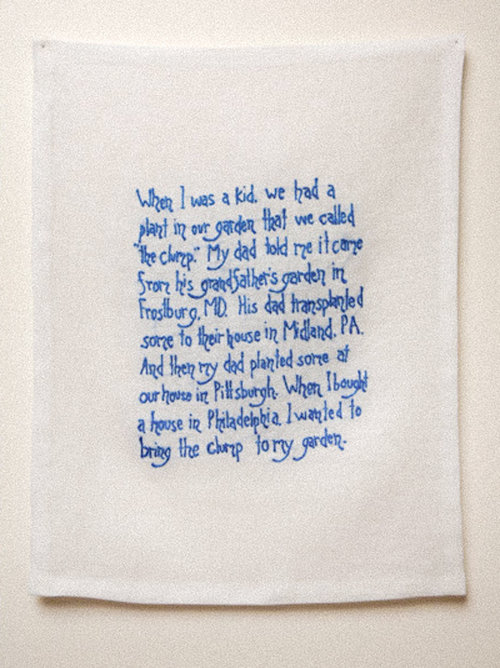
Gallery artist Isaac Lin will be showing in 'Indexiphilia' at BravinLee programs in New York, opening July 20th. The show features works on paper from members of the venerable Philadelphia collective Space 1026, and the website features helpful, extensive history and statements from the collective. We look forward to large collaborations with Lin and Space 1026 in the 2007-2008 season.
bravinlee.com
Three shows featuring gallery artists are taking place around the world this summer. Jina Valentine opened 'Witch Hazel Bark,' a solo show of new works on paper and small sculptures at Steve Turner Contemporary in Los Angeles, running now through August 4th. Images abound on Turner's website. TODT are showing 'Products' at the Georges Pompidou annex in Cajarc, France until September 23rd (see right,) and James Castle is showing in the recently extended/expanded exhibition 'Citadel 1: Front Room/Killing Room' at David Risley Gallery in London. All come with our heartiest endorsements and great gratitude.
steveturnercontemporary.com
magp.fr
davidrisleygallery.com
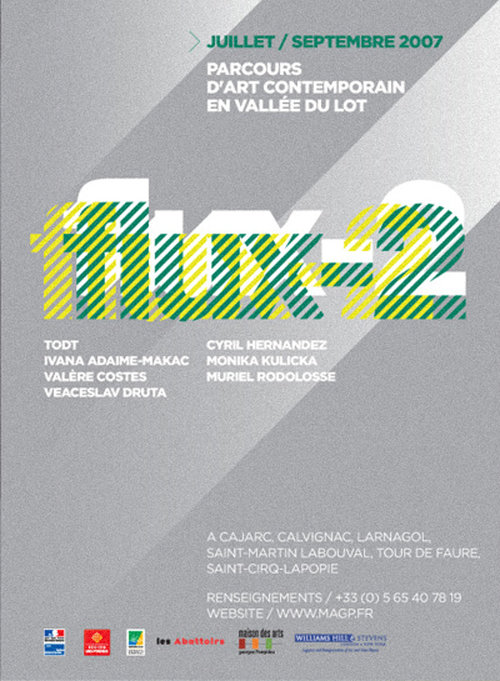
"Old Head Young Head," is an exhibition of two generations of snapshot photography. Philadelphia soldier Greg Tobias represents the elders, and Dan Murphy, currently up at Fleisher/Ollman in "Good Funky Miles," represents the youngers. Viewable from June 28th to August 31st at the compact powerhouse Cerealart Project Room in Old City, Philadelphia, the show comes with our full recommendation.
cerealart.com
3 Fleisher/Ollman artists are featured in two innovative summer shows at the moment. Find Anthony Campuzano and Felipe Jesus Consalvos at Adam Baumgold Gallery, 74 East 79th Street in New York City, participating in 'Text Messaging,' a show of words in pictures. Those in London would do well to visit David Risley Gallery for 'The Citadel,' a living room environment, fully inhabitable, containing, among many other fine works, two delicate James Castle interiors. New York runs until August 15th, while London closes July 1st.
www.adambaumgoldgallery.com
www.davidrisleygallery.com
"Good Funky Miles," FOG's summer show, it's a poem it's up and it looks lovely. In other less horn-blowing news, gallery artists Anthony Campuzano and Felipe Jesus Consalvos have works in the group show "Text Messaging" at Adam Baumgold Gallery, uptown in Manhattan. The show will be up there until August 15th. "Good Funky Miles" will be up until the end of July, and we'll reopen proper on 19th September. Thanks again!

Gallery artist Jina Valentine is appearing in a four-person exhibition at Jack The Pelican Presents in Brooklyn from May 12th to June 10th. Curator W. Benjamin Smith describes her contribution thusly: "Delicately cut-up bags of sugar and corn meal emerge as beautiful cadavers of processed pop food packaging with their granular insides pouring out. Valentine is also installing what may be perceived as a nervous sand painting of a makeshift prayer rug out of bleached flour. Jina, who recently was exhibited at the Studio Museum in Harlem, works almost as an actress in her studio playing roles of folk artists with odd and obsessive practices. She consciously chooses strange alternatives to canvas, from cupboard objects and wallpaper to record cases and shadows." Sounds great and check it out.
jackthepelicanpresents.com
A flurry of media interest has fallen upon the artists of the Fleisher/Ollman Gallery this month. Isaac Resnikoff is featured solely as the "Critic's Pick" on the desirable final leaf of the May issue of Artnews, while Anthony Campuzano is on the back cover and plum in the middle of the latest edition of New American Paintings "40 artists you should know about." TODT received a remarkable review in the Philadelphia Inquirer on the 27th April, while Sculpture Magazine has an 8 page, generously-illustrated article with interview in its May issue. TODT AFTER NEXT will be up until the end of the month, and is already proving one of our most popular shows of recent time. Do pay us a visit or drop us a line, and thank you.
Tonight marks the opening of TODT AFTER NEXT, a show that we have been working on for almost 2 years. TODT, a collective formed in 1978 who have exhibited at P.S.1, The Whitney Biennial, The Brooklyn Museum, The Venice Biennale and now Fleisher/Ollman Gallery, are among the most important New York artists of the 1980s, and remain among the most industrious, inventive and challenging artists, period. We are honored to present this show, which includes the double lightbox "Double Fuck Susie," famously censored at the Indianapolis Museum in 1995, weapons that stopped traffic on Walnut Street as we installed last week, and 3 sculptures including toilets. Here are sculptures that presupposed every cultural art shock of the 90s, from Hirst, to Emin to the Chapmans, by ten years clear. Please join us, 6-8, April 20th 2007.
In related news, there is a pleasant if small puff on Paper Magazine's diary about Fleisher/Ollman Gallery:
http://www.papermag.com/?section=article&parid=1885
Fleisher/Ollman Gallery has been honored with a contribution to the New York Foundation for the Arts' online magazine, Current. Commenting on the colic and euphoria of Locally Localized Gravity, an exhibition in Philadelphia which has received nationwide attention, this piece opts to speak plainly of how we are all feeling here. Check it out.
nyfa.org/current
Up now until April 14th, Fleisher/Ollman presents Tillykke Lille Fugl (Congratulations Little Bird,) a show of work by a group of young Danes mobilizing Copenhagen through music, performance and public art. We have had a remarkable relationship with these artists for the last five years, and are delighted to have been able to cull their archives for this light, joyful, informative exhibition. It is a real bazaar, with lots to take away, literally and figuratively. Inquire for images, available multiples and further avenues to explore.
escho.net
Guided by Fleisher/Ollman's design team, the second LP by Philadelphia's sensationally popular Dr. Dog is adorned by artwork from the estate of Felipe Jesus Consalvos. Released on February 27th by Park The Van Records, the record sounds as good as it looks. Felipe Jesus Consalvos will next appear at the Intuit Fair and Art Chicago in the Merchandise Mart, April 27th-30th.
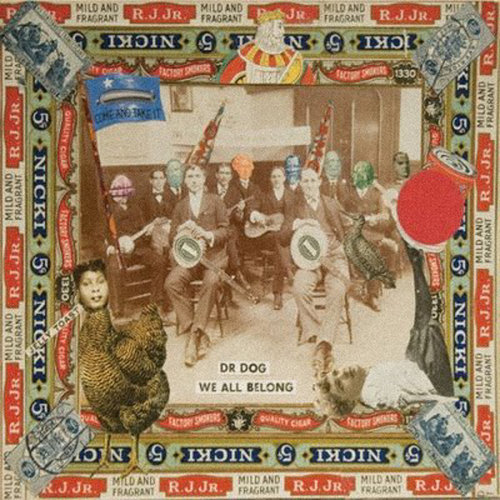
A peripatetic, passionate audio interview with Fleisher/Ollman, conducted on the top floor of a warehouse while a party raged below, is available for your ears. It covers a tremendous amount of ground, from love to art to the art market to Elton John. Do have a listen if 40 minutes of rambling and swearing sounds like a good time.
frankprattle.wordpress.com
Scroll down a bit (third item)
Tristin Lowe's Dumbo, created for the Fabric Workshop and Museum in 2001, is currently on view in the storefront window of the Workshop's interim space at 1222 Arch Street in Philadelphia. The next window is papered with Virgil Marti's blacklight bullies wallpaper, formerly the famous interior of the Workshop's gents bathroom. There for the forseeable future, do check it out.
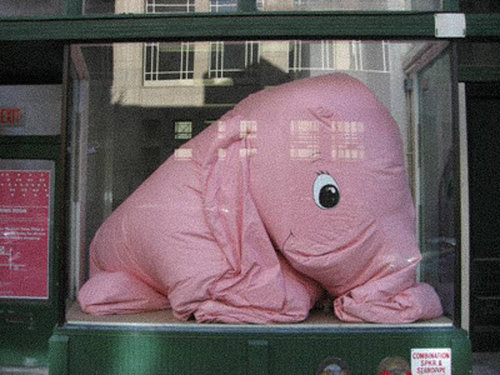
Jina Valentine's Dark Matters is up and running in the gallery, here until March 10th. There are more than 60 works on display from the last 18 months, none previously exhibited bar "Appetite For Destruction," a sculpture that featured in "Frequency" at the Studio Museum in Harlem last year. "Appetite For Mahogany," an answer piece, dominates the main space. Exhibition notes written in discussion with Valentine are available in the gallery and by request.
Join Megawords and Fleisher/Ollman Gallery for the release of "Public Wall Writing in Philadelphia", 6-8pm on Wednesday, January 31st. Food will be provided by Wadada, and audio/visual interventions will be provided by Megawords. These are some of the city's best citizens. This will be a treat. Afterparty, with drink specials, 8-10pm at Bar Noir, right around the corner. This too will be a treat. Contact us or them for more information.
megawordsmagazine.com
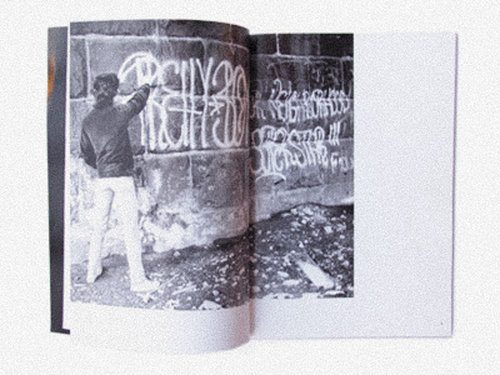
Gallery artist Annabeth Rosen is currently appearing in "The Good, the Bad, and the Ugly" at New Langton Arts in San Francisco. Running through February 24th, here is an optimistic curatorial essay on faith in abstraction. Alongside Rosen, the show features Robert Bordo, Charline Von Heyl, Rebecca Morris, Avery Pressman, Amy Sillman and John Zurier. Stephen Westfall and Larry Rinder will discuss the work and its implications in a lecture on February 1st.
newlangtonarts.org
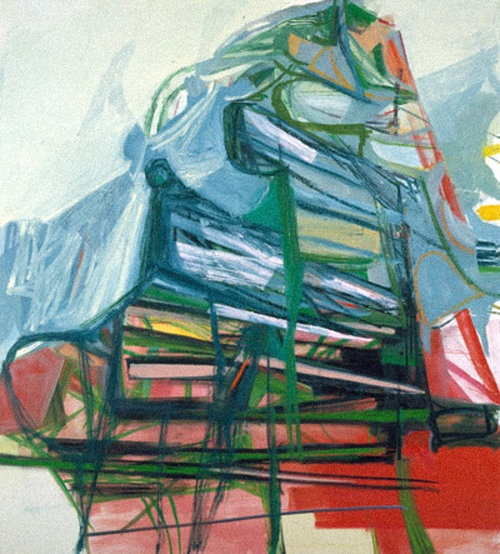
Gallery artist Mei-Ling Hom has won the art commission for the expansion of The Philadelphia Airport's Terminals D and E. Occupying the Hammerhead rotunda, the actual point of departure, Hom's installation will contain 35 large wire clouds, created by individually tweaking and weaving the hex cells of stainless steel netting, or chickenwire, as it's often known. An exhibition of similarly ethereal works inhabited the gallery in 2004, and can be seen on Hom's page in the artists section of the site. We offer sincere congratulations.
A definitive, descriptive review of Morgellons at Fleisher/Ollman Gallery dominates today's Arts section in the Philadelphia Weekly. This morning we heard a lady on the street say "why you gotta answer my question with a question?" As far as this piece goes, the way that the review responds seems necessary and au fait. Enjoy. Morgellons will be extended to January 27th.
http://www.philadelphiaweekly.com/view.php?id=13728
Fleisher/Ollman has written a yarn about life in Philadelphia for Artjaw, an ongoing oral history of art in Philadelphia. It is a story we've told before and will probably tell again, but it has yet to get old. The site is a fine hub for many Philadelphia pros and could well send you somewhere quite interesting.
artjaw.com
Our annual Winter Invitational is going great guns, and there are all sorts of opportunities to see it in the upcoming weeks. The gallery will be closed December 25th, 26th and January 1st. Other than that Fleisher/Ollman will operate at our regular hours. Walnut Street is very nice at this time of year, you look down from the picture window and see people act crazy and unstable all day.
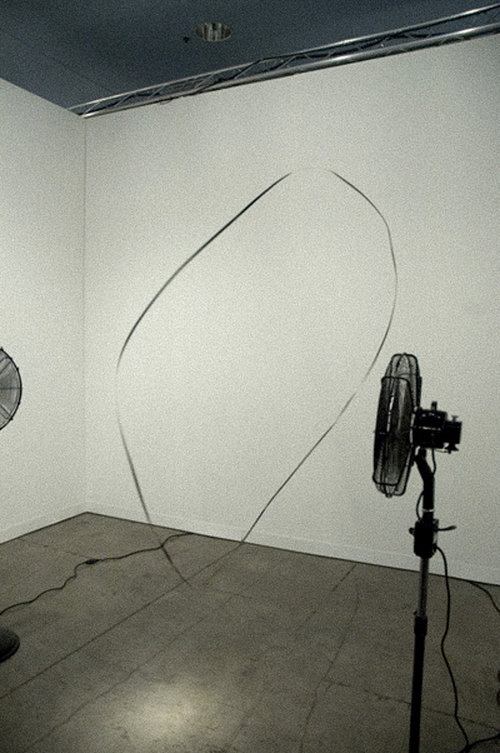
Fleisher/Ollman will be leading a gallery talk and lecture at Vox Populi Gallery at 6.30 on the evening of December 1st. The storied 1315 Cherry Street location, which houses Vox and the Fabric Workshop among other arts organizations, is being razed in February to accomodate the expansion of the Philadelphia Convention Center. This blistering, straight-ahead campaign would have made William Tecumseh Sherman very proud. So Friday, the last exhibition, should be an emotional, perhaps bitter, certainly hi-energy event.
voxpopuligallery.org
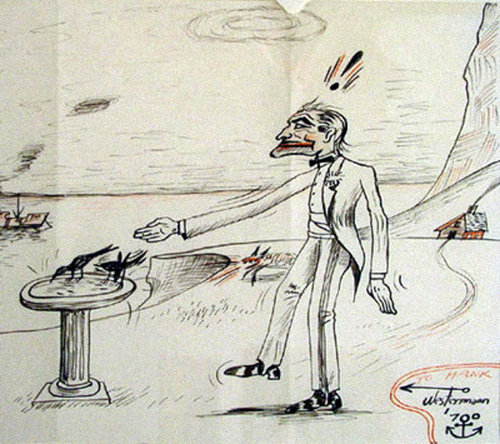
Fleisher/Ollman Gallery was featured both glossily and very sympathetically in last week's New York Times Travel magazine. We're very proud. Read for yourselves through some creative searching at nytimes.com.
For locals looking for action tonight, Fleisher/Ollman has very kindly been asked to play records at Transit nightclub. Local luminaries Low Budget and Spank Rock will be making a mess on the main floor, and we will be up in the attic trying to figure out ways to play jazz records, then not playing them at all. Our dear friends Philebrity.com are compèring the party and it should be an absolute smasher. Starts at 10, goes to 3.30, and there's free drinks for the first hour.
Lovely full-page review today in the Philadelphia Inquirer of both current Fleisher/Ollman shows. Edith Newhall offers incisive observations on Bruce Pollock's evolution over almost 30 years at the gallery, and tackles Jack Sloss' powerhouse poetry head-on. And with considerable gusto on both counts.
philly.com/mld/philly/entertainment/16029380.htm
Cross-pollination in Philadelphia is an interesting new development, and we are very happy to announce that gallery artist Anthony Campuzano will be appearing at the Cerealart Project Room in '25 x 25,' an exhibition of 25 works from the last 25 years by 25 artists who have shown with or are associated with White Columns, New York. It's a world-class roster, and full details can be found on http://www.cerealart.com. Curated by White Columns' Matthew Higgs and Amie Scally, the show runs from November 17th to January 17th.
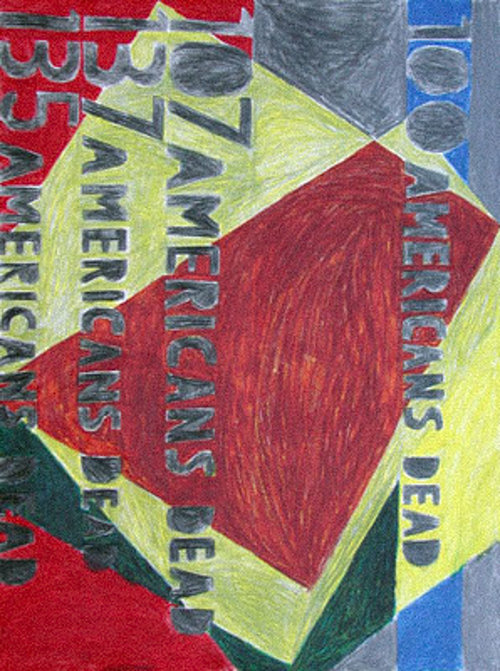
Hot off the press, issue 2 of Brooklyn-based literary magazine "The Crier" has arrived at the gallery and is available for sale in the live library. Includes an epic essay from former Fleisher-Ollman curator Brendan Greaves on death and a 1929 Southern sermon recorded on a 78 side called The Black Camel of Death, a close reading-slash-morality play on Mark Leckey's Drunken Bakers video, and thoughts on the NBA offseason. And lots, really lots, more besides.
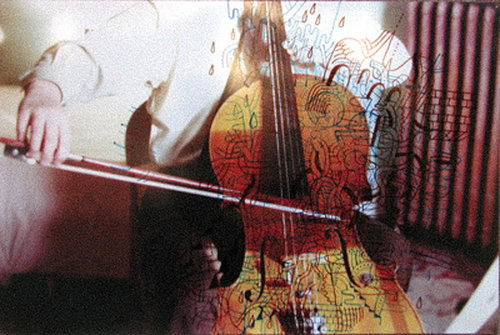
It has been a brisk and very satisfying 2006 for the Philadelphia Wireman, a singular enigma whose charged, history-filled icons have been exhibited at Fleisher/Ollman Gallery since their discovery in 1982. Following a collaboration with Matthew Marks Gallery's pocket space this past spring, spring 2007 will bring Wireman exhibitions to the Cornell Fine Arts Museum in Winter Park, Florida and the Oernskoldsviks Museum in Northern Sweden. Full details to appear on the artist page. We have also recently reacquired one of the Wireman masterworks, a piece with the size and animation of a human lung. Do come see it in the gallery.
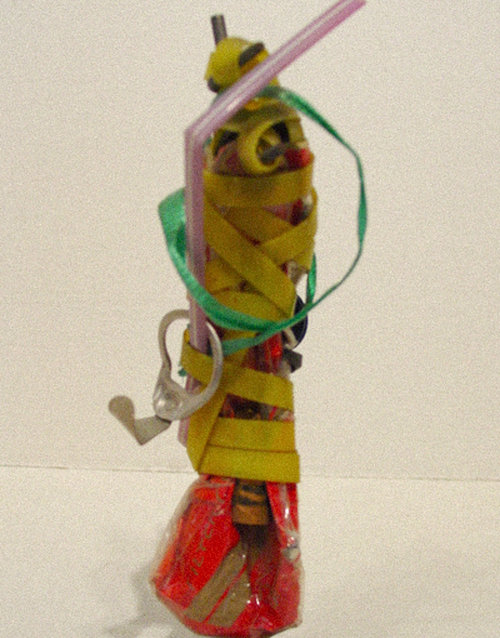
Fans of Rock and Roll should be encouraged to visit New York's storied Webster Hall venue on Thursday, November 2nd, to see performances from celebrated experimental party musicians Gang Gang Dance (NY) and Hot Chip (London.) In addition to these two tremendous acts, Fleisher/Ollman Gallery will be playing records between sets. Promises to be an odd and exhilarating evening. Doors at 6pm, 20 dollars entry.
Fleisher/Ollman Gallery is soliciting entries for our annual invitational of emerging Philadelphia artists. This is a perennial eye-opener and delight, and the talent pool grows each year.
We have established fruitful relationships with many of the artists in these shows over the past three years, and this year promises to be the beginning of more.
The submission deadline for the first round is November 11th. Full details viewable here.
Please sound the call far and wide.
Very proud to announce that Gallery artist Mei-Ling Hom has received a Fulbright Scholarship, an award that will take her to Hongik University in Seoul, Korea, to interview and document contemporary Korean ceramicists. During the ten-month sojourn, from March to December 2007, Hom will also set up a studio and travel around the penninsula, and we eagerly await the fruits of this adventure.
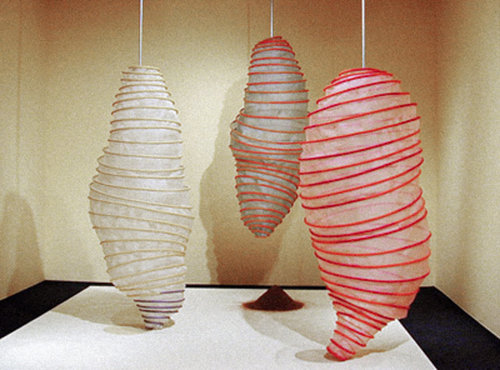
Keen to point you towards
a fierce morsel of criticism on Greil Marcus' new book. Gabe Boylan is a rara avis and friend (he deejayed a storied party for the gallery's first December invitational a few years back,) and even the most objective viewer will agree that this piece trumps the New York Times book review as far as dispersible critique goes. Since that's what matters here, nice work.
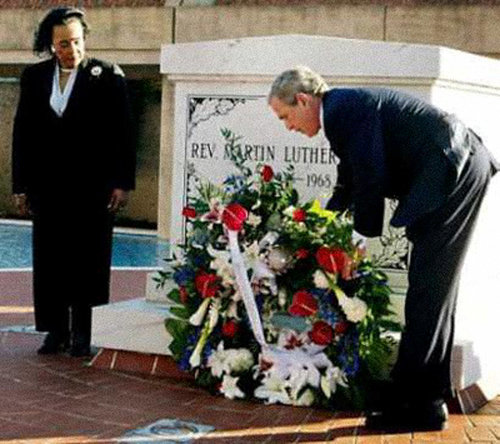
After several months of preparation, Fleisher/Ollman is proud to unveil its living library of self-published fanzines, tracts, screeds, slander, philosophy, doodle and doo-doo. The publications are available for sale and extended reference in the gallery, neither classified nor ranked, and we will periodically pick out exceptional work to feature on the shelf and on the website. This month's hot potatoes are:
FROM SCRAP
Hobo travelogues in photo and ephemera from a mob of tender itinerant Scandinavians. Cobbled together and produced in one day by Marten Damgaard, Tristin Ceddia, Barry McGee and Thomas Stavnes. 100 copies only, full color and black-and-white xerox, 2-color silkscreened cover.
END OF THE LINE
Two short stories and a longer novella by Matthias Connor, Carnaby Street legend, former pornographer and perennial dole collector. Spite and resignation vibrating from London center out to the suburbs. Original stamped cover artwork by Oliver Payne and Nick Relph.
STUCK ON THE MAP
Delighted to get these back in. Textbook-quality urban documentary, without a posture or a politic. Profoundly touching and prescient Philadelphia work from 2003. First printing, final copies, perfect bound, doorstopper-thick, 4-color silkscreened cover.
Please contact us for more information. If you would like to add your own publications to the library, for loan or sale, don't hesitate.
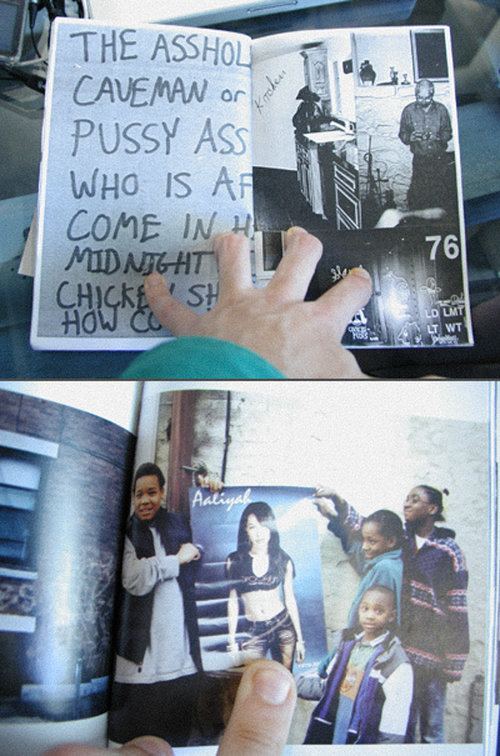
Fleisher/Ollman Gallery is pleased to invite you to Thursday's opening of "Socked Up," new work from Tristin Lowe, 6-8pm in the Gallery, with all the usual trimmings.
"Socked Up" is Lowe's first commercial gallery exhibition after over a decade of projects at such storied institutions as the Philadelphia Museum of Art, The Fabric Workshop and Museum, the ICA Philadelphia and The Royal Hibernian Academy. The installation includes over 50 new works: sculpture from intimate to large scale, and inflatable, 2D drawing studies, completed works and photographs, felt collages and a shocking homunculus.
As ambitious a show as we have mounted at our new space, these ruminations on sex, space, safety and middle age should prove a highlight of the season.
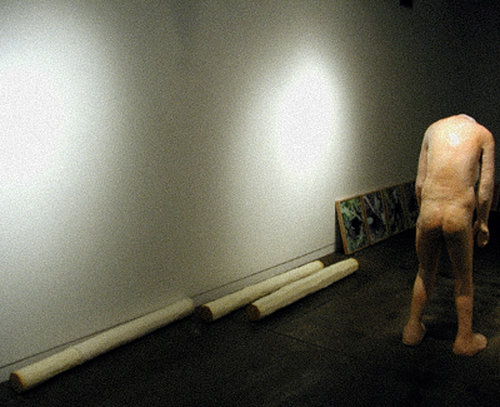
Anthony Campuzano's "Portrait of Kathy Change" and Isaac Resnikoff's "Geode" were purchased this month for the permanent collection of the Pennsylvania Academy of the Fine Arts, one of the foremost collections of American Art in the world. First-rate recent works both, see them there in the immediate months.
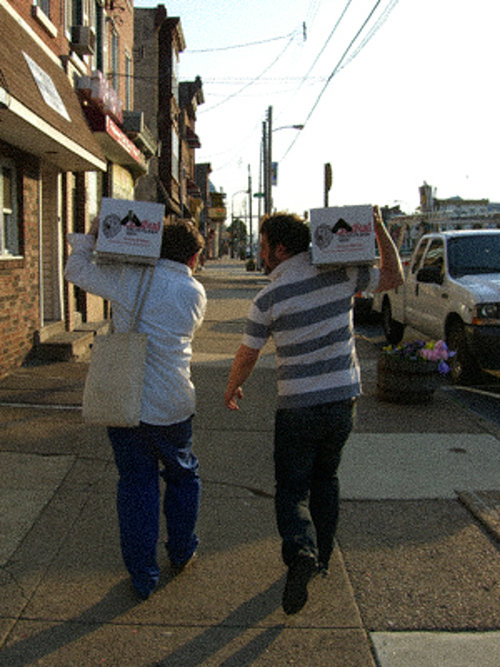
Delighted to alert you to a 45 from a close friend of Fleisher/Ollman and quiet supernova of the Philadelphia music scene, Meg Baird. Meg has been central to the success of Drag City recording artists and international weirdos Espers for several years, and her solo material is a gift.
The record itself is a single as a single is supposed to be. Big beautiful picture, 500 copies, hit on the A side, a cappella on the flip. Five minutes of wonder. We may get a few copies in the gallery, but do well and buy from (another house favorite) North Philly label Tequila Sunrise Records.

Fleisher/Ollman Gallery was named Best art gallery in Philadelphia by Philadelphia magazine this year. This is a legitimate award, an honor and a chance for a photograph and a piss-up with members of the '76ers and best Philadelphia band Dr. Dog. Thank you for your support over the course of an extraordinary year.
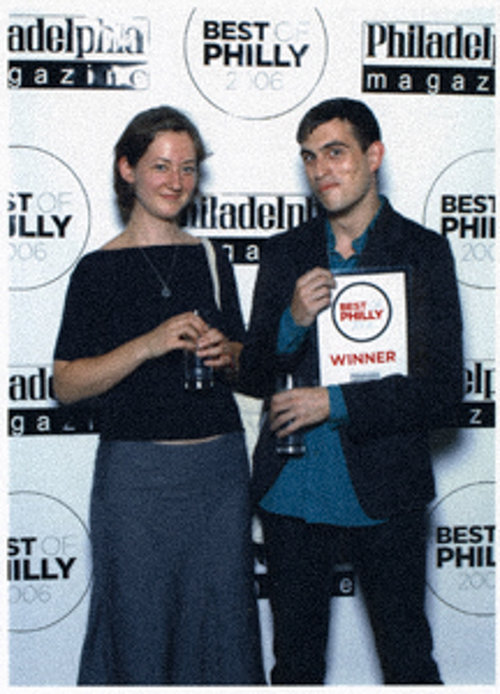
Keen to point you towards Heaven and Here, a remarkable series of unfolding essays from noted national authors exclusively engaged with the HBO television series "The Wire" and the arguments it raises. We at Fleisher/Ollman Gallery do not watch much TV, but are enthusiastic about good writing and good internet. This passionate, whip-smart project will last as long as the program lasts. A worthwhile experiment.
Announcing the heartily Fleisher/Ollman Gallery-endorsed, Isaac Resnikoff-hosted showing of Dick Proenneke's "Alone in the Wilderness" for the summer screening series at University of the Arts in Philadelphia. The film documents Proenneke's life as he builds a homestead at the base of the Aleutian Penninsula, Alaska, in the late 1960's. Tangles with bears, struggles with cold and beautiful carpentry punctuate this unforgettable work. Notes will be given before the film.
Tuesday, July 18th
7pm
Free to all
University of the Arts
320 South Broad Street
Anderson Hall 212
info@thefineartfuture.com

A local launch party, cocktail hour and reading will take place at Fleisher/Ollman on Saturday, July 15th. The Crier is a brave new literary journal founded by Christine Smallwood and Doree Shafrir in Brooklyn, focused on the long form and linguistic risk, and it is a treat to celebrate the first issue with them. Open to all, but numbers are limited.
Fleisher/Ollman Gallery
July 15th, 2006
5-7pm
strict RSVP required: events@thecriermag.com
www.thcriermag.com
Fleisher/Ollman Gallery is delighted to announce the inclusion of Anthony Campuzano in "Choplogic", a three-person exhibition of work from Melissa Brown, Campuzano and Amy Wilson.
New works include a reworked version of the UN Meditation Room from "The Police Are Here" and drawings concerning Siousxie and The Banshees, The Fall of the early 1990s, and the Bush administration.
June 29th-August 11th
Bellwether Gallery
134 Tenth Avenue, New York
www.bellwethergallery.com
A collaborative work by Isaac Resnikoff and Kate Abercrombie will appear in Two-Headed Monster: A group show of collaborations at Black Floor Gallery in Philadelphia.
July 7th-July 29th
Black Floor
319 N. 11th St. 3rd Fl.
www.blackfloorgallery.com
Fleisher/Ollman Gallery is happy to invite you to the opening, tonight, of Rip Rig & Panic.
The title Rip, Rig and Panic appeared from space while we were throwing ideas around Isaac Resnikoff’s Port Richmond studio last month. It is the name of a 1965 album by Rahsaan Roland Kirk. Kirk could, and would, adopt any style from jazz history with great sensitivity and invention, often on multiple horns that, using circular breathing, he could play simultaneously and for a very long time without stopping. I find myself hard pressed at this instance to cite a Twentieth-Century artist who has done more with their gifts. Having said that, this show has nothing much to do with Rahsaan Roland Kirk. We mostly loved seeing the words rip, rig and panic together in a line, and these days such a reason is a legitimate, if completely goofy, curatorial signature. Beyond that, ripping, rigging and panicking are three unusual activities that people seem to be enjoying in America today.
Fleisher Ollman Gallery is proud to announce an upcomming lecture by Mei Ling Hom in conjunction with the exhibition "Perspectives: Mei Ling Hom" at the Smithsonian, in Washington D.C. The artist will speak on Friday, February 3rd at noon, in the Arthur M. Sackler Gallery.
Perspectives: Mei Ling Hom
August 27th, 2005 - March 5th, 2006
Arthur M. Sackler Gallery
Smithsonian Institution
1050 Independence Avenue
Washington D.C.
Open Daily, 10am - 5:30pm